
WATERFALL AT LU-SHAN
Sunlight streams on the river stones.
From high above,the river steadily plunges-
Three thousand feet of sparkling water-
The Milky Way pouring down from heaven.
Li T’ai-po

WATERFALL AT LU-SHAN
Sunlight streams on the river stones.
From high above,the river steadily plunges-
Three thousand feet of sparkling water-
The Milky Way pouring down from heaven.
Li T’ai-po
This article consists of an e-mail interview with Prof. Stanley Sobottka, Professor Emeritus at the University of Virginia, conducted by Ivan Frimmel. Prof. Sobottka created a web-course covering the relation between consciousness and quantum theory. In addition to these topics, his course covers issues in advaita, Western philosophy of mind, and the practice of nondual inquiry. The course is available at http://faculty.virginia.edu/consciousness/home.html.
–The Editors
Stanley: In answering your personal questions, Ivan, I must make it clear that I identify with Awareness much more than with the body-mind, so your questions and my answers apply mostly to the latter, not to me. That in a nutshell is also the answer to your question about how Advaita has influenced my life.
A chariot is not asserted to be other than its parts,
Nor non-other. It also does not possess them.
It is not in the parts, nor are the parts in it.
It is not the mere collection [of its parts], nor is it their shape.
[The self and the aggregates are] similar.
– Chandrakirti, Supplement to (Nagarjuna’s)
“Treatise on the Middle Way”
Q: Where were you born, and what religion were you born into?
Harsha: I was born in Amritsar, Punjab, India, in a Hindu family.
Q: Anything interesting about Amritsar?
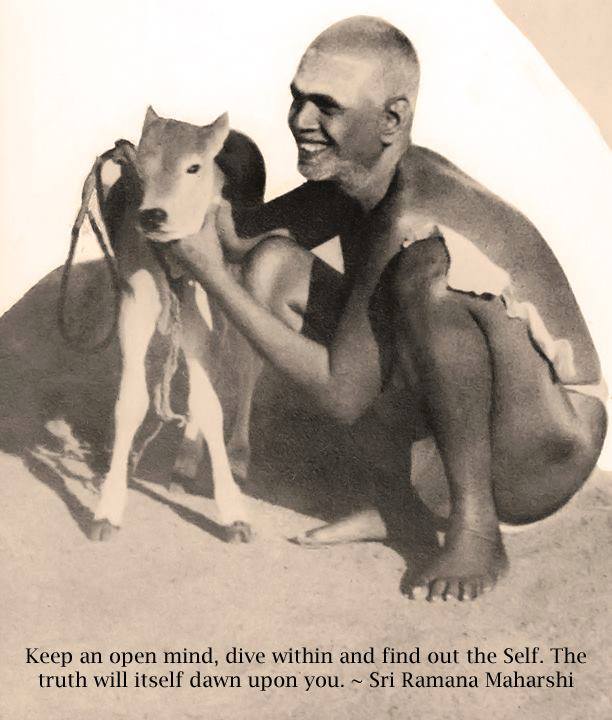
The nature of the Self is absolute, immutable, taintless. It is not distant, nor is it subject to attainment (being ever attained). This is the Truth. ——-Ashtavakra Gita
Here is my comment on this verse in six sentences. This is the natural approach to stilling consciousness by being simply aware of awareness with one’s awareness.
To see that, which is obvious, look.
Do not look for anything, and do not look at anything.
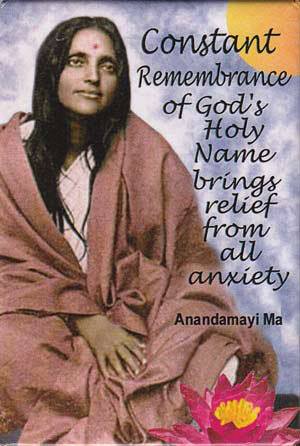
Gopi Krishna’s emphasis on Kundalini as a biological evolutionary force is a very limited view of the great Shakti.
Shakti is the fundamental Spiritual Principle and Force which has physical, mental, and psychic manifestations. These manifestations cannot indicate or capture the depth of this Great Power. Its ultimate nature is only realized when the Shakti completes its Journey to the end and reveals the deepest mystery of existence and the Self is Recognized.
Yes, the Shakti is Maha Sarswati, the Goddess of Wisdom. She makes one a poet, a scholar, and an orator. She bestows high intelligence. She is the teacher in both the earthly and subtle psychic realms.
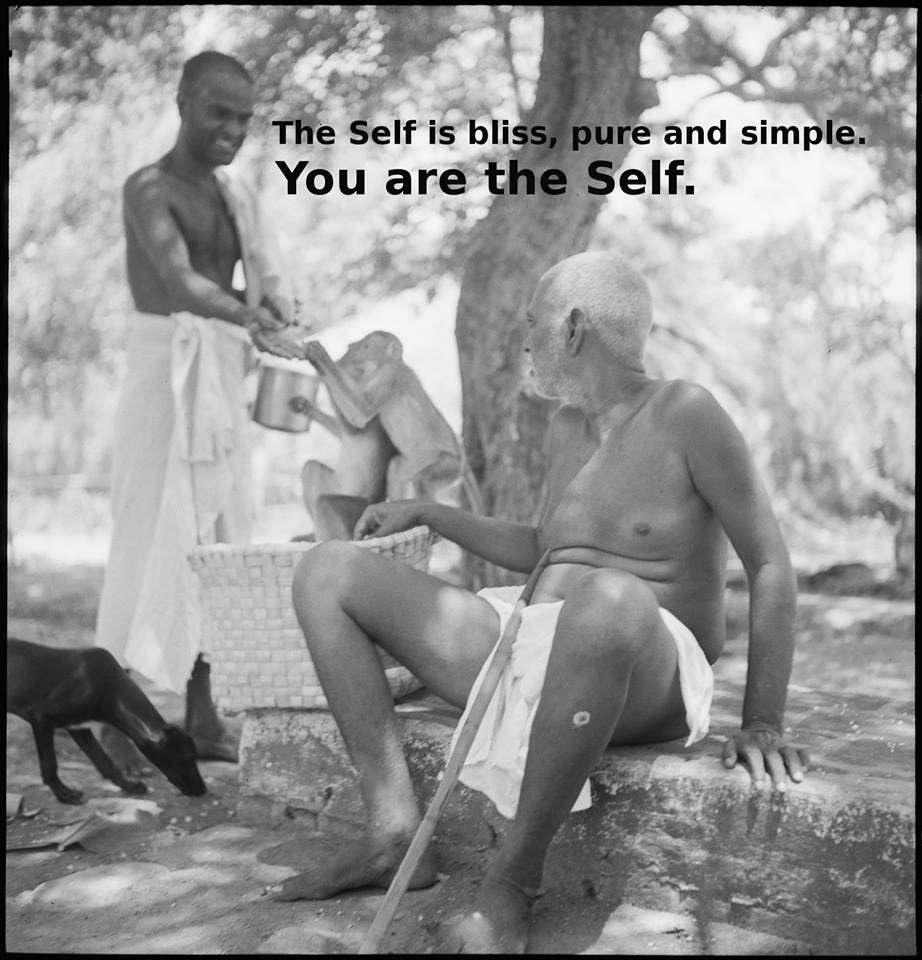
Sometimes people say that Nirvikalpa Samadhi is a state where there is no knower and known. That is really a half-truth. To capture the essence of Nirvikalpa Samadhi, it is better to say that in Nirvikalpa the KNOWER and the KNOWN are IDENTICAL. It is only pure consciousness that by its very nature is self-revealing and self-knowing.
Nirvikalpa in Sanskrit means “without thought or doubt or mental modification”. It is the absence of mental modification and presence of fullness of consciousness in Nirvikalpa Samadhi which allows for the clear recognition of the Self.
Self is both the Knower and the Known, the Seer and the Seen, without any duality. Self, being one without a second, is always self-knowing. There is no “other” for it to know. That is why we refer to the Self as Nirvikalpa. The reference to Nirvikalpa implies the nondual nature of the Self.
 Luthar.com
You must be logged in to post a comment.