Harsha's avatar

Removing the Dross from the Mind in Meditation: By Swami Sadasivananda

Posted by Swami Sadasivananda on his blog and reproduced here with his permission.
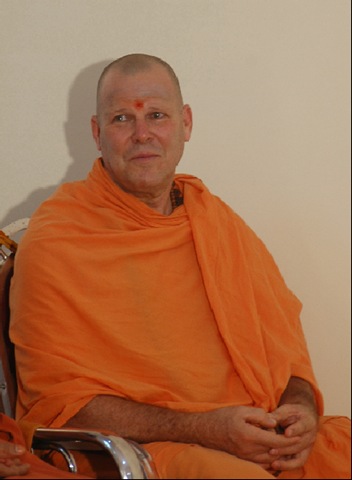
For more information on Swamiji, click here:   About Swami Sadasivananda

2

Fiery Gem, shining in all directions,
do Thou burn up my dross, Oh Arunachala!”
Five Hymns to Arunachala

In Talks, Sri Ramana Maharshi is being questioned concerning how to remove the obstacles (dross) within meditation.
D.: Impurities of limitation, ignorance and desire (anava, mayika, and kamya) place obstacles in the way of meditation. How to conquer them?
M.: Not to be swayed by them.
D.: Grace is necessary.
M.: Yes, Grace is both the beginning and the end. Introversion (meditation) is due to Grace: Perseverance is Grace; and Realization is Grace.

divd1

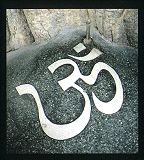
“Significance of Om, unrivalled — unsurpassed!
Who can comprehend Thee, Oh Arunachala?”
Five Hymns to Arunachala


“The purport of prescribing meditation on the pranava (OM) is this. The Pranava is Omkara…the advaita-mantra which is the essence of all mantras such as Panchakshara. In order to get at this true significance, one should meditate on the Pranava. This is meditation which is of the nature of devotion consisting in reflection on the truth of the Self. The fruition of this process is samadhi which yields release moksha  [liberation from all aspects of mental dross, ed. note], which is the state of unsurpassable bliss.” (Collected Works of Ramana Maharshi, 6th edition, Self Enquiry #28 p. 23-24)

divd1
Further in Talks #59, Bhagavan teaches us:
D.: Was Visvamitra a rishi?
M.: When contaminated [dross produced by excessive worldly attachment, ed. addition] he was not a rishi.
D.: Can he become a rishi even afterwards?
M.: Yes. By proper bhakti he could become a good rishi. Repentance and prayer will set him right.
D.: With all your penance for so many years what have you got?
M.: I have got what need be got. I see what need be seen.
D.: Can all see the same?
M.: I see only just what all do. It is immanent in all.
D.: Is this the way for seeing It?
M.: Method may be anything. From whatever directions the pilgrims may foregather, they must enter the Kaaba only by one route (passage) or all gather only to enter the Kaaba.
D.: Please tell me two upadesas on the way to salvation as known by you.
M.: What upadesa do I know? Everything is upadesa. Worship of God is the only upadesa.
india0061

divd1

Harsha's avatar

About Swami Sadasivananda

Sadasivananda

Sometime in early 2009, Alan Jacobs posted his first note to the Harshasatsangh group authored by Swami Sadasivananda.  In it Alan mentioned that Swamiji was available privately to answer any questions people might have, which I thought was quite generous of him, as time is such a limited commodity for most people, even those who populate the spiritual egroups.  Alan then followed this note with the first in a three part series on Surrender written by Swamiji, and I was touched by his combination of wisdom and wit, and his compassionate nature.   Since then, he forwarded a number of his articles to us and I began posting them to the blog with his permission not long afterwards. ( I do take the liberty of changing the format and the photos, but his words remain his. ) I look forward to them, because they are uplifting and sincere, and reach out to the reader with an honest clarity of expression. I always feel uplifted after I have read something he has written.  And I always feel as if he has included everyone…no student left behind!   His bio is below…

Swamiji was born in Florida in 1950. He studied comparative religion at a University in Colorado. He visited Sri  Ramanashramam in 1971. From that Darshan of Arunachala he determined to take Sanyas.In 1974 he received initiation in the disciple lineage of Puri Sankaracharya. He visited Anandamayi Ma’s Ashram while she was still alive and received the golden touch of this Joy-Permeated Mother, and remained under her guidance until her passing. He was there for thirty years giving service and practicing sadhana. Since then he has been living in Tiruvannamalai and is a frequent visitor to Ramanasramam where he is available, and gives advice to questioners. He has made a thorough study of Bhagavan’s teachings as well as those of Sri Ramakrishna.

Swami has also completed a new book regarding Bhagavan’s teachings on “Practical Sadhana” that isto be published by Sri Ramanashramam this spring. This book, as well as a great deal of additional works by direct disciples of Bhagavan including various other aspects of spiritual instructions are  posted on a website that is maintained by the Swami.

Harsha's avatar

Saddarsanam- Seeing the Truth is Being the Truth

Saddarsanam - a Unique Presentation by Sadacharya

What a special privilege it was for me when i attended the Talk on Sri Ramana Bhagwan’s ‘Saddarsanam’ as presented by Dr. K. Sadananda at the Chinmaya Mission Washington DC center on the  Memorial day weekend.

Sadaji is one of the moderators of the a Yahoo group ‘advaitin’ where he has contributed many valuable posts on the finer nuances of Adi Shankara Bhagvadapada’s  Advaita philosophy.  My only regret was I could not attend the First day of the Talks wherin Sadaji gave a commentary on almost 26 verses of this wonderful scriptural text on forty verses of ‘Reality’  ( aka as Ulladu Narpadu) . But the last 24 verses are equally important as they direct us to  the ‘Ultimate Reality‘ by a process of Atma Vichara – a unique contribution of Sri Ramana Bhagwan to  Sanatana Dharma.

Sadaji kept the 90 member strong audience ( consisting of all age groups from teens to adults)  spellbound with his commentary on the Sanskrit   verses with his English commentary. Sadaji  never once referred to any notes while reciting the verses . His presentation was flawless and spontaneous and he made it all very interesting by narrating humorous anecdotes, parables and real life experiences. Sadaji adopted a simple and direct approach in unique Ramana style in an easy to understand layman terminology while stating the profound Truth of Non Dual reality (Advaita).

The verses that appealed to me most were the verses on ‘Ego’ – of all the heads the demon  Ravana had , his ‘ego head was the last to fall! When that ego head collapsed on the ground , Realization dawned and Ravana was liberated! The sanskrit word for head is ‘masta’ and anything associated with the head is ‘masthisk’ ( the synonym for intellect /mind).

Here is verse 32 :

gavesanat prapaya hrdantaram tat
pated-ahanta paribhugna-sirsa
athaham-anyat sphurati prakrstam
nahamkrtis-tat parameva purnam

Having reached within the heart , by the search , the ‘I’ Notion whose head is broken falls . Then another ‘I’ which is the main one shines forth. It is not the ego but the supreme ‘Fullness’ alone.

The ‘ego’ is the cloud that is covering the ever shining Self , the Sun!

And when one hears this next verse , then you find the ‘key’ that is unlocking your heart ! in Tamil , Heart is refereed to as ‘ullam’ ! The word ‘ul’ has profound meanings in Tamil . Depending on the context ‘ul’  could mean being , thinking , heart and inner space , all associated with indivisible Oneness. Here , it is important to recall the very first verse of Saddarsanam aka as Ulladu Narpadu –

sat-pratyayah kim nu vihaya santam?
hrdy-esa cinta -rahito hrdakhyah
katham smarmas-tam ameyam ekam ?
tasya smrtis-tatra drdhaiva nishta . ( verse 1 )

Can  there be thoughts of the existence of objects without the existence principle ? (No) . The existence named as hrt is in the heart itself , free from thought . How can we remember that one immeasurable existence ? Its remembrance is in the form of firm abidance in it .

This is the first verse and that is the True vision of Truth ( Saddarsanam)

” Seeing the Truth is being the Truth”

The Washingtonians are indeed indebted to Sadaji for bringing the best ‘stimulus’ package in these troubled times.We would like to thank Sadaji for bringing the eternal message of  ‘Vedanta’ into the hearts of everyone,young and old , rich or poor . That is Sadaji’s gift to our community via the Platform of Chinmaya Mission.

It is rare to see Selfless Teachers like Sadaji spending two full days explaining and commenting on these Forty – all in the interest of ‘loka Sangraham’ ! ( the greater good for the community)!

A verse from Srimad Bhagwat gita comes to mind!

saktah karmany avidvamso
yatha kurvanti bharata
kuryad vidvams tathasaktas
cikirsur loka-sangraham ( 3:25)

As the ignorant perform their duties with attachment to results, similarly the learned may also act, but without attachment, for the sake of leading people on the right path

I am glad I did attend this camp and i wish all of you were there too ! What a wonderful ‘treat’ this retreat was ! Can you imagine learning the entire Vedanta within 40 verses ? Each verse is a gem and we thank Sadaji for placing this ‘treasure’ within our reach.

For those of you , who would like to read ‘Saddarsanam ‘ , you can order your own copy from Chinmaya mission . The commentary by Swami Tejomayananda is Divine.

May I now end this small tribute to the eternal Truth called ‘sanatana dharma ‘ with this immortal verse from upanishads ?

“OM Poornamadah Poornamidam Poornaad Poornamudachyate; Poornasya Poornamaadaaya Poornamevaavashisyate”.

Om Shanti ! Shanti ! Shantihi!

Harsha's avatar

Love Embracing the Beloved: By Swami Sadasivananda

By Swami Sadasivananda
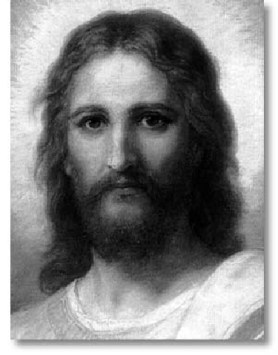
“In Thy Presence is fullness of joy,
The simplicity that is Christ.”
~
Brother Lawrence

This article contains the Spiritual Maxims of one Nicholas Herman of Lorraine, a lowly born and unlearned man; who, after having been a soldier and a footman, was admitted a lay brother among the Carmelites Deschausses (bare-footed) at Paris in 1666, where he served in the kitchen of the community. He was afterwards known by the name of Brother Lawrence. He died in February 1691, at the advanced age of eighty, after a life the true saintliness of which can be well realized from his words of guidance. ( Almost the entirety of this article is paraphrased or directly quoted from The Practice of the Presence of God, The Complete Book, by Brother Lawrence. )

“Herein you will not find set out a devotion which is merely speculative, or which can only be practiced in a cloister. No, there is an obligation laid on every man to worship God and to love Him, and we cannot carry out this solemn duty as we ought, unless our heart is knit in love to God, and our communion is so close as to constrain us to run to Him at every moment, just like little children, who cannot stand upright without their mother’s arms of love.”

Brother Lawrence, an earnest seeker of God, had a transforming experience at the age of 18. He was a changed person since then and till the last day of his life he was in commune with God to whom he surrendered himself entirely. His experience, and thus his guidance has a special significance as the theme is universal, and so is the endeavor to practice the Presence of God. The practice or sadhana explained herein is referred to thus in the Yoga Sutras of Patanjali; (I-23): “Isvarapranidhanadva”.

Brother Lawrence thus sought “Goodness”, in the highest sense of the word proclaimed by his Lord Jesus: “Only God is Good.” It is necessary to be good, but the good must then progress on to become godlike, to be a deva, a “shining one” filled with the Divine Light. Fixing their mind on God they make themselves living offerings. That is why the Manu Smriti (Laws of Manu) says that the greatest sacrifice is the offering of ourselves (purushamedha). And Patanjali says: “Samadhi is attained by offering our lives to God  (Isvarapranidhana).”

God is the essence and the apex of Consciousness, so Patanjali further says: “In Him is the highest limit of omniscience.” (Yoga Sutras 1:25) In seeking constant abidance with this highest limit of omniscience, Brother Lawrence eventually abandoned all previously set devotions except those prescribed to his station within the Carmelite Society. Often he said: “All that he had heard others say, all that he had found in books, all that he had himself written, seemed savorless, dull and heavy, when compared with what faith had unfolded to him of the unspeakable riches of God and of Jesus Christ. He alone can reveal Himself to us; we toil and exercise our mind in reason and in science, forgetting that therein we can see only a copy, whilst we neglect to gaze on the Incomparable Original. In the depths of our soul, God reveals Himself, could we but realize it, yet we will not look there for Him. We leave Him to spend our time in fooleries, and affect disdain at commune with Him, Who is ever present, Who is our King.”

Not only did Brother Lawrence perceive God as present in his soul by faith, but also in all events of life, whensoever they befell, instantly he could arise and seek the Presence of God. Yet he confessed that it was hard at first, that many a time he had been unmindful of this practice, but that, after humble prayer and confession to God of his failure, he had betaken himself to it again without trouble.

Of his life within God, his failures and attainments, he left a legacy of direction for those who would likewise seek “The Way, the Truth, and the Light (Life) in the Presence of God.” Thus his declaration most central to this undertaking was: “That the Presence of God can be reached rather by the heart and by love than by understanding. In the way of God thoughts count for little, love is everything.” mira30

“We search for stated ways and methods of learning how to love God, and to come to that love we disquiet our minds by I know not how many devices; we give ourselves a world of trouble and pursue a multitude of practices to attain to a sense of the Presence of God. And yet it is so simple. How very much shorter it is and easier to do our common business purely for the love of God, to set His consecrating mark on all we lay our hands to, and thereby to foster the sense of His abiding Presence by communion of our heart with His! There is no need either of art or science; just as we are, we can go to Him, simply and with a single heart.”

He no longer perplexed himself with thoughts of virtue, or of his salvation. He entirely forgot self; he never any longer thought of heaven or hell or his past sins or his deeds of striving for goodness and compassion. In the Presence of God he entered upon a perfect peace; after which he commended himself to God, as he used to say: “For life and for death, for time and for eternity – For we are made for God, and for Him alone.”

His one method of going to God and abiding in His Presence was to do all for the love of Him.

+++++++

When we enter upon spiritual life, we ought to consider thoroughly what we are, probing to the very depth. Though creatures made for God, we are prone to all manner of maladies and subject to countless infirmities, which distress us and impair the soul’s health, rendering us wavering and unstable in our humors and dispositions. We must believe steadfastly, never once doubting, that all such is from God and for our good; that it is God’s will to visit us therein.

“Good when He gives, supremely good;
Nor less when He denies.
Afflictions, from His sovereign hand,
Are blessings in disguise.”

Sri Ramana Maharshi, also declared this truth in conversation with Paramahansa Yogananda, evidenced in Talks #107:

Swami Yogananda: “Why does God permit suffering in the world? Should He not with His omnipotence do away with it at one stroke and ordain the universal realisation of God?”

Maharshi: “Suffering is the way for Realization of God.”

Swami Yogananda: “Should He not ordain differently?”

Maharshi: “It is the way.”

Brother Lawrence entreats us that we: “Must do all things thoughtfully and soberly, without impetuosity or precipitancy, with denotes a mind undisciplined. We must go about our labors quietly, calmly, and lovingly, entreating Him to prosper the works of our hands; thus keeping heart and mind fixed on God.

Sri Ramana Maharshi echoed this same truth when saying in Talks #91:

“The nature of the mind to wander. One must bring one’s thoughts to bear on God. By long practice the mind is controlled and made steady.”

“That useless thoughts spoil all: that the mischief began there; but that we ought to be diligent to reject them as soon as we perceived their impertinence to the matter at hand, or to our salvation; and return to our communion with God. When we are busied, as well as while meditating on spiritual things, even in our time of set devotion, whilst our voice is rising in prayer, we ought to cease for one brief moment, as often as we can, to worship God in the depths of our being, to taste Him though it be in passing, to touch Him though as it were by stealth. Since you cannot but know that God is with you in all you undertake, that He is at the very depth and center of your soul, why should you not thus pause an instant from time to time in your outward business, and even in the act of prayer, to worship Him with your soul, to praise Him, to entreat His aid, to offer Him the service of your heart, and give Him thanks for all His loving-kindness and tender-mercies?”

Brother Lawrence emphasizes that necessity is laid upon us to examine ourselves with diligence and to find out what are the virtues, which we chiefly lack, and which are the hardest for us to acquire. We should seek to learn the failures in virtue that most easily beset us, and the times and occasions, and through which associations we do most often fall. For the world, and association within it, is fraught with danger. So much so that reliance upon God’s grace is paramount.

“A soul is more dependant on grace, the higher the perfection to which it aspires; and the grace of God is the more needful for each moment, as without it the soul can do nothing. The world, the flesh and the association with evil join forces and assault the soul so straitly and so untiringly that, without humble reliance on the ever-present aid of God, they drag the soul down in spite of all resistance. Thus to rely seems hard to nature, but grace makes it become easy, and brings with it joy.”

In this same regard, Sanatana Dharma entreats us to “Seek satsanga…while abandoning dussanga.” (Narada Bhakti Sutras II: 42,43)

A proper understanding of the Sanskrit words satsanga (good association) and dussanga (evil association) is essential. Especially when applying them not only in the context of worldly associations, but as is more precisely scripturally intended, to associations within the mind. Here the spiritual maxim: “As above, so below… As without, so within” is applicable.

Copy (2) of radha-and-gopis-at-night

The gopis in satsangha with Radha, yearning for the Lord

While good association with others enables one to develop purity (sattwa) and is the gateway to Liberation, evil association intensifies distraction and inertia (rajas and tamas), and is the gateway to hellish conditions in life. But even more harmful to the soul is the effect of evil association. There is nothing so disastrous in an aspirant’s life as when evil association nourishes the mental impurities of anger, hate, greed, pride, egoism, selfishness, hypocrisy and passion. Once these mental impurities become strong through external nourishment, they become formidable enemies of the soul in and of themselves. They then no longer need to rely on external sustenance, for through mainly memory, imagination and fantasy they, as Brother Lawrence warns us, “assault the soul untiringly.”

+ + + + + + +

The Spiritual Maxims of Brother Lawrence systematically guides us through the means for attaining unto the Presence of God.

1. The first is a great purity of life; in guarding ourselves with care lest we should do or say or think on anything, which might be displeasing to God.

2. Second is a great faithfulness in the practice of His Presence, and in keeping the soul’s gaze fixed on God in faith, calmly, humbly, lovingly, without allowing an entrance to anxious cares and disquietude.

3. Make it your study, before taking up any task to look to God, be it only for a moment, as also when you are engaged thereon, and lastly when you have performed the same. And forasmuch as without time and patience this practice cannot be attained, be not disheartened at your many falls; truly this habit can only be formed with difficulty, yet when it is so formed, how great will be your joy therein.
4. Let us mark well, however, that this intercourse with God is held in the depth of our being; there it is that the soul speaks to God, heart to heart, and over the soul thus holding converse there steals a great and profound peace. All that passes without concerns the soul no more than a fire of straw, which the more it flares, the sooner burns itself out; and rarely indeed do the cares of the world ever intrude to trouble the peace that is within.

5. It is here therefore, in the heart, that we ought to strive to make a habit of this gaze on God; but that which is needful to bring the heart to this obedience we must do, as has been said, quite simply, without strain or study.

6. When the mind, for lack of discipline when first engaged in this practice, has contracted bad habits of wandering and dissipation, such habits are difficult to overcome, and commonly draw us, even against our will, to things of earth. One remedy for this is to humbly offer prayer to God. A multiplicity of words in prayer is not advised; discursive forms of prayer are often an occasion for wandering.

7. One way to recall easily the mind in time of prayer, and to preserve it more in rest, is not to let it wander too far at other times.

8. This practice of the Presence of God is somewhat hard at the outset, yet, pursued faithfully, it works imperceptibly within the soul most marvelous effects; it draws down God’s grace abundantly, and leads the soul insensibly to the ever-present vision of God, loving and beloved, which is the most spiritual and most real, the most free and most life-giving manner of prayer.

9. Remember that to attain this state, we must control the senses, inasmuch as no soul, which takes delight in earthly things above those in their Creator, can find full joy in the Presence of God; to be with Him we must leave behind the creature.

Thus, Brother Lawrence compassionately entreats us to ‘seek and find’, to ‘knock and the door will be opened unto us’, for his final guidance is:
“All things are possible to him who believes, they are less difficult to him who hopes, they are easier to him who loves, and still more easy to him who practices and perseveres in these three virtues…

Believe me, count as lost each day you have not used in loving God.”
Just prior to the final moment when this lover of the Beloved passed away in the embrace of His Lord, a brother asked him if he was at ease and what his mind was busied with? He said:

“I am doing what I shall do, through all eternity – blessing God, praising God, adoring God, giving him the love of my whole heart. It is our one business, my brethren, to worship Him and love Him, without thought of anything else.”

The brethren then begged him to entreat of God for them to possess the true spirit of prayer. Brother Lawrence, without pain or struggle, without losing in the slightest the use of any of his faculties, in perfect peace and calm replied:

“There was need of labor on his part also
to make himself worthy of such a gift.”

These were his last words.  untitle

You can access Swami Sadasivananda’s website at   http://www.ramanateaching.org/

Harsha's avatar

Kundalini Shakti and Spirituality: By Dr. Harsh K. Luthar

The awakening of Kundalini Shakti is one aspect of spiritual life on many of the yogic paths. It allows for the exploration of  manifesting consciousness at different levels of existence.

What yogis refer to as Kundalini Shakti in the East has different names in various religious traditions. I believe that in Christianity, this power is referred to as the Holy Spirit.

All these practices such as centering prayer, meditation, concentration, devotion, praying to the Lord with heart felt intensity over a period of time can evoke a powerful response from the fundamental primordial divine intelligence that sits at the base of all life and in our heart.

In Yoga (see Patanjali’s Yoga Sutras), the first principle is Ahimsa or nonviolence. That should be the proper foundation on which to build one’s life and to experience the manifestations of the divine intelligence which we refer to as the Kundalini Shakti.

Normal awakening of Kundalini Shakti allows one to balance the spiritual and the worldly aspects of life. Through Kundalini Shakti, one can come to understand the role of conditioned consciousness  in desiring, creating, and consuming various types of experiences, both of the spirit and of the world.

The spiritual life may integrate visions of angels, saints, the divine feminine as the Goddess, and other forms of  super conscious experiences.

However, the ultimate aim of a life that is lived well is to attain the “peace that passeth all understanding”. That perfect peace comes from knowing our original and pure nature and abiding effortlessly in that.

On the path of Kundalini Yoga, there are many gimmicks and also charlatans who pretend to be Kundalini masters and so forth. If your spiritual search is sincere and free from the greed to obtain various psychic and mental experiences, you can easily avoid such things.

Some people are attracted to telepathy, mind reading, fortune telling, astrology, and such phenomena. There is nothing wrong with such desires but where can these really lead us in the long run?

By remaining pure to the ideal of knowing deeply the truth of your being and existence, gradually you will lose your attraction to small and superficial things which dance in the mind and cause ripples.

Whatever religion or spiritual path you follow with Ahimsa (nonviolence) as the foundation of your life and gentle and kind awareness as your support, it will bring you to the destination which is here and now. The kingdom of heaven  exists in this very moment.

Harsha's avatar

On Prayer-From the Words of Mahatma Gandhi by Swami Sadasivananda

From a post by Swami Sadasivananda on http://blog.spiritualpracticeofbhagavan.org/

800px-Marche_sel

“If we had attained the full vision of Truth,
we would no longer be mere seekers,
but have become one with God, for truth is God…
Prayer has saved my life.
Without it I should have been a lunatic long ago.”

“The meaning of prayer is that I want to invoke the Divinity in me. You may describe it as a continual longing to lose myself in the Divinity which compels us all. Prayer really is a complete meditation and melting into the higher Self, though one may occasionally lapse into it, as a child would call out to its mother “Ah, Ma!” In such an instance, the greater the distance between the child and its Mother, the greater the longing within the heart of the child. Thus, in the mind of the child, the Mother is present in thought. And thought, you know, has a greater velocity than light. Therefore though the distance between Him and me is told to be so incalculably far, in truth He is so very near.

There is an eternal struggle raging in man’s breast between the powers of darkness and light, and he who has the sheet anchor of prayer to lay upon will not be overcome by the powers of darkness. The man of prayer will be at peace with himself, and with the whole world. The man who moves about the world without a prayerful heart will be miserable, and also will make the world miserable. It is a universal experience that every calamity brings the sensible man down on his knees. Millions of human beings call out for God through prayer, thus the calamities of the world are seen as a means for self-improvement.

Prayers are the only way of bringing about orderliness, peace and repose in our daily practice. He who hungers for the awakening of the Divine in him must fall back on prayer.  But it is not the recitation of a set formula. It is better in prayer to have a heart without words, than words without a heart. It must be in clear response for the Spirit that hungers for us. Even as a hungry man will relish a hearty meal, a hungry soul will relish a heartfelt prayer.

I will give you a bit from my own experience, and from that of my companions, that he who has experienced the magic of prayer may go days together without food, but not a single moment without prayer. For without prayer, there is no peace.  It is so needful for me. When it springs from the heart. prayer needs no speech. It is an unfailing means of cleansing the heart from passion. But it must be combined with an atmosphere of humility. Our prayer is our heart’s step that reminds us that we are helpless without God’s support. The greatest of human endeavor is of no effect if it has not God’s blessing behind it! Real prayer is an absolute shield and protection against evil. But God does not always assent by our very first effort through prayer. We have to strive against ourselves. We have to believe in spite of ourselves. We have, therefore, to cultivate inimitable patience, if we are to realize the efficacy of the prayer. There is the darkness, disappointments and even worse, but we must have courage in us to battle against all these and not succumb to cowardess. There is no such thing as retreat for the man of prayer.

It may take time for the recitation to come from the heart, even as the seed that is sown has to be nurtured and bears fruit only in due season. If the desire to have God within us is there, progress however slow, is bound to be. Man cannot be transformed from bad to good overnight. God does not exercise panic. He too is within His own law. His law is written on the tablets of the heart. There can be no fixed role laid down as to when a devotional act should take place. It depends on individual temperaments. There are precious moments in one’s daily life, these are exercises intended to soften and humble and enable us to realize that nothing happens without His will, and that we are but clay in the hands of the Potter. These are moments that one can use when one’s need confesses ones weakness, asks for forgiveness, and strength to be and to do better. One minute may be enough for some; 24 hours would be too little for others.  For those who are filled with the presence of God in them, to labor is to pray. Their life is one continuous prayer, or act of worship. For those who act only to sin, to indulge themselves, and to live for self, no time is too much.  If they are patient and have the will to be pure, they would pray until they feel the definite purifying presence of God within them.

For us ordinary mortals, there must be a middle path between these two extremes. We are not as exalted to be able to say that all of our acts are a dedication, nor perhaps are we so far gone as to live purely for self. Hence all religions have set apart time for general devotion. I believe that prayer is the very soul and essence of religion and therefore prayer must be the very core of the life of man.”

A note from Swamiji on the source of the quotes above:  ” This was from a transcription I was doing of a speech,
in which the speaker was reading from an unknown compilation of all 100 of Gandhiji’s volumes!
But the words of this saint, not just Mahatma, are unmistakably Divinely inspired.

Photo from http://en.wikipedia.org/wiki/File:Marche_sel.jpg

Harsha's avatar

Undifferentiated – Satsang Discourse by Nome

Satsang, April 6, 2008

Om, Om, Om (Silence)

Undifferentiated and, thus, doubtless is Being, which is the real Self. Every doubt, every notion of illusion, is based upon some false supposition of differentiation, as if that which alone is could become two or other than what it is. A doubt is always of differentiation, and the resolution of the doubt is always the relinquishment of the supposed differentiation.

Thus it is with questions and answers. The explanations in the teaching are, in one sense, based on the differentiation, yet the purpose of them is the dissolution of that very differentiation. The primary differentiation is the assumed identity as an individual, “I.” This assumed differentiation is integral to every other differentiation, such as a conception of a mind, a conception of a world, or the conception of anything else. The dissolution of the world and the subsidence of the mind are the abandonment

of this false differentiation. It cannot be negated in an objective fashion because such presupposes the differentiation as existent, and that is the very thing that one wishes to abandon.

Abandonment of differentiation is the Realization of the Truth. The direct approach is the inquiry into your own nature: Who am I? This inquiry does not presuppose differentiation and then attempt to explain or transform such. The inquiry asks if there is any such differentiation, and, since the way is subjective and not objective, the inquiry is, “Who am I to perceive some difference? Who is it that perceives a mind, and who is it that supposedly perceives a world?”

The undifferentiated state is the state of Reality. It is innate.

(silence)

The natural, or innate, Self does not transform itself into anything else. There is nothing else to act upon it to transform it into something that it is not.

(silence)

If your desire is to realize the Supreme Truth, to know Reality as it is, find within that which has no birth, no death, no change at any time, which does not undergo any kind of modification or transformation, and which does not enter or exit anywhere. The one who finds that is himself that. It is not that you become Brahman, but, rather, Brahman is what you are. Such is the immutable Self.

If differentiation appears to persist for you, inquire for whom it is. Who am I? Upon inquiry, there is Self-Knowledge. In Self-Knowledge, you realize that, not only does differentiation not persist, but it did not start. That which truly is always is just as it is.

(silence)

———————————————————————————–

Nome is an American spiritual teacher of Advaita Vedanta, in the tradition of 20th Century Indian sage Ramana Maharshi.

clip_image001

Biographical Info

Nome was born on January 23, 1955 in Long Island, New York, and spent most of his childhood in New Jersey. His family was opposed to all religions.

Early Spiritual Experiences and Practice

Despite having no training in any religious tradition, Nome’s first spiritual experience, of nirvikalpa samadhi, occurred at age 15 spontaneously in a park in New jersey. At age 16, without graduating from high school, he left his home and family in New Jersey and traveled to California in search of enlightenment.

In San Francisco Nome met Swami Swanandashram, who introduced him to the traditional scriptures of Hinduism such as the Upanisads, the Avadhuta Gita, and the Astavakra Gita, and to the teachings of Adi Sankara and Sri Ramana Maharshi.

After three years of intense spiritual practice (Ramana’s Self-inquiry), on May 14, 1974, at 19 years of age, Nome gained Self-Realization.

Early Teaching

For several years Nome was mainly silent, and sometimes answered questions from spiritual seekers.

In 1978, a group of spiritual seekers, first called “The Avadhut Ashram,” formed around Nome. He held satsang in Boulder Creek, Santa Cruz and San Francisco. Later, the Society of Abidance in Truth was created from this group, and a temple, dedicated to Sri Ramana Maharshi, was built in Santa Cruz, CA, USA, and opened in 1989. Satsang and retreats have been offered in this temple since that time.

Books – Translations, commentaries and original works

Although he had no formal education in Hinduism, Nome dedicated himself to reading and studying the classical scriptures and the Sanskrit language. From 1988 to 2001, Nome worked with Dr. H. Ramamoorthy, a scholar of Hinduism and the Sanskrit and Tamil languages, to translate classic Advaita Vedanta works into English (many for the first time). This work encompassed xx manuscripts, and continued until the death of Dr. Ramamoorthy at age xx in 2001.

Many works have been published, including classics of Hindu thought such as both the Sanskrit and the Tamil versions of the Ribhu Gita, and Sankara’s Svatmanirupanam. There are more manuscripts still to be published. This collaboration produced the only complete English translation of the Tamil-language Ribhu Gita, titled Song of Ribhu. This work has been reprinted in India by Ramanasramam, and has been translated into Hindi and Italian.

Original written works by Nome include Timeless Presence and Self-Knowledge. A commentary on Sri Ramana’s “Self-Inquiry,” Essence of Inquiry has also been published and is available  from the Ramanasramam book store.

Since the founding of SAT

Nome was invited by Sri Ramanasramam to participate at the 1996 centenary celebration of Sri Ramana Maharshi’s arrival at Arunachala. He has also spoken at The Ramana Centre for Learning in Bangalore, by request of A.R. Natarajan. Both Ramanasramam and The Ramana Centre for Learning have published books written or translated by Nome.

More about SAT can be found at www.satramana.org. More about Nome is on Wikepedia, at http://en.wikipedia.org/wiki/Nome,_Spiritual_Teacher 

Related Posts:

Nome, an American teacher  of Sri Ramana’s Self-inquiry
The Ribhu Gita

Harsha's avatar

AHAM (I AM) Is The Essence Of Mantras: By Sri Venkata Sriram

Edtior’s Note: The following post appeared in the Advaitin list on Yahoo Groups and is reprinted with the permission of the author, Sri Venkata Sriram. In this article Venkat-Ji speaks about the idea of AHAM as the essence of Mantras, Vedas, and Upanishads. AHAM translated from Sanskrit means, “ME” or “I AM” and refers to the principle of I-NESS that is inherent in the existence of all beings as it is their core. Sri Bhagavan Ramana’s teaching involving the Inquiry, “Who Am I?” is essentially a meditation on AHAM, which in the Advaitic approach leads to Self-Realization. I have made only minor edits in the original version. Please bring to my attention any errors and these will be corrected right away.

AHAM (I AM) Is The Essence Of Mantras

It is to be noted that *who am I* is not a *intellectual* enquiry to be pursued.  It is the upasana of *Aham* which is the upasana of Vak – the Great Goddess of Speech which is described in Vedas as Vak / Tripurasundari.

According to legend, the 14 Maheshwara Sutras were revealed to Panini, Vyaghrapada, Upamanyu and other sages by Shiva. Panini then composed his grammar called Ashtadhyayi which is based on the 14 Sutras that were revealed during the Cosmic Dance of Shiva. They are also called the Maheshvara Sutras. At the end of the Shiva’s Cosmic Dance, he sounded his Damaruka 14 times. And from these 14 Sounds of Damaruka, evolved 14 Sutras. These 14 sutras encompass the phonetics of the Sanskrit language.

The first 4 sutras cover all the vowels.  They are :

1) a i u n
2) r l k
3) e o n
4) ai au ch.

Omit the last letter of the 4 sutras and they are a, i, u, r, l, e, o, ai, au. The entire 16 vowels from A to AHA have emanated from these letters.

The Last 10 sutras include all the consonants. They are :

5) h y v r t
6) l n
7) n m n n n m
8.) jh bh n
9) gh dh dh s
10) j b g d d s
11) kh ph ch th th ca t t v
12) k p y
13) s s s r;
14. h l.

Omit the last letter of these 10 sutras, they become entire 34 consonants ie., from K to HA. The SRICHAKRA is constructed keeping in view these entire set of 14 sutras.  Ashtadhyayi divides these 14 formulae into 43 letters which become the 43 Angles of Sriyantra.

The entire Matrikas (letters) ie., 16 vowels and 34 consonants have evolved from these 14 Maheshwara Sutras.

The 16 Vowels and 34 Consonants have become 50 Matrikas of Letters.. They are the Saktha Pitas of Sridevi.  Every Matrika has a distinct Power and Seat of Origin in our Body. These Matrikas are presided by a distinct and corresponding Devis that govern that particular seat of origin (Pita) in our Body. These Cosmic Powers that preside over each Matrika is invoked during the Antarmatrika and Bahir Matrika Nyasas.

It is to be noted that the Kamakala Akshara is derived from these 14 sutras. This *AHAM* is the essence of all the Mantras, Vedas, Upanishads as these fall in between A (WHICH IS 1ST VOWEL) AND H (WHICH IS THE LAST CONSONANT). From the first sutra, A is taken and from the last Sutra H is taken. Bindu is added and it becomes AHAM.

This is the AHAM swarupa or the I-NESS of Maheswara which is of the form of CHIT. It is from this AHAM of the Siva, the entire Cosmos in the form of Matrikas have evolved. This AHAM is the KAMAKALA. The entire vowels and consonants fall in between this A and H.

The Tantric script encodes this principle of AHAM and depicts as a INVERTED TRIANGLE which is a representation of Triputi or Triad in the form of External Object perceived, Knowledge or Perception, Observer or Perceiver otherwise called Jnatr-Jnana-Jneya.

Veda & Tantra paves the way for the piercing of this Triad which is called TRIPUTI-BHEDANA. And the methodology employed is *AHAMGRAHOPASANA* through Sagunopasana.

When Vashishta Ganapati Muni pleaded for guidance in sadhana, Bhagavan Ramana asked the Muni to enquire into the Source of the Panchakshari Mantra (NAMA SIVAYA) which is invariably collection of 5 letters in the form of Speech.

The root of all mantras in the form of Speech is *A-HA-Bindu*.  A is the 1st vowel; Ha is the Last Consonant; M-the Bindu; which is AHAM. This is what is the essence of VAK Sukta in Rg Veda which starts with *Aham rudrebhir vasubhischarami……….*.

Bhagavan Ramana Maharishi wants us to catch hold of this AHAM as it is the source of Speech and which shines in the cave of our heart. (vide ref: Ramana Gita).

The speech has 4 stages of evolution whose order of evolution is : 1) Para 2) Pashyanti 3) madhyama 4) Vaikhari.  Vaikhari is the Articular Sound what we hear.  The source of this Articulate Sound is Para which originates from Heart Cave where throbs our consciousness in the form of *AHAM* (hridaya kuhara madhye aham aham iti sphurantam…).  It is this throb or Antah sphurana, Bhagavan urges us to realise.  It is this *Aham throb* or *Antah-sphurana* which is *Brahma*.  Hence, Bhagavan Ramana says in ECSTASY *Aham* *Brahma* *Asmi*.

It is verily this *I* which shines in the heart cave as *Aham* which Bhagavn says is Brahman.

Now, what does Acharya Sankara say about the Upasana of *Aham*, let us see.

Acharya Sankara gives us a wonderful hymn for meditation, contemplation and reflection which is called *Dakshinamurthy Stotram* (DS).  Acharya has divided the entire hymn into 3 principles  : Jiva, Jagat & Ishwara. Later, he gives a clue for the Upasana which is quite *mandatory*  for those who are into the upasana of  the *aham* principle. What exactly is this *aham*, is wonderfully given in the sloka *bAlyAdiShvapi…….AHAM iti antahsphurantam sadA….* of DS.

Now, how should we enquire into the root of this *aham* or *I-ness*? Acharya has hinted in the subsequent sloka and the type of upasana to be undertaken. It is the *ahamgrahopasana* along with Sagunopasana which is suggested here.  When this upasana reaches the state of culmination, it is the realisation in *ECSTASY* that this *aham* or *antah-sphuraNa* is Brahman which is the essence of Mahavakya *aham brahmasmi*.

Mahavakyas are the *GREAT UTTERANCES IN ECSTASY* by our vedic seers.

Even in deep reflection and sadhana, when the upasaka reaches the highest pinnacle of spiritual illumination, both the terms *aham* and *brahma* drops off and what remains is ASMI.  And this state is wonderfully explained in the Rg veda in  the *Hymn of Creation or *Nasadiya Sukta*.

I repeat: Mahavakyas are the *GREAT UTTERENCES IN SPIRITUAL ECSTASY*.

Acharya Sankara also hints in his Sutra Bhashya about the sagunopasana..  He says:

“apratyAkhyAyaina kAryaprapancham, PARINAMAPRAKRRIYAM CHA shrayati SAGUNESHuPASANESHUP AYOKSHYA te iti”.

Also, in the 1st adhyaya for the sutra “tad adhInatvA darthavat”, Acharya Sankara explains the principle of Sakti to be the upAdana kAraNa for paramEshwara in the Creation. Acharya Sankara emphatically says that it is the Parinamavada to be adopted to achieve the Sagunopasana Siddhi and not for kArya-prapancha (jagat) siddhi.

Acharya Sankara in his sutra bhashya says that parinamavada (theory of transformaton) can be adopted for the purpose of saguna upasana which is the upasana of maya-sabala brahman where the substratum is Brahman only. When the upasana is ripe, and upon the dawn of right knowledge, the “reality” which the “ignorant” people perceive WOULD BECOME an “illusion”.

So, what i conclude is that Bhagavan Ramana’s Teaching is not new and is not an *Intellectual Enquiry*. It is verily the *Veda Vidya* handed down to us. Bhagavan embodies in himself the *Spirit of Vedic Seer*.  Bhagavan’s teaching is the upasana of Vak.

Bhagavan was verily the form of Dakshinamurthy who taught the Upasana of Vak in the form of *Silence*. It is this *silence* which is called Para-vak. It is this Para-Vak which sports in the deep chasms of our heart as *I* or *Aham*.

The vedas and Tantra declare this Para-Vak as Tripurasundari – which is the Great Triangle in Sriyantra and the substratum of this Para-Vak is the Absolute Principle in the Form of Shiva which is depicted as Circle or Bindu in Sriyantra.

Sriyantra is the diagrammatic representation of AHAM and Srividya is the Upasana of Vak in the form of *Ahamgrahopasana*.  Hence, to evolve a method for this *ahamgrahopasana*, Srividya Tantra came into being.

It is interesting to note that Bhagavan Ramana himself did the prana pratishta of Sriyantra at the samadhi of His mother.

tamai shri gurumurtaye namah idam shri dakshinamurthaye.

with regards,
sriram

Harsha's avatar

“ ALL IS ONE ” – No.1 by V Ganesan

This posting is  from a series of ‘sharings’ given by V Ganesan in the winter of 2008/2009 in Tiruvannamalai.

=================================================================================================

How to give up the “me” ? Even to contemplate on its being given up, poses us with an enormous hurdle. No theoretical methods, postulated throughout the past centuries seem to have helped us, at all. The only solution to this Herculean problem, perhaps, lies on a practical, experiential approach to it.

Who will guide us with a direct and simple, yet natural experience-oriented practical solution to the dissolution of the “me” ? Most assuredly, Bhagavan Ramana has already solved the insoluble conundrum !

ANNAMALAI SWAMI had elicited it from the Great Guru, Bhagavan Ramana ; and, years later, he shared it with fellow-seekers. Annamalai Swami came to Sri Bhagavan in 1928 and was made an attendant to the Master. Noticing the potentiality in him as a hard worker, he was entrusted with the supervision of all important construction projects of the then growing up ‘Sri Ramanasramam’ . He did it with an exemplary zeal, under the direct stewardship of Sri Bhagavan, for ten years — from 1928 to 1938.

In 1938, he had a great spiritual awakening through an embrace of him by Sri Bhagavan.** That totally changed him. Then on, he wanted to dedicate his whole time in meditation and contemplation. He sought the guidance of the Master. He approved of his living alone outside the Ashram. Sri Bhagavan encouraged him to construct a dwelling at the adjacent ‘Palakottu’, helping him with practical advices during the construction. Bhagavan gave a few personal advices, as well; for instance, not to move out towards the southern side of his tenement, but should wander about only towards the north, at the foot of the Hill. Annamalai Swami studiously put that instruction into daily practice to its very letter – he had not stepped into the road, which lay on the southern side, the rest of his life ! He had not also moved out of Arunachala, even for a single day !

In Annamalai Swami’s own words : “I went to Bhagavan’s bathroom to help him with his morning bath. Madhava Swami and I gave him the usual oil bath and massage. When the bath was over, Madhava Swami asked a question : ‘ Bhagavan ! The people who take Ganja Lehiyam [ an Ayurvedic medicine whose principal ingredient is cannabis ] experience some kind of Ananda [ bliss ] . What is the nature of this Ananda ? Is it the same Ananda the scriptures speak of ? Bhagavan replied: “Eating this Ganja is a very bad habit”. Then, laughing loudly, he came over to me, hugged me and called out : Ananda ! Ananda ! This is how these Ganja-taking people behave ! It was not a brief hug. After the first few seconds I completely lost all awareness of my body and the world. Initially, there was a feeling of bliss and happiness, but this soon gave way to a state in which there were no feelings and no experiences. I did not lose consciousness, I just ceased to be aware of anything that was going on around me…..This experience completely changed my life. As soon as I regained normal consciousness I knew that my working life at the Ashram had come to an end.”

Sri Bhagavan told him to lead a quiet, reclusive life and to meditate continuously on the Self. After many years of arduous and unremitting effort, he was able to stabilize himself in Self-Awareness, uninterruptedly and with effortless ease. Annamalai Swami pleaded with the Maharshi as how to give up the ‘me’ . He used the term ‘the little self’ instead of the ‘me’ . The Master not only gave him an answer but also totally eradicated the ‘me’ in him. This is well brought out through a dialogue a Westerner had had with Annamalai Swami, long after the Master had dropped the body.

Question : What is the easiest way to be free of ‘the little self ’ ?

Annamalai Swami : Stop identifying with it. If you can convince yourself, ‘This little self is not really me ’ , it will just disappear.

Q : But, how to do this ?

AS : The ‘little self’ is something which only appears to be real. If you understand that it has no real existence it will disappear, leaving behind it the experience of the real and only Self. Understand that it has no real existence and it will stop troubling you.

Consciousness is universal. There is no limitation or ‘little self’ in it. It is only when we identify ourselves with and limit ourselves to the body and the mind that this false self is born. If, through enquiry, you go to the Source of this ‘little self’ , you find that it dissolves into nothingness.

Q : But, I am very accustomed to feel ‘ I am this little self ’ . I cannot break this habit merely by thinking ‘ I am not this little self ’ .

AS : This ‘little self’ will give way to the real Self only when you meditate constantly. You cannot wish it away with a few stray thoughts. Try to remember the analogy of the rope which looks like a snake in twilight. If you see the rope as a snake, the real nature of the rope is hidden from you. If you see only the rope, the snake is not there. Not only that, you know that there never was a snake there. When you have that clear and correct perception that the snake never at any time existed, the question of how to kill the snake disappears. Apply this analogy to the ‘little self’ that you are worrying about. If you can understand that this ‘little self’ never at any time had any existence outside your imagination, you will not be concerned about ways and means of getting rid of it.

* * * * * * *

Bhagavan Ramana clearly points out that there is only one way not to be affected by the miseries caused by the ‘me’ :

Talks No.532 :

Devotee : Is there no way of escape from the miseries of the world ?

Maharshi : There is only one way and that consists in not losing sight of one’s Self, under any circumstances.

To enquire “Who Am I ?” is the only remedy for all the ills of the world. It is also perfect Bliss.

**************************

Why has Sri Bhagavan been consistent in insisting on one experiencing the Self ?

Talks No.536 :

“The person soaked in the “I-am-the-body” idea is the greatest sinner and he is a suicide. The experience of “I-am-the-Self” is the highest virtue. Even a moment’s dhyana to that effect is enough to destroy all the stored up age-old tendencies [ sanchita karma ] . It works like the Sun before whom darkness is dispelled. If one remains always in dhyana , can any sin, however heinous it be, survive his dhyana ? ”

*************************************

Bhagavan Ramana not only explained why one should do dhyana but also insisted that one should constantly be in touch with one’s Self.

Talks No.540 :

Once Annamalai Swami asked : There is more pleasure in dhyana than in sensual enjoyments. Yet, the mind runs after the latter and does not seek the former. Why is it so ?

M : Pleasure or pain are aspects of the mind only. Our essential nature is happiness. But we have forgotten the Self and imagine that the body or the mind is the Self. It is that wrong identity that gives rise to misery. What is to be done ? This vasana [tendencies] is very ancient and has continued for innumerable past births. Hence it has grown strong. That must go before the essential nature, viz., happiness, asserts itself.

***************************

Talks No.541 :

A certain visitor asked Sri Bhagavan : There is so much misery in the world because wicked men abound in the world. How can one find happiness here ?

M : All are gurus to us. The wicked say by their evil deeds, ‘ Do not come near me ’ . The good are always good. So then, all persons are like gurus to us.

****************************

Should one not run away to solitude to obtain peace ?

Talks No.542 :

Annamalai Swami asked : I often desire to live in solitude where I can find all I want with ease, so that I may devote all my time to meditation only. Is such a desire good or bad ?

M : Such thoughts will bestow a janma (another birth) for their fulfillment. What does it matter where and how you are placed ? The essential point is that the mind must always remain in its source. There is nothing external which is not also internal. The mind is all. If the mind is active, even solitude becomes like a market place. There is no use closing your eyes. Close the mental eye and all will be right. The world is not external to you. The good persons will not care to make plans previous to their actions. Why so ? For, God who has sent us into the world has His own plan that will certainly work itself out.

******************

In the day-to-day working, one generally experiences that doing good to others one suffers. On the other hand, one doing wicked deeds enjoys happy environments and success. How is it ? This is a common doubt, to all !

Talks No.546 :

Annamalai Swami asked : A person does something good but he sometimes suffers pain even in his right activities. Another does something wicked but is also happy. Why should it be so ?

Maharshi : Pain or pleasure is the result of past karma (past actions) and not of the present karma. Pain and pleasure alternate with each other. One must suffer or enjoy them patiently without being carried away by them. One must try to hold on to the Self. When one is active one should not care for the results and must not be swayed by the pain or pleasure met with occasionally. He who is indifferent to pain or pleasure can alone be happy.

******************************

Why did Sri Bhagavan repeatedly emphasize the efficacy of “Self-enquiry” ?

Talks No.551 :

A man asked Sri Bhagavan : “How is it that Atma Vidya is said to be the easiest ?”

M : Any other vidya (learning) requires a knower, knowledge and the object to be known; whereas this does not require any of them. It is the Self. Can anything be so obvious as that ? Hence it is the easiest. All that you need do is to enquire, “Who Am I ?”.

A man’s true name is Mukti (Liberation) .

******************

The topic chosen for this session’s “Sharing” is entitled : “All Is One” . What is the significance ? “All Is One” is an old Tamil publication commended by Sri Bhagavan. This tiny book incorporates ideas of immense use to spiritual aspirants, at every level and of any faith. Sri Bhagavan himself had gone through it and given chapter headings for the benefit of seekers. He told Annamalai Swami to read it “if he desired Moksha (Emancipation) ” .

In our next session, we will further deal with it, perhaps, bringing out the worth and greatness of the work.

———————————————————————————————————————————————

***********************************************

Related posts:

Satsang with Ganesan
Self nature, Faith and Attention
Wisdom and Action (No. 1)
Wisdom and Action (No. 2)
Wisdom and Action (No. 3)

V. Ganesan Bio

HPIM9540

Born in 1936, up to the age of 14 years old, Ganesan grew up in the presence and proximity of Bhagavan Sri Ramana Maharshi. His sacred memory of the Great Master is rich in its content; and, even at that tender age he could see Sri Ramana as the greatest compassionate human being.

On April 14, 1950 – the day the Great Master chose to leave the body – the adolescent Ganesan stood near the entrance to the room where Sri Ramana was lying and was fortunate to witness the brilliant flash of Light that later moved towards the top of the Holy Hill – Arunachala.

Ganesan obtained a Master’s Degree in Philosophy; and, then came to stay permanently at “Sri Ramanasramam, Tiruvannamalai” – the sacred abode of Sri Ramana Maharshi – taking care of the Old Devotees of Sri Ramana. He did it as his sole sadhana (spiritual practice). In that way, he collected the reminiscences of Sri Maharshi from those Old Devotees which have never before been recorded.

His close contacts with sages and saints, including Swami Ramdas, Mother Krishnabai, J. Krishnamurti, Nisargadatta Maharaj and Yogi Ramsuratkumar, he says, have deepened and widened his understanding of the ‘Direct Teaching’ of the Maharshi. However, he feels himself to be an insignificant ‘dust’ at the Holy Feet of Bhagavan Ramana.

He has traveled widely and spread the ‘Direct Teaching’ of Sri Ramana Maharshi, in its pristine purity, wherever he was invited to give talks.

He has authored a few books on the life and teaching of Bhagavan Ramana. Among others, “Purushothama Ramana”, “Be the Self”, “Moments Remembered”, “Direct Teaching of Bhagavan Ramana” and “Practising Self-Enquiry” , are very popular.

Harsha's avatar

What is Saguna and Nirguna Brahman? By Dr. Harsh K. Luthar

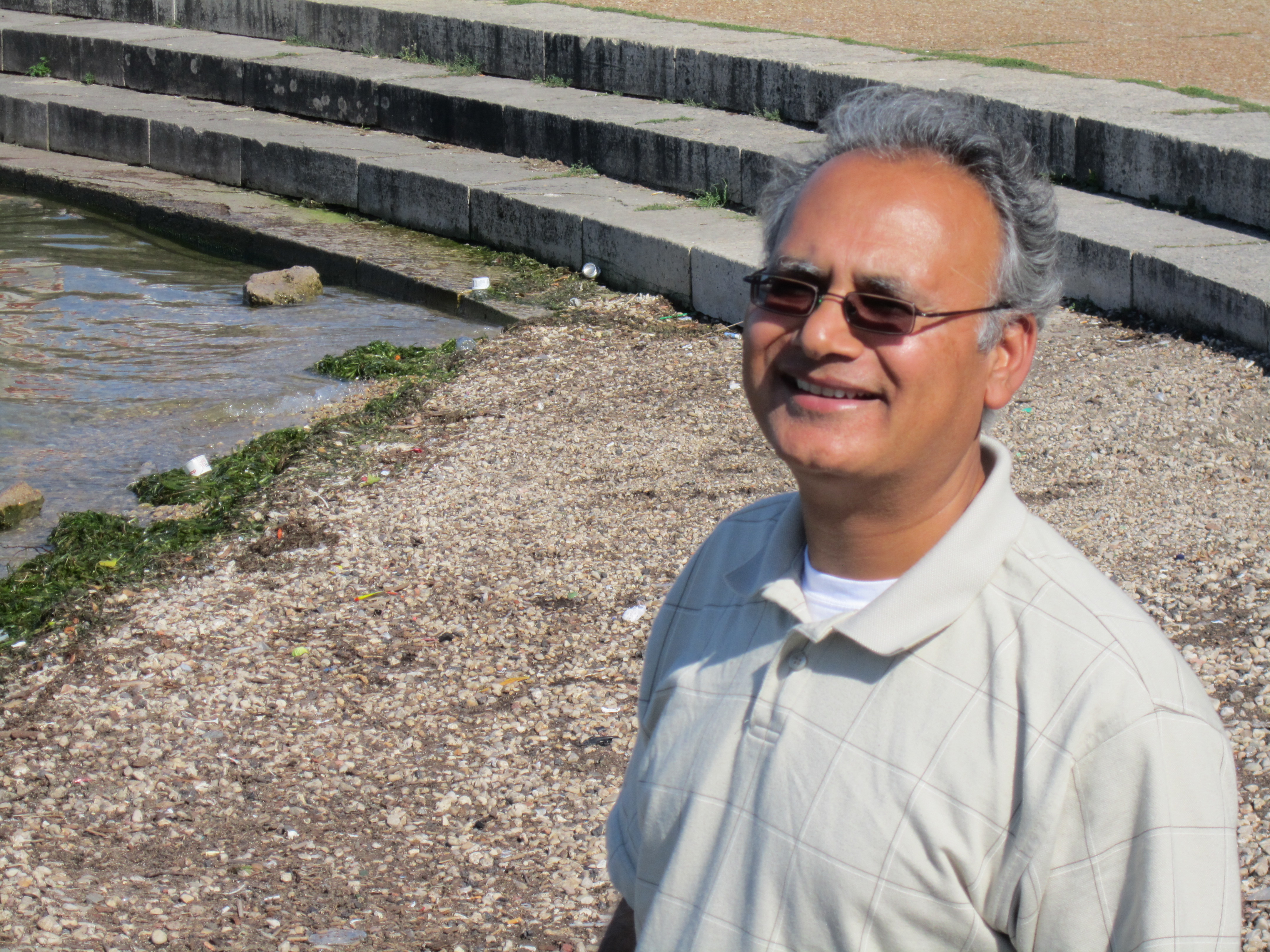
Harsh K. Luthar in Madison, WI

Questioner: What is meant in Hinduism by “Saguna Brahman” and how is that different from “Nirguna Brahman”

Answer: The term Saguna means “with attributes”. The term “Saguna Brahman” implies that God has a name and form and other attributes. Many Savikalpa Samadhis give rise to the (living) form of the Ishta Devata. Ishta Devta is one’s favored way of visualizing the divine. It might be Krishna, Jesus, Rama, the Goddess or some other Deity of choice.

Nirguna means “without attributes”. The term “Nirguna Brahman” implies that God as the Absolute Spirit and Pure Consciousness has no name and form or attributes. Nirvikalpa Samadhi reveals the Nirguna nature of the Self.

There are a number of books on Hinduism that discuss Saguna and Nirguna Brahman. Classic yoga texts like Patanjali’s yoga sutras explain various types of Samadhi states. All of such concepts and topics of discussion can also be found in the conversations Sri Ramana had with various visitors, scholars, and yogis for over 50 years.

The book I recommend for the devotees of Sri Ramana is “Talks with Ramana Maharshi” as it gives the context of the conversations and the flavor of the essential teaching of Sri Ramana. “Day by Day with Bhagavan” capturing the Ashram atmosphere in the 1940s is very good as well. In addition, the recollections of various devotees given in many books are quite good.

One sees that Sri Ramana was very flexible and open to people who came with a sincere desire for self-knowledge. A person’s religion, philosophy, background, race, all of that, made no difference to him. In his acceptance of all, even the monkeys and squirrels and animals who were always around him, Sri Ramana emanated a perpetual aura of kindness.

Those interested in Advaita Vedanta and Self-Realization will find the teachings of Sri Ramana Maharshi to be very helpful.

Namaste and Love to all