
Frank Maiello
Regardless of what you think, say or do, the
perfection of Freedom was, is and always will
be who and what you really are.

Frank Maiello
Regardless of what you think, say or do, the
perfection of Freedom was, is and always will
be who and what you really are.
 I used to go to Asia every year, especially to India, but had never been to Bali. So in Aug 92 l scheduled a trip there. It’s such a long flight l decided at the last minute to do a stop-over in Japan for 5 days to break up the trip. Before l left l told my caretaker to get rid of all the weeds in my back yard, which was quite a mess. Upon arriving in Japan l immediately went to Kyoto, which l knew to be a spiritual center with a lot of zen temples. It was then that l found myself in another world, sensing at once that destiny had guided me there. I’d been doing vipassana meditation pretty intensely for several months and was starting to feel the increased concentration and depth from this practice. In addition, I’ve always had a passionately aesthetic nature. So, l think it was a combination of these things that led to not only the temples, but particularly the zen gardens being probably the most wonderful moment of discovery I’ve ever known. There were many moments of melting in tears of joy, and many others of profound meditative stillness, induced by the sense conveyed of almost perfect harmony with nature.
The nature of the Self is absolute, immutable, taintless. It is not distant, nor is it subject to attainment (being ever attained). This is the Truth. ——-Ashtavakra Gita
Here is my comment on this verse in six sentences. This is the natural approach to stilling consciousness by being simply aware of awareness with one’s awareness.
To see that, which is obvious, look.
Do not look for anything, and do not look at anything.

Gopi Krishna’s emphasis on Kundalini as a biological evolutionary force is a very limited view of the great Shakti.
Shakti is the fundamental Spiritual Principle and Force which has physical, mental, and psychic manifestations. These manifestations cannot indicate or capture the depth of this Great Power. Its ultimate nature is only realized when the Shakti completes its Journey to the end and reveals the deepest mystery of existence and the Self is Recognized.
Yes, the Shakti is Maha Sarswati, the Goddess of Wisdom. She makes one a poet, a scholar, and an orator. She bestows high intelligence. She is the teacher in both the earthly and subtle psychic realms.
Sometimes people say that Nirvikalpa Samadhi is a state where there is no knower and known. That is really a half-truth. To capture the essence of Nirvikalpa Samadhi, it is better to say that in Nirvikalpa the KNOWER and the KNOWN are IDENTICAL. It is only pure consciousness that by its very nature is self-revealing and self-knowing.
Nirvikalpa in Sanskrit means “without thought or doubt or mental modification”. It is the absence of mental modification and presence of fullness of consciousness in Nirvikalpa Samadhi which allows for the clear recognition of the Self.
Self is both the Knower and the Known, the Seer and the Seen, without any duality. Self, being one without a second, is always self-knowing. There is no “other” for it to know. That is why we refer to the Self as Nirvikalpa. The reference to Nirvikalpa implies the nondual nature of the Self.
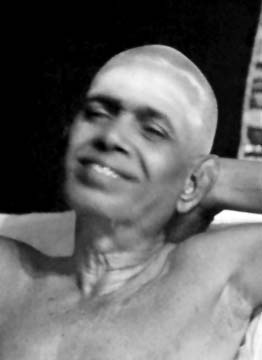
Bhagavan Ramana


You must be logged in to post a comment.