Harsha's avatar

Krishna, A Transformational Servant-Leader: By Dr. Harsh K. Luthar

“Because, whatever noble persons do, others follow. Whatever standard they set up, the world follows.”

(3.21) Bhagavad Gita

A version of this paper was presented at the 2005 Academy of Management Meetings in Hawaii under the title: Transformational Leadership and Self-Awareness in Hinduism: A Role Model for Creating Adaptive Organizations. It was part of an Academy of Management Symposium entitled Leadership for Adaptive Organizations: Models from the Christian, Hindu and Buddhist Traditions-Spiritual Leadership. Krishna images can be found throughout the Internet, including the site http://www.vishvarupa.com/vishnu-krishna.html and http://www.krishna.com. All images reproduced here in the spirit of fair use. http://www.law.cornell.edu/uscode/17/.

We have given acknowledgement of photographers and artists to the best of our ability. Please contact us if you feel we have missed an acknowledgement.

ABSTRACT

Charismatic leadership behavior of Krishna is examined in the Hindu epic Mahabharata just prior to the start of the Mahabharata war. Using modern theories of leadership, it is suggested that Krishna’s leadership style fits both the servant-leader and the transformational models of leadership based on situational contingencies. This approach adds to the stream of literature wherein scholars have examined the leadership of various historical religious figures including Jesus of Nazareth, Nehemiah, and Mahatma Gandhi and have analyzed the implications of spiritual leadership for modern life and organizations. The paper initiates an important stream of literature since no one has yet looked at Krishna’s leadership style from the modern perspective of transformational and servant-leader models.

In this paper, I look at one of the major characters in the Hindu epic Mahabharata, namely Krishna, and analyze the leadership behavior of Krishna to see how it fits the modern management thoughts on transformational and servant-leadership models. Taking this approach is consistent with recent literature wherein scholars have examined the leadership of Jesus of Nazareth (Sendjyaa and Sarros, 2002), the leadership of Nehemiah (Maciarello, 2003), and in general explored the characteristics of spiritual leadership (Cavanaugh, 1999; Covey, 1996) and its implications for modern life and organizations.

The sociologist Max Weber (1947) conceptualized a leader as a charismatic personality whose exercise of power was rooted in the followers identifying with the leader and their strong belief in him or her as an authority. According to scholars, charismatic leaders have extraordinary characteristics which allow them to inspire their followers and gain their commitment to shared ideals and a common vision (Conger & Kanungo, 1998; Hellriegel, Slocum, and & Woodman, 2001; Smith, Montago, & Kuzmenko, 2004). In suggesting the importance of the charismatic leadership as a root model, Graham (1991) reasoned that charismatic leadership lays the conceptual foundation for understanding transformational (Burns, 1978) and servant-leader models (Greenleaf, 1977) as both of these are inspirational and moral in nature. Similarly, Farling, Stone, and Winston (1999), have concluded that the notion of transformational leadership and servant leadership have a fundamental commonality to them.

This is the first paper looking at Krishna’s charismatic leadership and how it manifested in Krishna’s playing the role of a transformative servant-leader before and during the Mahabharata war. Although the charismatic leadership of many religious leaders and prophets and even Jesus of Nazareth has been examined (Barnes, 1978), Krishna has been left out of this analysis by modern western scholars. The reasons for this are unclear, although it is possible that many traditional western scholars have viewed Krishna as a fictional character and, like Barnes (1978), tend to focus on a contemporary figure like Gandhi as being a more representative leader of Hinduism.

image

However, hundreds of millions of Hindus view Krishna as being quite real and historical; exactly in the same way that Christians view Jesus to be a real and historical figure. Further, Indian scholars such as Raghavan (1969), a mathematician and an astronomer, have conducted analysis on the large number of detailed astronomical references (the relative positions of planets, the stars, the sun, and the moon in the sky) found in the Mahabharata literature and have argued that the strong internal consistency of these data from the ancient skies establishes the historicity of Mahabharata and places the Mahabharata war as having occurred around 3067 B.C.

B. N. Narahari Achar (2003), a Professor of physics at the University of Memphis, used the astronomical references in Mahabharata and experimented with various simulations employing very sophisticated tools of modern technology. Using a variety of planetarium software programs (such as Skymap Pro and Red Shift) that allow the exact picture of the sky for any given day and time from any part of the earth to be recreated (from 4000 B.C.E to 8000 C.E), Achar came to the same conclusion that Raghavan had arrived at earlier. Based on various streams of evidence, a significant number of Indian scholars believe that Mahabharata war is historical in nature and actually took place around 3000 B.C. (The IGNCA Newsletter 2003 Vol. I (January – February).

Krishna’s place in Hinduism

Hinduism is a broad umbrella for many different schools of philosophy and religious thought. The common bond among Hindus is that they all accept the central truths proclaimed by the Vedas and the Bhagavad Gita. However, interpretations of these truths diverge depending on the lens of the particular Hindu tradition under which these truths are viewed. It is in the Bhagavad Gita that Krishna speaks to Arjuna about the meaning of life and how to attain the goal of life. The term “Bhagavad Gita” translates literally into English as “The Song of God”. The Bhagavad Gita is sometimes called the fifth Veda, and it is embedded in the epic civil war of Mahabharata.

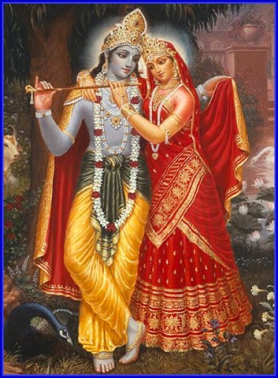
The Mahabharata war was a battle between two dynasties of princes (Pandavas and Kauravas) who were cousins (Kane,1958; Pusalker, 1996). The father of Pandavas, Pandu, who had been the king, had died when his sons were still young. The kingdom, thereafter was looked after by his brother Dhritrashtra (who had been blind since childhood), until it could be passed on to the rightful inheritors, the Pandavas. However, Dhritrashtra’s sons, the Kauravas, schemed to have the Pandavas killed so that the entire kingdom would fall into their hands. When the many methods and plans employed over the years to destroy the Pandavas failed, the issue came to a head and the dispute between Pandavas and Kauravas became open. With various neighboring Kings choosing either one side or the other, the conflict escalated into a major national battle for the control of Bharata (the old name for India). Krishna played a critical leadership role in attempting to stop the war. Having failed in diplomacy, Krishna took the role of the charioteer for Arjuna in the Mahabharta war.
image

While the scholarly debate on the historicity of Mahabharata and the date it started is likely to continue, for most Hindus, the reality of Krishna has never been in question. Indeed, stories about Krishna as a mischievous child, a playful boy, a young man, a lover, a friend, and a warrior, who became the ruler of Dwarka in Western India, have captivated the Indian imagination since time immemorial. Krishna could be well described by Max Weber’s notion of ‘charisma.’ Weber defined charisma as a special quality in the personality of the leader by which he, “…is set apart from ordinary men and treated as endowed with supernatural, superhuman, or at least specifically exceptional qualities.” (1947: 48).

In Hinduism throughout the ages, Krishna has remained as the clearest example of one of the most charismatic and transformational leaders who with his great power of intuition adapted himself to every situation and inspired his followers to do their duty and achieve the goals and objectives that had been set forth. We see Krishna taking a variety of leadership roles both before and during the Mahabharata war. The two most prominent roles Krishna takes are that of a servant-leader and the transformational leader.

Krishna as a Servant-Leader

In the servant-leader model, the goal of leadership is viewed primarily as service. Servant-leaders take into account the interests of those they lead and put the interests of the followers above their own self-interest. Servant-leaders facilitate the growth and development of their followers, promote community, share power and resources, and provide the support needed to help achieve the goals that lead to the common good of individuals and the community as a whole (Greenleaf, 1977; Spears and Lawrence, 2002). In the context of this perspective, we see that Krishna meets the criteria of a servant-leader.

The following background of Krishna helps us to assess this aspect of his leadership style.

image

Krishna’s reputation was well established by the time of the Mahabharata war and he was revered and adored by the people he ruled along with his older brother Balarama in the city of Dwarka. Krishna and Balarama were known as the protectors of the weak and helpless in society. In particular, Krishna had great reverence for Brahmins and the Rishis (religious monks and spiritual scholars and teachers) and enjoyed helping and serving them in a variety of ways to facilitate their spiritual practices.

Krishna himself had gone through a formal religious training period with his spiritual teacher and understood the importance of maintaining age old traditions. Therefore, he had little tolerance for those who harassed the Rishis and the Brahmins in any way. Many of Krishna’s fights had evolved from attempting to protect the innocent from harm. Both Krishna and his brother Balarama were known to be superb warriors who had been through many battles. Krishna’s enemies, for good reason, had a great fear of him, although Krishna never fought without a just cause and often patiently waited to determine if aggressive action was necessary.

The Mahabharata fight between Pandavas and Kauravas posed a dilemma for Krishna and his brother Balarama as Krishna and Balarama were related to both the Pandava princes and the Kaurava princes. Krishna knew that the leader of Kaurava princes, Duryodhana, was a wicked person who had relentlessly pursued the Pandavas for years to have them killed so that Pandavas would have no claim to the throne.

The Pandavas were still alive and well due to the protection Krishna had secretly extended them through a variety of means. The Pandavas had great love for Krishna and the five Pandavas brothers and their families were dear to Krishna as well. In particular, Arjuna, one of the Pandava brothers was Krishna’s best friend since his youth. He was also married to Krishna’s sister Subhadra. Arjuna is a supreme archer and a major character in both the Mahabharata and the Bhagavad Gita. Krishna and Arjuna are inseparable during the Mahabharat war as Krishna takes the role of his charioteer and counselor.

Krishna Acts as a Diplomat

In order to avert the Mahabharata War, Krishna, although himself the ruler of the kingdom of Dwaraka, took the humble role of a mediator and negotiator to try to bring peace to the community. The Mahabharata epic details Krishna’s activities and the crucial role he played as a diplomat by attempting to achieve a last minute negotiated settlement in the conflict between Pandavas and Kauravas.

Here we see Krishna in his characteristic role of the servant-leader, not exercising his authority and power which he had in abundance, but instead trying to broker a peace by listening to both sides, empathizing with their suffering, attempting to persuade them to peace, offering them consolation and healing for the past wrongs that they may have suffered.

Even though Krishna knew the Kaurava princes to be wicked, he left no stone unturned and made a special visit to the Kaurava kingdom to speak with them and get them to agree to some minimal rights of property and conditions of fairness for the Pandavas.

In the modern management leadership literature, the servant-leader model has been recognized as important by Greenleaf (1977) and many authors have viewed this style of leadership as having a moral and a spiritual dimension (Wicks, 2002). Spears (1998), based on Greenleaf’s writings, identified ten major attributes of servant leadership that included, listening, empathy, healing, awareness, persuasion, conceptualization, foresight, stewardship, commitment to growth of people, and building community.

Several writers such as Covey (1996) and others have added more attributes including, vision, integrity, empowerment, teaching, etc., and with minor variations in the terms used, these are generally consistent with Greenleaf’s original conceptualization of the servant-leader. In the Mahabharata epic, we see Krishna engage in most of these activities in his role as a mediator and peace maker in attempting to negotiate a fair settlement between the Pandavas and Kauravas so that a civil war and the resulting bloodshed can be avoided.

Krishna’s choice to serve Arjuna as his Charioteer

When all of Krishna’s diplomacy to avert the war fails, due essentially to the evil intentions of the Kaurava princes and their oldest brother and leader Duryodhana, war becomes unavoidable and is forced upon the Pandavas. The war preparations now start in earnest and within about a month’s time, both sides have built camps and colonies to support their respective armies with weaponry, food, and places of rest and shelter in the Kurukshetra field where the battle takes place.

With the civil war being imminent, Krishna’s older brother, Balarama, decides not participate in a war where there is family on both sides and leaves the area going on a religious pilgrimage. Krishna, however, when asked by his Pandava cousin Arjuna, who is also his best friend, to be by his side in the war, feels duty bound to take the side of righteousness and justice and agrees. But he does so on the condition that he, Krishna, will not take an active part in the war and engage in battle and spill any blood.

image

Instead, Krishna offers to serve Arjuna and be his charioteer in the battles of the Mahabharata war. Normally, it would not be common for a great King like Krishna to play a support role for another in battle. However, by becoming Arjuna’s charioteer in the war, Krishna actively takes on and embraces the support role and demonstrates that an act of service for a just cause is, in fact, an act of leadership.

The Starting Scene of Bhagavad Gita

Krishna and Arjuna have been through many experiences together and are about the same age at the start of the Mahabharata war, both being in their mid forties (derived from Raghvan, 1969; and Achar, 2003). As the appointed hour of the war gets closer, the two massive armies face each other and conch shells are being blown on both sides. Arjuna asks Krishna, now his charioteer, to take their chariot in the middle of the two armies so that Arjuna can have a good look at the opposing army and its leaders.

Krishna then drives the chariot between the two armies and stops in the middle. Arjuna starts to carefully observe the great warriors on the opposing side, all of whom he knows well.

As Arjuna looks at his foes on the other side, he experiences a deep life crisis and along with it panic, anxiety, and confusion. Arjuna’s body starts trembling and his mouth goes dry.

Arjuna sees his cousins, uncles, and even his revered teacher Dronacharya and great grandfather Bishma, all on the other side of the war, duty bound to their evil leader Duryodhana and ready to do battle with Arjuna and his Pandava brothers.

While the oldest member of the family, his great grandfather, is on the opposing side, one of the youngest warriors of Mahabharata is on the side of Arjuna, and it is his own son Abhimanyu. Abhimanyu is 16, a talented and brave fighter who has just gotten married and unknown to him, his wife is pregnant.

Abhimanyu, simply by being around his father Arjuna, watching him and listening to him, and practicing with him is on his way to becoming a great warrior himself. Abhimanyu is full of strength and confidence that is natural to youth.

Arjuna, however, is concerned that he has not had time to complete his son’s training in the art of war strategy and the tactics of survival within enemy formations. But now there is no more time left for training and to prepare. The great war is upon them.

All of a sudden, the horrific reality of what is about to happen overwhelms Arjuna and he is thrown into great sorrow at the prospect of death and destruction of families on both sides. He understands that the ground of Kurukshetra will be turning red with the blood of warriors who will leave behind their weeping widows and children.

This is what battles bring and Arjuna has seen it all before. Perhaps the words of his oldest brother Yudhishtara and his reservations regarding this war haunt him. “Even though we are duty bound by our caste as warriors to conduct this battle, everyone should remember that war is evil in any form. To the dead, victory and defeat are the same,” Yudhishtara had said to his brothers with great sadness.

Now the Mahabharata war is about to ensue, and Arjuna, the supreme archer and veteran of many battles, experiences deep uncertainty and questions whether this is the right thing to do.

The following verses from the first chapter of Bhagavad Gita describe Arjuna’s mental state (Translations by Dr. Ramanand Prasad).

Arjuna was overcome with great compassion and sorrowfully said:
O Krishna, seeing my kinsmen standing with a desire to fight (1.28), my limbs fail and my mouth becomes dry. My body quivers and my hairs stand on end (1.29).

The bow, Gaandeeva, slips from my hand and my skin intensely burns. My head turns, I am unable to stand steady and, O Krishna, I see bad omens. I see no use of killing my kinsmen in battle (1.30-31).

I desire neither victory nor pleasure nor kingdom, O Krishna. What is the use of the kingdom, or enjoyment, or even life, O Krishna? (1.32).

Because all those for whom we desire kingdom, enjoyments and pleasures, are standing here for the battle, giving up their lives and wealth (1.33).

Teachers, uncles, sons, grandfathers, maternal uncles, fathers-in-law, grandsons, brothers-in-law, and other relatives (1.34).

I do not wish to kill them, who are also about to kill, even for the sovereignty of the three worlds, let alone for this earthly kingdom, O Krishna (1.35).

O Lord Krishna, what pleasure shall we find in killing the sons of Dhritaraashtra? Upon killing these felons we shall incur sin only (1.36).

Therefore, we should not kill our brothers, the sons of Dhritaraashtra. How can we be happy after killing our kinsmen, O Krishna? (1.37).

Though they, blinded by greed, do not see evil in the destruction of the family, or sin in being treacherous to friends (1.38).

Why shouldn’t we, who clearly see evil in the destruction of the family, think about turning away from this sin, O Krishna? (1.39).

With the destruction of the family, the eternal family traditions are destroyed, and immorality prevails due to the destruction of family traditions. (1.40)

Indeed, how does one fight evil without becoming evil? How does one fight a wicked enemy, who is intent on destruction, without becoming wicked? This is the most difficult and an age old question for humanity.

Arjuna puts it bluntly when he asks Krishna, “Though our enemies blinded by greed do not see evil in the destruction of the family, or sin in being treacherous to friends, why shouldn’t we, who clearly see evil in the destruction of the family, think about turning away from this sin, O Krishna?”

Arjuna, whose arrows have always found their mark in the past, now lays down his bow and tells Krishna that he would prefer to be slain not resisting rather than kill his cousins, uncles, and relatives on the other side, many of whom he admires, respects, and loves no matter how wicked and evil their leaders are.

We all understand that this is a natural reaction in the given context. However, in light of current scientific information, Arjuna’s question acquires a modern relevance. Scientists now tell us that all persons alive today had common ancestors. Somewhere in our deep biological evolutionary past, there is a super great grandmother that we all share. So, if we view all human beings, regardless of their nationality, religion, color, race, and ethnicity as part of our larger family, we must also understand that when nations conduct wars against each other, it is essentially distant cousins who have to battle and either kill or be killed.

The dilemma of Arjuna is not new. Arjuna admits to Krishna that he is very confused and asks for his guidance.

Krishna as a Transformational Servant-Leader

image Given the unexpected change in the mood of Arjuna, it falls upon Krishna, acting as his charioteer, to counsel him. Sensing the critical urgency of the situation, with the opposing side getting ready to strike, Krishna with his immensely charismatic personality immediately transforms himself into an authority who speaks with power and conviction to inspire Arjuna to do his just and righteous duty.

Modern leadership literature documents the association between crisis and manifestation of charisma in political leaders (House, Spangler, and Woycke, 1991). Scholars have reasoned that a crisis allows charismatic leaders with the opportunity to display their personality to a fuller extent (Bryman, 1993) and an uncertain situation enhances the leader’s ability to appear charismatic. Seen in this context, acting as a charismatic transformational leader, Krishna inspires Arjuna to have a new vision of life and empowers him to act according to his Dharma (duty) as a warrior.

Krishna does this by focusing on the immediate psychological needs of Arjuna in order to bring him out of his sorrow and confusion and offers himself (Krishna) as a role model whose ideal conduct is worth emulating. Krishna’s approach is consistent with the classic strategy of transformational leadership (Smith et al., 2004), using which, leaders are able to uplift their followers and enable them to share and follow a powerful vision of the future.

We can examine in depth Krishna’s response to Arjuna using the four components of transformational leadership behavior that are mentioned in the modern literature as idealized influence, inspirational motivation, intellectual stimulation, and individualized consideration (Bass, 1985, 1996; Bass & Avolio, 1994a, 1994b). Krishna’s goal is to pick up Arjuna’s spirits by explaining to him the nature of life, death, and the immortal spirit, and the way to overcome mental obstacles that stand in the way of doing his duty.

Given below are a few sample verses from the Bhagavad Gita to demonstrate Krishna’s use of the four behaviors commonly accepted as belonging to the realm of transformational leadership.

1. Individualized Consideration: In the following verses, we see Krishna addressing Arjuna’s personal duty as a warrior and advising him what he needs to do to achieve his goals. Specifically, Krishna points out that Arjuna, given his background as a warrior prince, cannot shirk from a battle that is just and righteous. The words used are meant to remind Arjuna that his people are depending on him to protect them from harm, and if Arjuna now retreats, there will be chaos and very serious consequences undermining his past achievements, reputation, and hindering his future potential and growth as a warrior and a person.

Krishna says to Arjuna:

If you will not fight this righteous war, then you will fail in your duty, lose your reputation, and incur sin (2.33)

The great warriors will think that you have retreated from the battle out of fear. Those who have greatly esteemed you will lose respect for you (2.35).

Your enemies will speak many unmentionable words and scorn your ability. What could be more painful than this? (2.36).

Further, as part of his individualized consideration for Arjuna, Krishna later advises Arjuna that he can develop his potentially divine nature and become an evolved soul by doing his duty as a warrior without attachment to whether it will bear fruit or not.

Krishna states:

Treating pleasure and pain, gain and loss, victory and defeat alike, engage yourself in your duty. By doing your duty this way you will not incur sin (2.38).

You have jurisdiction over your respective duty only, but no control or claim over the results. The fruits of work should not be your motive. You should never be inactive (2.47).

Therefore, always perform your duty efficiently and without attachment to the results, because by doing work without attachment one attains the Supreme. (3.19).

2. Intellectual Stimulation: Another component of transformational leadership is for the leader to open the followers up to new ideas and different ways of understanding so the followers can integrate this new knowledge into their behaviors and actions. Krishna demonstrates this approach in the following selected verses when he explains to Arjuna the nature of life and death of the body and the eternal nature of the Atma (Soul – Self -Spirit).

Krishna states:

You grieve for those who are not worthy of grief, and yet speak the words of wisdom. The wise grieve neither for the living nor for the dead (2.11).

There was never a time when I, you, or these kings did not exist; nor shall we ever cease to exist in the future (2.12).

The Atma is neither born nor does it die at any time, nor having been it will cease to exist again. It is unborn, eternal, permanent, and primeval. The Atma is not destroyed when the body is destroyed (2.20).

O Arjuna, how can a person who knows that the Atma is indestructible, eternal, unborn, and imperishable, kill anyone or cause anyone to be killed? (2.21).

Just as a person puts on new garments after discarding the old ones, similarly Atma acquires new bodies after casting away the old bodies (2.22).

Weapons do not cut this Atma, fire does not burn it, water does not make it wet, and the wind does not make it dry (2.23).

3. Idealized Influence: In this aspect of transformational leadership, the leader offers himself/herself as the ideal role model whose high ethical and moral conduct is worth emulating. We see Krishna use this approach in the following verses emphasizing that although he, Krishna, needs nothing and has nothing to obtain, yet he still does not give up action and does his duty to set an example to others.

Krishna states:

Because, whatever noble persons do, others follow. Whatever standard they set up, the world follows (3.21).

O Arjuna, there is nothing in the three worlds (earth, heaven, and the upper regions) that should be done by Me, nor there is anything unattained that I should obtain, yet I engage in action (3.22).

Because, if I do not engage in action relentlessly, O Arjuna, people would follow My path in every way (3.23).

These worlds would perish if I do not work, and I shall be the cause of confusion and destruction of all these people (3.24).

As the ignorant work, O Arjuna, with attachment (to the fruits of work), so the wise should work without attachment, for the welfare of the society (3.25).

Works do not bind Me, because I have no desire for the fruits of work. The one who understands this truth is (also) not bound by Karma. (4.14).

4. Inspirational Motivation: The last essential facet of transformational leadership is the ability to inspire and energize the followers to act on the shared vision of the leader and empower the followers with the ability to carry it out. The next few verses are examples of Krishna’s inspirational motivation and the divine touch that removes Arjuna’s confusion about the right course of action.

Krishna states:

Both you and I have taken many births. I remember them all, O Arjuna, but you do not remember (4.05).

Whenever there is a decline of Dharma and the rise of Adharma, O Arjuna, then I manifest (or incarnate) Myself. I incarnate from time to time for protecting the good, for transforming the wicked, and for establishing Dharma, the world order (4.07-08).

Dedicating all works to Me in a spiritual frame of mind, free from desire, attachment, and mental grief, do your duty (3.30).

Those who always practice this teaching of Mine, with faith and free from cavil, are freed from the bondage of Karma (3.31).

O Arjuna, I am the Atma abiding in the heart of all beings. I am also the beginning, the middle, and the end of all beings (10.20).

The Supreme Lord said: O Arjuna, behold My hundreds and thousands of multifarious divine forms of different colors and shapes. (11.05).

image

Therefore, you get up and attain glory. Conquer your enemies and enjoy a prosperous kingdom. All these (warriors) have already been destroyed by Me. You are only an instrument, O Arjuna (11.33).

After Krishna had explained many mysteries to Arjuna he asked:
O Arjuna, did you listen to this with single-minded attention? Has your delusion born of ignorance been destroyed? (18.72).

Arjuna answered: By Your grace my delusion is destroyed, I have gained knowledge, my confusion (with regard to body and Atma) is dispelled and I shall obey your command (18.73).

Arjuna then went on to lead his armies into the battle that has become known as the Mahabharata war, with Krishna acting as his charioteer and guide.

A ferocious and a hellish battle followed in which large numbers of armies were destroyed on both sides.

Arjuna’s worst nightmare came true when his son Abhimanyu, trapped behind a cunning enemy formation, lost his life fighting valiantly while Arjuna was preoccupied in a different field of battle and unable to reach him in time.

After experiencing the insanity and destruction that war brings to both sides, Arjuna, along with his Pandava brothers, with the counseling and support of Krishna, were victorious. Yudhishtara, the oldest Pandava prince, with some convincing from his brothers and Krishna, reluctantly took over the reigns of the new kingdom.

Conclusion

In this paper, I examined the charismatic leadership behavior of Krishna just prior to the start of the Mahabharata war to demonstrate that it fits both the servant-leader and the transformational model of leadership. This approach adds to the stream of literature wherein scholars have examined the leadership of various historical religious figures (Barnes, 1978) including Jesus of Nazareth (Sendjyaa and Sarros, 2002) and Nehemiah (Maciarello, 2003). With the growing general trend to explore the characteristics of spiritual leadership (Cavanaugh, 1999; Covey, 1996) and its implications for modern life and organizations, the paper fills a gap in the literature because no one has looked at Krishna’s role in Mahabharata in the context of modern leadership theories.

Many scholars who have analyzed both the servant-leader model and the transformational model have suggested that these models have many common elements as they are both rooted in theories of charismatic leadership and are moral and inspirational in nature (Graham, 1991; Farling et al., 1999; Smith et al., 2004).

An examination of Krishna’s leadership in Mahabharata shows that Krishna as a charismatic leader was able to potentially adapt and shift between the servant-leader and transformational leadership styles based on situational contingencies, and that this led to successful outcomes. The possibility that such adaptability can be developed by charismatic leaders in organizations would have implications for organizational survivability and prosperity and should be explored by scholars in the future.


References

Achar, B.N. (2003). Date of the Mahabharata war based on Simulations using Planetarium Software.

Barnes (1978). Charisma and religious leadership: An historical Analysis. Journal for the Scientific Study of Religion, 17 (1): 1-18.

Bass, B. M. (1996). New paradigm of leadership: an inquiry into transformational leadership Alexandria, VA: U.S. Army Research Institute for the Behavioral and Social Sciences.

Bass, B.M., Avolio, B.J. (1988). Transformational leadership, Charisma, and beyond. In Hunt, J.G., Baliga, B.R., Dachler, H.P., Schriesheim, C.A. (Eds.). Emerging Leadership vistas, (pp. 29-49). Lexington, MA: Lexington Books.

Bass B. M., Avolio B. J. (Eds.). (1994a). Improving organizational effectiveness through transformational leadership. Thousand Oaks, CA: Sage Publications.

Bass, B. M.; Avolio, B. J., (1994b). Transformational leadership and organizational culture. International Journal of Public Administration, 17(3/4), 541-552.

Burns, J.M. (1978). Leadership. New York: Harper & Row.

Cavanagh, GF. (1999), “Spirituality for managers: context and critique”, Journal of Organizational Change Management, Vol. 12 No. 3, pp. 45-53.

Conger, J.A., Kanungo, R. N. (1998). Charismatic leadership in organizations. Thousand Oaks, CA: Sage publications.

Covey, S. R. (1996). Three roles of the leader in the new paradigm. In Hesselbein, F., Goldsmith, M., & Beckhard, R. (Eds.), The leader of the future (149-159). San Francisco: Jossey-Bass.

Farling, M.L., Stone, A.G., & Winston, B.E. (1999). Servant Leadership: Setting the stage for empirical research. The Journal of Leadership Studies, 6 (1/2), 49-72.

Graham, J.W. (1991). Servant leadership in organizations: Inspirational and moral. Leadership Quarterly, 2 (2), 105-119.

Greenleaf, R.K. (1977). Servant leadership: A journey into the nature of legitimate power and greatness. Mahwah, NJ: Paulist Press.

Hellriegel, D., Slocum, J. , Woodman, R. (2001). Organizational Behavior (9th Edition). Cincinnati: South Western.

IGNCA Newsletter 2003 Vol. I January – February. (http://ignca.nic.in/nl002503.htm)

Kane, P. V., History of Dharmasastra, BORI, (Poona, 1958) Vol. III.

Maciariello, J. (2003). Lessons in leadership and management from Nehemiah. Theology Today, 60: 397-407.

Prasad, Ramanand, The Bhagavad Gita (1988), American Gita Society, Freemont CA; http://eawc.evansville.edu/anthology/gita.htm

Pusalker, A. D., “Traditional History from the earliest Time to the Accession of Parikshit”, in The Vedic Age, Majumdar, R. C., Pusalker, A. D., and Majumdar, A. K. (ed.) Bharatiya Vidya Bhavan, (Mumbai, 1996)

Raghavan, K. S., The Date of the Mahabharata War, Srirangam Printers, (Srinivasanagar, 1969).

Sendjaya, S. and Sarros, J.C. (2002). Servant leadership: It’s origin, development, and application in organizations. Journal of Leadership & Organizational Studies. Vol. 9, Iss. 2; p. 57.

Smith, B.N. Montagno, R.V. Kuzmenko, T.N. (2004). Transformational and Servant Leadership: Content and Contextual Comparisons. Journal of Leadership & Organizational Studies. Vol. 10, Iss. 4; pg. 80, 12 pgs

Spears, L.C. (Ed.). (1998). Insights on leadership: Service, stewardship, spirit, and servant leadership. New York: John Wiley & Sons.

Spears, L.C. (1998). Creating caring leadership for the 21st century. The Non-for-Profit CEO, 5 (9), 1-3.

Spears, L.C., Lawrence, M. (Eds.). (2002). Focus on leadership: Servant leadership for the 21st century. New York: John Wiley & Sons.

Weber, M. The theory of social and economic organization (Translated by A.M. Henderson and T. Parsons). New York: The Free Press, 1947.

Wicks, J. (2002). Table for Six Billion Please. In Spears, L.C., Lawrence, M. (Eds.). Focus on leadership: Servant leadership for the 21st century (pp. 269-283). New York: John Wiley & Sons.

Yukl, G. (1999). An evaluative essay on current conceptions of effective leadership. European Journal of Work & Organizational Psychology, 8(1), 33-48.

Please note that there are numerous translations of The Bhagavad Gita, many of which can be found on the Internet in addition to that of Dr. Prasad cited herein. See also http://en.wikipedia.org/wiki/Bhagavad_Gita; http://www.gitasupersite.iitk.ac.in/

Harsha's avatar

ALL IS ONE -Yet We Are Not Alone: By Michael Bowes

By Michael Bowes

One can be certain that one is not alone in this world. As long as we consider ourselves to be a separate, limited, mortal individual in this sometimes bewildering existence, one can be certain that the presence and guidance of the true guru, the eternal guide, is always with us. That loving guide draws us to ItSelf just as the flowers attract the bees.

Have you noticed how persons use expressions similar to the following – “I said to myself”, “I thought to myself”, “I told myself”, “I asked myself”?
Who is the “I” that asks one’s self, who is the “I” that thinks to one’s self, who is the “I” that tells one’s self? And who is the “myself” that “I” tells?
These expressions and questions are subtle indications of the fractured nature of our existence; but they are also indications of the one who is guiding the other home, back to eternal peace and bliss – back to the multivaried oneness that is our very nature.

If we haven’t already, at some point we will discover the one who is guiding the other home. And in so doing we find our very own self – our eternal, immortal guide and companion. This loving guide is within and without, and is present in all places and at all times regardless of our personal merit or lack of merit.

In the coming days, weeks and months, I’d like to offer some stories about the journey, the guide and the goal.

Love to all.
Michael

Harsha's avatar

Understanding of the Active/Passive Aspect of Kundalini Yoga Practice: By Pieter Schoonheim Samara

pieter

It is often said that Kundalini Yoga, as taught by Yogi Bhajan, comprises all systems of yoga. This is meant more in the sense that the result and benefits of other systems of yoga gradually and suddenly emerge into the experience of the Kundalini Yoga practitioner, such that one will notice the emergence of a deep intuition of posture and prana, and awaken to the experiences of shakti, laya, bhakti, and gyan (jnana), which emerge spontaneously into consciousness. While providing all the benefits of physical and mental health, fitness and fortitude, Kundalini Yoga is entirely different in approach, practice, technique, benefit and result than any other system of yoga. Kundalini Yoga is a Path towards direct experience of the non-dual all-pervasive and single Self.

This article is to provide some clarification and guidance as to how to practice Kundalini Yoga to realize the full physical, mental and spiritual benefit, while attempting to make it clear that, even though the various aspects of Kundalini Yoga may seem somewhat like the practices of other yogas, one should not make the mistake of teaching or practicing Kundalini Yoga, as one might have learned in another yoga discipline, because the dynamics of Kundalini Yoga are entirely different.

While other yogas often lose their direction – hatha becoming a “stretch and bolt,” martial arts – a sport, bhakti leading to fanaticism, jnana into intellectual mind-games, daily practice of Kundalini Yoga generates a relentless force field within the body mind and soul that turns one to experience their True Spiritual Self, as a magnet turns to true north.

Through the daily practice of Kundalini Yoga, there is a gradual strengthening of the nerve pathways and centers of the body towards the experience of an increasing electromagnetic voltage that corresponds to the influx of the awareness of the universal energies that support and sustain the body and mind, like the conversion in a house of a 110 voltage system, gradually to a 220 voltage system, then to a 440 voltage system, where, by analogy, the electric wiring, fuses and energy support systems are progressively strengthened throughout the body field. The results are systematic, holistic, expansive, balanced and complete, where Kundalini is experienced as an awakening of Awareness. This awareness brings about a total opening of the systems of the body. The governors, which are energy control centers in the Kandal, between the navel and fourth vertebra, the brain and the Heart, which restrict (like the surface of a bubble) the sudden influx of the ocean of energy that surrounds us, are able to gradually open the body’s energy channels to this ocean.

Voltage throughout the body increases to allow the infinite energy that supports, sustains, and pervades the universe in all dimensions to emerge as our normal awareness. As a result of this systematic strengthening of the body field, as energy increases, it diffuses throughout the system, so that even sudden bursts, which in other yoga practices may seem troubling, become no more that waves on the shore of an ever widening ocean to the practitioner of Kundalini Yoga, as taught by Yogi Bhajan. There is a shift in awareness from reflected consciousness (the moon of the mind) to direct consciousness (the sun in the Heart), from notional “i” to the True “I” that is seamless. The Guru becomes the inner divinity in one’s Heart, no longer the reflected images of the mind.

Kundalini in other yoga practices is something different, because the body and mind are not prepared and adequately balanced, except in a monastic situation, and then under the careful guidance of someone who has practiced that yogic system, who assists the practitioner in the long and arduous purification process unique to that specific practice. Otherwise, there may be sudden bursts of energy that become disconcerting to the practitioner who experiences them, who then has no one to go to for direction. Thus, yoga / mediation teachers often tell their students to disregard energy flows or to sublimate them, which in reality is like the lifeguard at a lakeside resort telling someone, who is swimming with some discomfort in the middle of a lake, to avoid the experience of water against their skin and wetness in the mouth.

In Kundalini Yoga practice there is acceptance and opening, not denial or rejection. As the higher centers open, the devotion one feels, the deep inner longing, are for the ever increasing experience of purity, lightness and Truth that begins to permeate them, versus images of devotion that often trap devotees into an imaged concept of God.

Shakti becomes Bhakti, and Bhakti becomes Gyan (Jnana), a realization of inner Wisdom and Self Knowledge that is beyond thought and conjecture, beyond endless intellectual discourse and argument, into which many other practices degenerate. The power of the discriminative mind emerges, a Force of Intelligence permeates and rivets the body and mind to the Spirit, and the pure mind inverts and reflects the True Self in the Heart. The ancient Sages and Yogis call this the Enlightenment of the Whole Body.

Kundalini Yoga, as taught by Yogi Bhajan, is very practical. Innumerable sets of Kundalini Yoga exercises, kriyas, mantras and meditations, with their origins going back thousands of years, once hidden and imparted secretly are now provided openly, each with specific purposes that culminate in the systematic strengthening of the energy pathways, centers and governors, resulting in the simultaneous influx of the universal energy consciousness pervading us. But there are basics that need to be covered in order to realize the full power and benefit of a daily Kundalini Yoga practice, i.e., sadhana.


Invocation / Dedication:


Kundalini Yoga practice always begins with a dedication. Our life and being, our consciousness is based on one simple component. Awareness. This simple Awareness is a light that illumines everything. It is the subject-“I” to all objects. Its source is the substratum of waking, dreaming and deep sleep. It is the support for the physical, subtle and causal bodies. It is the consciousness behind the conscious mind, the subconscious and unconscious. It is a self-effulgent screen within which and upon which everything seen and unseen appears. While single and all-pervasive, it manifests in the Heart, the Harimandr, from there filling all the nerves of the body and a major nerve up to the brain with the sense or awareness of “I” – of identity. All that is required to awaken to the True Self is to hold onto this Awareness and just watch. In Kundalini Yoga we begin with a dedication to apply this Awareness to our entire practice and life. This is the Adi Mantra: Ong Namo Guru Dev (Day) Namo: In the Name of the Creator, the Creative Force in the Universe. In the Name of That Inner Divinity that takes me from darkness to Light,… i.e., I dedicate my awareness.

This means that throughout the practice the orientation is always to be aware, as follows:


Concerning the Awareness of postures and movements in Kundalini Yoga:

When there is a posture, movement or angle, it is also important that you s–t–r–e–t–c–h. For example, if you are instructed that the arms are to be held at 60o, you bring them to 60o (not 45o to 90o) and stretch the shoulders, arms, fingers, opening the armpits. Kundalini Yoga is the yoga of angles. The angle leads to a specific effect. By stretching, you will discover that the exercise becomes easier and achieves its full physiological intent. The same for raising legs, or arching. There needs to be an attention and awareness of a full and complete execution of a Kundalini Yoga exercise, not necessarily to do a posture or movement to perfection, as with some yogas, but to do ones best to perform the Kundalini Yoga exercise correctly (and never to over exertion or strain, which might hinder practice later). A little done right will enable you to do much more later. In time, progressively, you will find that what you can do now for 30 seconds or for a minute or 2, within a matter of weeks it will be easy to do these same exercises for 3 minutes, 5, 7, 11, 31 minutes. The stretching is the key to holding a position for a long time, because it vitalizes the entire life system in each area. Otherwise the body will feel like a dead-weight.

Also, in movements, begin slowly and feel the link of the awareness to the pranic radiance; then begin to add breath. Then, to effect the electric charging of the body, begin to gradually increase the power of the breath and the movement. The result will be that you will see a tremendous difference in the overall experience and realization of the benefit of each Kundalini Yoga exercise.

In Kundalini Yoga, awareness is the important factor to the practice. That’s why Yogi Bhajan emphasizes that “Kundalini yoga is the Yoga of Awareness.” He doesn’t say the yoga of postures, movements, angles, breath, bhandas, and so many other factors, but specifically “Awareness.” This is because our Awareness is the True Self, and through the practice of Awareness in a yoga that generates and deepens the experience of radiance, identity to the limited mind dissolves, and the substratum support Awareness emerges – the Infinite Being, and you abide as That.

Therefore, when we move into a posture and movement, we begin slowly, being aware of every part of the body, of the stretching of muscle and ligaments, of the relaxation of all parts of the body not involved in the exercise, so that the energy generated can flow directly to the areas under pressure, and then to relax inwardly those areas under pressure, so that these too will be able to fully absorb the energy flow being generated. The very directing of awareness to these areas will also greatly expand the growing sensation of radiance that flows from the muscles and organs, then deeper from the cells, then deeper from the atoms, and then even deeper, as ever expanding radiance is felt that you eventually realize to be the Radiance of the Self, the light of your consciousness.


Awareness in Breathing:


It is also very important that you learn to do the breathing properly. The basic breaths are long deep breathing (yogic breath), breath of fire and suspension of breath (holding the breath). But there are other breaths as well, such as kapalabati, canon breath and others that have specialized applications in conjunction with posture and movement that result in a unique effect that is exponentially greater and different than as practiced in other yogas.


Breath of Fire – whether one is sitting cross-legged with hands on the knees or arms extended in front of the chest, hands clenched or other angle, the main focus is on the rhythmic expansion and contraction of the diaphragm powered by the movement of the solar plexus and navel, so that the air is felt deep in the lungs, in the middle and through the chest area without using the muscles of the abdomen, chest or shoulders. This means that as you enter lightly into this breath, once you feel the light flow of the breath and the beginning of the emergence of a delicate pranic radiance, you begin to watch through the abdomen, the sides, the legs, the lower spine, the middle and upper arts of the back, the solar plexus and chest, the shoulders, neck and throat, the facial muscles, lips, jaw, eyes and forehead, relaxing each and every area. Then you refocus on the light rhythm of the diaphragm, relaxing its movement. The very application of this awareness to the diaphragm also gives it a greater voltage and energy, so that you’ll notice that the power and movement, combined with increasing radiance all through and around the body, deeper and deeper, becomes steadily stronger. In this way, you develop the Awareness to practice in a manner that allows the energy being generated to go to the actual areas under pressure from the posture or movement and not to be dissipated in other areas that might be under tension or stress only because awareness was not applied to relax and release these areas. Then the focusing of the energy flow to the areas under pressure will bring about the greatest benefit.

This same approach should be used in the beginning and active part of every Kundalini Yoga exercise, kriya, mantra and meditation.


Long Deep Breathing – in the Breath Awareness exercise, which is simply the practice of the yogic breath, there are three areas one becomes aware of: The inhalation together with the expansion of prana or feeling of radiance through the legs, lower middle upper part of the body, the chest/heart, neck head, up through the top of the head and expanding outward around the body field.

You inhale deeply down to the bottom of the lungs by allowing the lower part of the diaphragm to unwrap and expand downward and out against the abdomen. Then, pushing lightly down in the knees with the hands and pulling in with the hands against the knees, the spine will arch, chest come forwards, shoulders back, chin come in slightly and neck stretch upwards, slightly back at the axis and atlas. This is neck lock. Then “suspend the breath forward in the chest, and you will feel the gradual expansion of the energy flow, as described. With each breath more and more prana is stored in the heart, located it the 8th vertebra pranic center. After 5 to 10 seconds (initially holding 5 seconds and then gradually increasing to 10), slowly exhale, squeezing from the top of the lungs downwards until, as sensation of upwards contraction of an area just below the navel is felt. Then you will feel all the expanding energy, the prana, withdraw and flow down from the centers in the brain and higher centers, down into this area, which you just maintain in a contracted state without pulling upward as with root lock, for 5 or more seconds. In this way, the prana is expanded then together with the downward flowing apana, contracted. With every breath a greater and greater radiance will be felt throughout the body, all around and deeply into the cells and atoms of the body. Then inhale and hold the breath, come into neck lock, suspend the breath, meaning there is no downward pressure at the throat on the expanding pranic radiance. Then pull the root lock, which draws the accumulating polarity of energy in the Kandal below the navel up into the spine and experience a flow of energy radiating upwards and out, expanding in an ever widening field through the 10 Bodies – the chakras, throughout the aura, ark line and radiant body. This is a key breath (prana) awareness exercise, often used between Kundalini Yoga exercises.

In the Breath Awareness Exercise, you also become aware that in the suspension of breath you will notice that the radiance felt in the chest extends all through the front of the body, a kind of an infilling electric sensation that entirely suspends the breath and the mind. With each breath, you will notice a sense of abiding singly as the seer, with less and less interest or focus on the energy increasing throughout the body. The emergence of a sense of being “empty, clear, self-illuminating, with no exertion of the mind’s power (attention).” (from faith Mind of the Third Zen Patriarch) Thus, suspension of breath in holding the breath produces an effect that is vastly different from the breath retention in other yogas.

By incorporating this in the way that Kundalini Yoga exercises are practiced, the body becomes acclimated to the experience of greater energy flows, the mind becomes more expansive, pure/satvic, inertia is relinquished, and your awareness grows in inward clarity and expansion and the emergence of a deeper knowledge of who and what you really are, less and less centered around the focusing of the sense of “I” identity, more and more simply abiding in the consciousness of radiant, expanding being and the inward emergence of your True Identity in the Infinite.


Awareness and Bhandas:


Learning the bhandas properly from the beginning is also important, i.e., mool bhand (root lock), uddyana bhand (diaphragm lock) and jalandara bhand (neck lock). Bhandas are meant to direct the easy flow of circulating energy during and after the completion of the active portion of a Kundalini Yoga exercise. Eventually an automatic electromagnetic locking effect will be felt, as the energy increases in the body. Practice makes this eventuality come sooner.


Preparation:


Each Kundalini Yoga exercise has a specific effect that can be felt in the radiance generated and longer term deepening of awareness. Kundalini Yoga exercises are usually put together in sets with a specific purpose or more powerful kriyas, which may also be part of a set.

In order to derive the full benefit of sets, kriyas, laya mantras and meditations, it is suggested that a few kundalini Yoga exercises and pranayamas be practiced in preparation, in order to activate the radiance throughout the body and charge and balance the channels, then the effect of the sets, kriyas and meditations will be immediate and much more powerful.

An example would be to start with the breath Awareness Exercise, lead by the teacher.

This might be followed by bringing the palms of the hands together, with thumbs against the sternum to begin the Invocation / Adi Mantra repeated 3 to 5 times, then inhale, hold the breath, pull the root lock and 30 seconds later, relax the breath. When you exhale you may feel a sensation of strong electricity moving through the spine and throughout the body. Just remain entirely passive and relaxed and the energy will flow outward.

Then sitting, spread the legs wide and bring the arms up to the sides, parallel to the ground pressing the shoulders back. In this exercise you slowly begin the lean forwards keeping the spine straight, leading with the heart and not the head, so the head remains slightly up. Then slowly start to stretch the arms forward, reaching and stretching the arms as far as possible. Feel the flow of radiance as you move.

Then slowly come into the starting position. Be aware of the stretching of the ligaments and muscles in the back and shoulders. With each slow forward and back motion, feel the radiance expanding throughout the body. You may notice a certain brightness in the source of the flow of attention between the heart and the brain. After 9 or 10 such stretches introduce a long deep breath as you come straight, hold a moment, then exhale as you stretch forwards. Again each slow motion will add pranic radiance. Then to increase the power and voltage much further, begin to move through this exercise with greater power in movement and breathing. You should begin to feel the radiance becoming electric. Then inhale and hold the breath, pull the root lock and let the energy fill the body, expand upwards and all around the body field. Exhale and lower the arms squeezing all the breath out until you feel the area below the navel contract upwards. Repeat in the same manner as Breath Awareness Exercise, several times, then inhale and hold again. Pull the root lock, feel the electricity flow through the legs, torso, back, arms and through the head, then relax for a minute, and come sitting cross-legged. The spine and back will be open and the Heart will be open from this exercise, and the whole body will radiate.

The next exercise is similar to the Breath Awareness Exercise in the intent to irradiate the body field. In this case one prepares for the practice of Kundalini Yoga exercises by bringing the arms forward, parallel to the ground, hands clasped in Venus Lock and doing the Breath of Fire. You begin lightly, then, as the prana begins to expand in the body, you will notice that the power of the breath, both in terms of volume of air pumped and speed, increases steadily throughout the exercise period. As you continue for up to 5 minutes, you will notice that all the muscles of the body are relaxed and that the powerful motion of the diaphragm itself becomes more and more effortless. A sense of clarity and electricity will begin to be felt expanding up from the legs and lower part of the body to the upper areas until you feel and expansion of this clarity and light filling the head and flowing out through the entire crown area, radiating around the body. Then inhale hold the breath, pull the locks, hold for 30 seconds or longer, then exhale squeezing all the breath out until the area below the navel contracts upwards. Keep the breath out in this way, without pulling the root lock, and all the energy will stabilize into this area and polarize. Then continue with the Breath Awareness Exercise, holding the breath in, then holding it out for 10 seconds after each inhalation and exhalation, while the cells of the body decontract, absorb the energy and begin to radiate.

Next comes spinal flex – camel ride. Again, you begin slowly. Sitting with legs crossed, holding the shins with your hands, then pulling the hands inwards, the spine arches straight and the neck comes into alignment stretching upwards in an easy neck lock. You will feel a releasing of energy all through the spine and flowing up through the top of the head, a clear, yet blissful sensation. After a few moments completely slouch the back, pressing the back arched spine back, stretching the nerves, muscles and ligaments that start to release their energy. Slowly come into the straight position, pulling the spine straight, and feel the released energy radiate upwards through the spine. Continue this slow motion several more times, then bring in the breath, inhaling to fill the lungs as you come straight, exhaling back, continuing slowly, feeling the radiance increasing even greater. At a certain point you will begin to feel the sensation in the spine of a will to vibrate more quickly, which in turn increases the power of the voltage being generated. In classes the teacher usually leads the movement until the power and speed is felt, then students continue on their own. Then inhale and hold the breath. Pull the locks, pressing the shoulders back, chest forward, suspending the breath 30 seconds, or longer. Then exhale, again, as previously squeezing all the air out until the area below the navel contracts upwards bringing about a polarization of the flow of prana (radiance) throughout the body field. Again continue with the Breath Awareness Exercise, as above, than sit still and relax, and feel the circulation and expansion of the radiance throughout the body, inside and eventually outside.

The exercises that follow are to open the moon channel and sun channel (the ida and pingala nadis). There are many variations, but here are 2 that open these channels in opposite ways.

The first is to come kneeling on the knees. Then extend the right leg straight to the right side. Then raise the arms up by the sides until they are stretched up, arms hugging the ears, with palms pressed together. The pelvis is pressed slightly forwards to keep a straight tension throughout the spine. Then begin very powerful Long Deep Breathing, completely expanding then contracting the lungs with every breath for 10 to 15 breaths, stretching the arms upwards with each inhalation. Then inhale, hold the breath for 10 to 15 seconds, pull the root lock, stretch the arms up, press the pelvis slightly forward and stretch the spine upwards. Feel the radiance fill the body, then slowly exhale, bringing the hands down in front of the kneed, bring the right foot back next to the left foot and come sitting back on the heels. Bring the spine straight, stretching the neck upwards, shoulders back slightly, chest forwards and wait. You will begin to feel a releasing of an electric current all along the left side of the spine, the moon channel, up through the back of the left side of the neck, up over the left side of the top of the head, to the point between the eyebrows. Wait, notice the flow of the energy, then release your attention and remain passive (negative mind meditation). The energy will begin to increase and expand all through the left side of the body, flowing upwards through the top of the head and around the left side of the body field. Just wait, maybe a minute or 3. Then repeat the same exercise, kneeling and extending the left leg out, arms stretched up, and so on to affect the sun channel to the right side of the spine.

The second part of this ida pingala / moon sun channel cleansing is again to come up in the kneed, but this time, you press the pelvis forward as far as possible, arching the spine back, pressing the shoulders back, expanding the ribcage forward, then arching the neck and head all the way back. Feel the radiance. Then slowly extend the left arm up stretching the arm and the fingers upwards, as though to reach for a lightning bolt. Then twist slightly to the right to put the right hand on the right heal, then over the right foot. Press the pelvis forwards more, extend the left arm and fingers upwards even further and begin the Breath of Fire for a minute. Then inhale deeply, hold the breath, pull the root lock, press the pelvis forwards, reach up, arch the spine more, feel the expansion in the chest area. Feel the energy radiance beginning to increase forcefully throughout the body field. Then slowly exhale, come sitting on the heels, hands resting on the thighs, spine straight. You will begin to feel a powerful radiance through the moon cannel, then expanding to all the organs on the right side of the leg, torso, neck and head, with energy flowing powerfully upwards. Wait.

After 2 to 4 minutes, feeling the radiance increasing, then balancing, you can repeat the same exercise extending the right arm up and left hand back to the left heal, to affect the sun channel.

Now that the ida and pingala are charges and balanced, the exercise that follows is to open the central canal (the sushumna) and the Heart, simple but powerful. I this exercise, simply sit cross-legged. Bring the arms behind the back with the hands clasped in Venus lock. Bring the spine straight, arms stretched straight, press the shoulders back to bring the shoulder blades together, expanding the chest forward. Now inhale deeply, then lean forwards keeping the head slightly up, leading with the heart, while stretching your arms up from the back as high as possible. Hold for a few seconds, then exhale coming straight, again pressing the shoulders back. And continue slowly 10 to 15 times, then when you come up, after inhaling down, this time inhale deeper, using all your strength to press the shoulders back, clasped hands pressing into the lower spine, neck extending and stretching upwards, pull the root lock and hold for 10 to 30 seconds. Exhale completely, inhale immediately remaining with the spine straight, again pressing the shoulders back, while pulling the root lock and neck lock 10 seconds. Repeat one more time, then very slowly exhale and bring th hands slowly around from behind the back to the knees. Relax the breath. You will begin to feel a surge of e pillar of light all through the spine, upward flowing through the top of the head, opening the central canal of the spine (the sushumna) and the Heart. Wait for 1 to 3 minutes until the radiance extends throughout the body through the top of the head and all through the aura.

The final preparation exercise is to open up the higher centers from the Heart to the brain and the arc line. This is a very simple exercise. Sitting cross-legged, you reach your arms up 90 degrees, palms facing eachother. Then begin to stretch the shoulders and arms back, arching the spine, opening the chest cavity. Stretch. Stretch the nick upwards and drop the head back slightly, as though to look between the up stretched arms and hands. Begin a powerful Breath of Fire for 3 to 5 minutes, all the while focused on the arching of the spine, stretching the arms and shoulders up and back, expanding the chest. You will feel the radiance begin to flow upwards through the neck and the chakras and governors in the brain and through the top of the head, possibly feelings of bhakti and purity filling the mind. Then inhale, pull the root lock and hold for 30 seconds. Slowly exhale bringing the hands to the knees and wait. You will feel the radiance expanding throughout the body and flowing upwards. Just apply the awareness to the flow, without direct attention, and the radiant flow will deepen and increase.

Try this series, as an example of what some might call a “warm up.” But in Kundalini Yoga, what in other yogas and sports is called a warm up, is a preparation of the body and mind for deep meditation on the radiance to be developed through every set, kriya and meditation.

There are variations of these after the Breath Awareness Exercise, but you are now ready to experience the full benefit of a Kundalini Yoga set, kriya and meditation.

In Kundalini Yoga practice, while the importance of stretching may be taught, the breathing and locks are somewhat different from hatha yoga practices, so it’s important to understand how to do them so that the energy flows easily and correctly.


The Active and Passive Aspects of Each Kundalini Yoga Exercise:


Finally, it is vitally important to understand that each kundalini yoga exercise has an active part and a passive part. In other yogas this is not the case. Each posture is a complete exercise in itself, whatever the series might be or whether in a series (like a karate karta) or single posture to corps pose.

But in Kundalini Yoga the purpose of the practice is to develop radiance (laya) and depth (pratyahar), which is only felt in other yogas much further along in their practice.

In Kundalini Yoga you are maximizing and working directly with all the systems of the body simultaneously – circulatory, pulmonary, endocrine, nervous etc. Each posture and movement brings about a pressure in a specific area or system of the body. This pressure means that the blood will saturate in that area. As powerful Kundalini Yoga breathing techniques are combined with the postures and movements, these areas put under pressure will have the strong effect of the purified and energized blood flow into that area. Initially, this means that these areas, where the capillaries and cells open under the pressure of the exercise, discharge their impurities and toxins in return for the vitality of the purified energized blood flow. Moreover, these same areas begin to build a charge – a voltage.


Now, here is the important part to remember:

The body is like a car battery, only with many batteries working together. In a car battery, there is water, and there are chemicals. As the chemicals are increased the voltage of the battery also increases – 3 volts, 6 volts, 12 volts, 24 volts, are a standard we can buy at any K-Mart. The body is mostly water, with some chemicals, whose secretion is the basis for the maintaining of voltage generated in the body. (This is why it is said: You are as young as your glands.

In the practice of other yogas, there is a gradual process in which the tensions and blockages of the body are reduced and the mind begins to become still. The process accelerates with increase practice and especially fasting and internal purification, such as (in the west) colonics (versus Nauli Kriya for cleaning the large intestine).

Then, as the energies of the body are used less and less towards the incessant pressure of thinking and identity encoding, imaging, impression taking and so on, there is a build up of unused kinetic energy, that begins to fill through the body, so that the body begins to lose its inertia, becoming satvic pure, transparent, blissful, easing into the ever-present oneness of the yogi’s surrounding.

Awareness to movement and eventually prana, as in Kundalini Yoga practice, is a key to the expansion of this kinetic energy in other yoga practices, what in Buddhist meditation and martial arts is called “Mindfulness.” This is because that simple awareness through which we experience the inner and outer world is really the light of the Infinite Being. When the mind becomes pure and still, this light of awareness, through which we experience the inner and outer world, sinks into its source, and illumination flashes forth.

In Kundalini Yoga, the posture/movement (always practiced with still awareness) combined with powerful breath creates this purification in various areas of the body directly, and with it comes an electrical charge to these areas. To support this electrical charge, and this is the very important point to remember in your Kundalini Yoga practice, the glands secrete very specialized chemicals. The charge or voltage generated directly impacts the glandular system causing the glands to secrete so that this charge may be sustained and maintained. Chemical electric pathways open. Once the active part of the Kundalini Yoga exercise is completed, the passive part begins. The reaction of the glandular and nervous system to the vitality of the bloodstream impacting the specific areas of pressure brought about through the posture or movement takes some time to complete. The time period depends on the duration of the exercise and other dynamics of the body’s ability to circulate the secreted chemicals.

Therefore, you have an active aspect of each Kundalini Yoga exercise and a passive aspect, which must be experienced for the exercise to achieve its full benefit!

card

In the experience of the passive aspect of a Kundalini Yoga exercise, initially, there is the sensation of decontraction of the cells and muscles and ligaments in the area. Then comes the sensation of opening and radiance. Then the radiance begins to balance with all the other organs and cells of the body, strengthening the magnetic field of the whole body, bringing it into balance with the area affected in the exercise. And you begin to feel a previously impalpable sensation of “electric radiance” / “transparent electric” – which grows and expands (and brings about a deepening) through each progressing Kundalini Yoga exercise (and kriya) that make up a set, and then progressively building from set to set.

At the end of each set, usually before a meditation, we allow the body to go into a deep relaxation, yoga nidra, through which all the energies compacted in various areas of he body may finally release, merge, deepen, effecting an entire systemic new increased voltage plateau in the body, so that gradually you will become aware of the inner and outer radiance continuously.

In Kundalini Yoga, we usually diversify the sets practiced in order to bring about the opening of the cells, glands, organs, nerves and systems in every area of the body.

Typically, the passive part of a Kundalini Yoga exercise is as long as the active part, but what you are looking for is a sensation of the radiance circulating and rising through the body to the crown and beyond, which indicates the balancing of the electromagnetic field is complete.

Typically the Yoga Nidra is 10 to 15 minutes.


Purification of the subconscious:


The body is a mechanism that stores the impressions of who we think we are. (The body is like the hard drive for computer storage, versus the brain as the RAM/cache storage.) Because the impressions are stored in the body structure, we call it the subconscious. With Kundalini Yoga practice, the electric chemical balance of the voltage of the body increases to bring about a system wide vibratory frequency that is higher – more subtle – than the frequency of thought vibration, so that your sense of identity begins to become clearer and clearer, less linked to thought and sensation. No longer drawn to this or that reactive thought or imbedded compulsion, but open single clear awareness of the pervasiveness of consciousness throughout the body field (i.e., the ten bodies).

At the lower voltage level of the body, the mind’s focusing mechanism of attention needs to be used to see and know. It moves through the darkness (unawareness) of the body/mind field like a flashlight used to see on a dark night whose light grips each arising thought, sensation, impression in order to compare or merge with the sense of “I” inherent in the light. Sometimes more is seen. Like the waxing and waning of the moon cycles, the mind becomes brighter (feelings of love, compassion – satvic) and dimmer (feelings of hate, distrust, judgment – rajasic, tamasic).

Many people have no real sense or feeling of the energy radiance that pervades and sustains the body, i.e., their own life force, let alone that this force of Life is actually the Light and Life of the Infinite Being that denotes the single sense of “I” in the body. We focus to each part of the body and feel that part of the body.

But with Kundalini Yoga practice, in particular a daily morning sadhana, the overall voltage of the body begins to become the same as, even greater than, the voltage of the focusing mechanism of the mind……..

The result of this is that you begin to lose your experience of the need to focus, i.e., direct attention, as your awareness now simultaneously encompasses the whole body! You realize yourself to be the single seer of the whole body and the radiant field around, which you actually experience without focusing.


Kundalini Yoga practice includes the use of mantra and meditations.


Mantra in Kundalini Yoga is much different in effect and impact than with other yogas, because through the practice of what we might call the “Yoga of Light,” as described above, the “Yoga of Sound” is amplified. With the Yoga of Light, the whole body begins to resonate. When you add the Yoga of Sound, the sound amplifies throughout the body, and has the unique and special effect of integrating the energy that has been systematically stored from each Kundalini Yoga exercise. It’s like playing a regular guitar versus playing an electric guitar, where the reverberation increases with the amplitude of the voltage. But with Kundalini Yoga, the very use of the mantra also increases the amplitude of the voltage, so that you have a leveraged effect. Part of this is due to the effect of the sound causing a breakdown of subtle blockages of energy flow. Part has to do with the effect of releasing of energy stored in areas of the body from practicing Kundalini Yoga exercises. And, with the use of mantra, the glands also secrete to support and sustain the increasing voltage. You may practice a Kundalini Yoga set for an hour, and feel the radiance throughout your body and mind, and now you practice a mantra, and within 5 minutes the energy is so tremendously greater, and yet at the same time easy flowing and expanding, that there is no comparison.

While there are kriyas to benefit every part of the body and every aspect of the mind, and kriyas to activate the energy channels and control governors between the base of the spine and crown, there are also special kriyas and meditations to trigger the opening of the Spiritual Heart (not the anahata chakra) and the Pathway of the Self between the Spiritual Heart and the Crown. The Radiance felt here is both inward pulling and expansive, all absorbing and pushing out from within and between the atoms of the body. Time and space lose there meaning altogether. Stillness, radiance, pervasiveness, and all notions are relinquished.

Once you are able to “hear” the soundless pulsing of the “I as I,” the radiance takes on a different characteristic that inwardly reflects the Truth (Sat), giving the continuous sensation of Remembrance of your True Self single and pervasive and Abiding as That.

Kundalini Yoga meditations have a very specific purpose of opening the gate to the Infinite Spirit, which is to say, to subtly dissolve the remaining idea that the notional sense of “i” we feel as myself in the body is separate or different from the True “I” of which our notional “i” is only a reflection in the mind of the Temple of the True “I” in the Spiritual Heart.

As the mind becomes pure and satvic, there emerges a sense of a clear Force of Intelligence, that pervades the body field, but is felt initially in the area of the brain, wherein you feel the question arising, without a thought formation, of inquiry into where the sense of seeing arises. As the inner intensity increased, you feel a pulling force in your Heart (not the anahata chakra), initially like a magnet, and then like a graviton, transfixing the body and mind as one in Spirit, where inside and outside vanish, and “Everything is Whole” (YB)

Yogis call this force of intelligent awareness the budhi or discriminative faculty of the mind. The emergence of this discriminative faculty is because the mind is experienced to be radiant, clear, pervasive and still. Abiding in that stillness and pervasive field of radiance, which has no here or there focus, the experiencer Itself amplifies Its own Intelligence to ask “Who …? And suddenly something new happens, which we can call Yoga – Union. A Hearing, Recollection and Abiding. You hear and experience with a deep inner clarity that draws your sense of “i” powerfully inwards to a remembrance of who you are behind everything. Yogis call this experience Turya. You feel as though a sun is rising in the Heart, and with it that the moon of the mind is less and less needed to see and know, even though it may appear in the crystal blue sky. The notions of here and there become meaningless, and you abide in the recollection of your True Identity, the Ground of Being, as though coming out of an amnesia.

Initially, this “hearing” (sunia, sravana) is felt like a pulsing of “I as I” – like the striking of a tuning fork that reverberates as a soundless sound, or like a self-effulgent pervasive screen upon which everything emerges into appearance, only the images on the screen are seen from their perspective of the undifferentiated whole, and the idea of separateness simply dissolves from the conscious field.

In Kundalini Yoga, the evolutionary/involutionary practice taken as a whole is called One Star Spirituality, the One Star being the Reality in the Heart that expands Light of Being outward while drawing the self inward to abide as one’s True Self. The True Guru within us is experienced as sound and light that subtly draws us inward to awaken to our whole Self.

While Kundalini Yoga is not a religion, with daily practice the words in the spiritual texts of all religions will be heard, and you will feel the force of your True Self awakening to the meaning within the sound of the words, like being called from a sound sleep.

All this to say that, if a daily sadhana is taken up and you practice the breathing and locks properly, and you practice each Kundalini Yoga exercise, kriya, mantra and meditation understanding that with every active part there is an equally important (more important) passive part, then fear, imbalance, and everything related will pass and you will experience your True Whole Self.

“Wait, be patient,relax, consolidate integrate, be You…” Yogi Bhajan

gesturing-speaking

Just practice, practice the right way, and keep up, and “everything that is good will come to you.” (YB) Sat Nam

Pieter Schoonheim Samara with his daughter

pieter

Pieter has traveled a long and fascinating spiritual path, having close contact with and studying under Yogi Bhajan. He lives in Thailand with his family, where he teaches Kundalini yoga as taught by Yogi Bhajan. You can find more of Pieter’s articles at the following link:

https://luthar.com/kundalini-yoga/

Harsha's avatar

Advaita and Western Neo-Advaita-A Study: By Alan Adam Jacobs

entrance

‘If the blind lead the blind
both shall fall into the ditch.’
(Matt. 15:14,15)

We must be grateful to Dennis Waite and his excellent book, with its appendix, for sharply bringing this whole question to our attention. There can be no doubt that Dennis Waite’s ‘The Book Of One’ is a worthy introduction to the Ancient Teaching of Advaita. In a clear and erudite manner he summarizes the main points of this Great Philosophy and Spiritual Teaching. The book is in Sections with subsidiary chapters elucidating the chief principles. The Main Section Titles are as follows: The Unreal, The Spiritual Path, and the Real. The subsidiary 18 chapters within these Sections cover, amongst others, such topics as What I Am Not, the Nature of Man, What We Think We Can Know, Meditation, Appearance and Reality, Consciousness, the Nature of Self, Realisation, and the Direct Path.

Dennis Waite is a respected member of the Ramana Foundation UK, and there are many useful references to the Maharshi’s Teachings in the text. He has studied the subject for over fifteen years and has a working knowledge of Sanskrit. The book is definitely to be recommended for those who need a succinct overview to the whole Teaching in one medium size volume. It is easy to read and surveys the philosophy competently in an even handed way. This part of the book can well be regarded as a sound and valuable introduction to the whole field.

There is, however, a long Appendix of 24 pages packed with information on current Western Advaita Organisations, International Internet Sites, and a Reading List. This part of the book and the names contained in it raises an interesting and perplexing question of what exactly is happening to the hallowed and revered Teaching of Advaita in the Western World?

Many firm devotees of Sri Ramana Maharshi now rightly term this Western phenomenon as ‘Neo-Advaita’. The term is carefully selected because ‘neo’ means ‘a new or revived form’. And this new form is not the Classical Advaita which we understand to have been taught by both of the Great Self Realised Sages, Adi Shankara and Ramana Maharshi. It can even be termed ‘pseudo’ because, by presenting the teaching in a highly attenuated form, it might be described as purporting to be Advaita, but not in effect actually being so, in the fullest sense of the word. In this watering down of the essential truths in a palatable style made acceptable and attractive to the contemporary western mind, their teaching is misleading .

Let us examine this thesis in more detail. There are a great many so-called Advaita or Non-Dual Teachers both in Europe, America and Australasia. Dennis Waite lists numerous organisations, Internet sites, and modern books, many of which fall under this category. New teachers calling themselves ‘Awakened’ appear frequently. They are often long standing ex-students of the late Raj Neesh, or people who visited Lucknow with H.L.Poonja.

Obviously, styles, personalities, emphases, delineations, and content vary considerably. But there are enough common threads to identify this tendency as ‘Neo-Advaita’. First of all, the teaching are mainly presented by question and answer at meetings called ‘Satsangs’. The teacher invites questions, and then answers them in his or her own particular way. There is no overview of the basic Advaita principles. So those who attend are left with no full understanding of the complete bases on which the Teaching stands. One is dependent on what is said there and then; after many visits, which have to be paid for, one may appreciate what the self-appointed teacher is attempting to ‘put over’. The books they have published are in the main just edited transcripts of these ‘satsangs’, and are also often incomplete.

There is no doubt that many of these men and women in most cases are attractive, talented, gifted communicators. They often have a certain charisma and an intelligent quick wit. They handle concepts from an intellectual standpoint with dexterity and are often entertaining in an idiosyncratic way. Many seekers develop a psychological dependency on one favourite teacher; others move from one to another hoping to pick up some truth which will help them in their quest. But these satsangs tend to be fragmented, so many teachers and meetings need to be visited and this can lead to confusion. There is generally a lack of experiential understanding of the Real Self and its Power as deep, silent, unconditional love. When the vasanas are strong and rajistic even such rare glimpses may not happen at all.

Stated briefly, what has happened is that an advanced teaching pointer, normally give to the Sadhak by a fully Self Realised Guru, Jivan Mukta or Jnani, has been taken over as the preliminary step and is now given ‘piecemeal’ to any new adept. The suggestion that no further effort is necessary is only stated when the Sadhak has reached the point where effort is no longer possible .The mark of the true Guru is that peace, Love and Silence are palpably felt in his presence. What Neo-Advaita gives in fact boils down to the seductive formula that ”there is nothing you can do or need to do, all you have to know is that there is no one there.”

That the mind is a bundle of thoughts ,and that there is no entity called ‘me’ is ancient Upanishadic teaching, and not a new revelation as some purport. Paradoxically, and for a reason difficult to explain, all of the leading International Neo-Advaita teachers have themselves engaged in spiritual practices of one kind or another, sometimes over a long period, then they deny this necessity to their pupils.

The suggestion by the Neo-Advaitins that effort builds up the Ego giving it a sense of pride in its ability to meditate is only true in a small number of eccentric cases. In fact, the effort of developing one pointedness leading to Self Enquiry in order to discover the source of the ‘phantom me’, the root of all thoughts and feelings, actually undermines this recalcitrant ‘egotistical ghost’. Effort can give some modicum of necessary mind control, and one pointed attention. By sidelining Self Enquiry and treating it as an idea rather than a practice along with Devotion and the support practices for Self Enquiry, the student is left in a comfortable conceptual mental zone where it is stated cosily that ‘there is nothing to do and nowhere to go’. One can park in this space forever, coming once a month and paying for another satsang, hoping Grace will descend. It is like trying to win a major lottery prize, without ever having bought the ticket of turning deeply and persistently inward and enquiring into the source of the ‘phantom me’. Friendships are often made and a lifestyle developed which is psychologically rewarding. Retreats and intensives are held.

The charge is made that effort is trying to ‘get something’ and therefore suspect as coming from the ‘me’. In fact, the ‘ghost of the me’ doesn’t really exist as an entity. The notion of ‘the false me’ is very powerfully fuelled subconsciously by the selfish-will and compounded by the vital force. It has to be diligently enquired into to be destroyed. The Maharshi says emphatically that our only freedom as an ajnani is to turn inwards. It is not trying ‘to get something.’ It is rather trying to ‘get rid of something’, the sense of separation, i.e. identification with the thoughts, mind, and feelings. Otherwise, there is a permanent occlusion, the Granthi Knot, permanently screening off the tremendous power of the Real Self, which is the Absolute Unborn Deathless Consciousness, God, Unconditional Love, Dynamic Silence, and Oneness. Instead, the Neo-Advaitin pupil merely basks in his or her Reflected Consciousness, designated as follows: ‘All there is, is perfect, whatever manifests.’ The clear distinction between Absolute and Relative consciousness is not made, and possibly may not even be known about.

To summarise, the main Neo-Advaitin fallacy ignores the fact that there is an occlusion or veiling formed by the vasanas, samskaras, bodily sheaths and vrittis, and there is a Granthi Knot forming an identification between Self and mind which has to be severed . If this were not the case then the whole of humanity would be living from Absolute Consciousness. As it is, humanity still lives from Reflected Consciousness, including the Neo-Advaitin Teacher with his or her active vasanas, still identified with the mind. In effect Neo-Advaita gives the ego licence, without attenuation, to live on under the justification of a seductive, hedonistic argument.

The Maharshi’s remedy to this whole trap is persistent effective Self Enquiry, and/or Complete Unconditional Surrender of the ‘phantom ego’ to Self or God, until the Granthi Knot is severed, the Vasanas, Samskaras and Vrittis come out, and are rendered harmless like a burned out rope. Support practices and directions are given for those who find Self Enquiry too difficult to commence. Partial surrender is possible for all, leading to total surrender through Grace consequent on efforts made through earnest one pointedness. In his foundation Essay, Self Enquiry {Collected Works}, Bhagavan clearly draws a diagram which shows how the Ego, composed of thoughts, bodily sheaths, and tendencies, forms a mirrorisation which reflects Pure Absolute Consciousness through the door of the senses onto the world as Reflected Consciousness.

The Neo-Advaitin often says somewhat wryly that Awakening is actually very ordinary and nothing special. Obviously it will appear ‘grey’ if vasanas are still active. How can living in Sahaja Samahdi and from Absolute Consciousness with unconditional love, great peace and dynamic silence abounding, be called ‘ordinary’ ? For the Neo-Advaitin teacher, there is a process of cleverly intellectually deconstructing the ‘sense of doership’ or the ‘false sense of me’ or ‘phantom ego’ which can, if performed intensively, lead to an experience, usually temporary, that there is ‘nobody there’ and even making the sense of doership temporarily disfunctional. This is then termed as ‘ an awakening has happened’ or some such hyperbole and the aspirant rests content and may even develop a desire to teach the same technique to others. The subtle part of the ego believes itself to be ‘enlightened’ but the vasanas are still active, so the awakening is conceptual, and possibly imagined, rather like the ‘born again’ experience in evangelical Christianity. No Jnani ever claims to be Enlightened. It remains for others to recognise his qualities. To say ‘I am enlightened’ is a contradiction as the I which would make such an assertion is the ‘I’ which has to be destroyed before Enlightenment can happen.

The Neo-Advaita teacher is still talking from the mind in reflected Consciousness not from the ‘no mind’. To claim to have awakened others prematurely in this tentative way then becomes further proof of a teacher’s ability. This builds up a false sense of expectation in the mind of the naive and gullible adherents that they may become awakened too, if they are lucky. This then becomes a vocation, and in many cases a very successful means of earning a livelihood. Pupils gravitate to the teacher with this kind of agenda which confirms what he or she wants to believe, that no effort is needed. The result is that the Teacher, still living from the ordinary mind, with vasanas active, can never go back on the promise that he is ‘awakened’ and therefore forfeit the right to teach. That the vasanas have been accumulated and consolidated in previous ‘life dreams’ is not examined, and if raised, the teachings about ‘samsara’ , ‘maya’ , jiva, karma and re-birth, are often considered too metaphysical to explain or grasp. They are invariably dismissed as old superstitions. Teaching from the ‘no mindstate’ or ‘silence of the Sage’ can never happen while the powerful vasanas are active. They have to die down and become harmless, and this means self-enquiry and surrender, until the mind, through Grace, when the Real Self recognises the Jiva with a one pointed mind, has fully turned inwards. The nervous system has been prepared and The Self then draws the mind into the fully opened Heart. This is Self Realisation.

Many of the teachers claim Ramana Maharshi as their lineage, often displaying his photo prestigiously, but are not at all erudite in his Teaching. Often the Teaching is stripped of its devotional content. Some merely pass over him and are content to be the sole authority. To give ‘satsang’ in Arunachala gives some Teachers added credence. How has this fundamental fallacy come about? Why is it so attractive to mostly young contemporary Westerners, that they are content to by-pass Self Enquiry, Devotion and the Surrender of the ‘false self’ or ‘ego’ to the Real Self or God, and so hand over all the cares and responsibilities of their lives, with great faith, before entering the spiritual life?

This advanced teaching of ‘no effort needed’ drawn from advanced Advaita and Cha’an Buddhism [the Sudden Awakening School] has slipped in as the fundamental Neo-Advaita pointer. It is then easy for the radically skeptical Western mind to accept this lazy way in our micro wave culture of wanting instant gratification now, instead of having to work at studying the Teachings of the great Sources of the contemporary Advaita Renaissance, Sri Bhagavan Ramana Maharshi, Adi Shankara and other great Sages. Nor do they need to develop some power of attention and concentration. Nor does Hindu terminology have to be understood, and the traditional language assimilated even in translation. This demands study and effort. The making of an effort can arise without a sense of personal doership just as one makes efforts in life spontaneously when needed, from the vital energy. It is said that we are utterly helpless and there is nothing we can do, but this ignores the All powerful Self and the Grace which starts to flow as a response to the initial and persistent effort of Self Enquiry and Surrender. The idea that this ‘awakening’ may not be immediate does not appeal to the current desire for materialistic instant satisfaction. Hedonism, without pain, dominates Western culture, religious values are at a low ebb, and a humanistic teaching is much more appealing.

Besides it lets the Teacher off the hook. He can dispense with advising on Sadhana altogether. Peace and quiet is preferable to Sadhana as the prerequisite for Enlightenment. This has a therapeutic value. In addition the idea of a ‘living Teacher ‘is appealing. It is not understood that the Supreme Guru, the Jivan Mukti who has left the body, is still available both in the Heart as the Sat-Guru within or as Absolute Consciousness, the Deathless Unborn Self, beyond the mind. But to reach the Sat-Guru inwardly needs the effort of turning inwards and this is not a popular word to use, although effort is applicable in every other walk of life. The Neo-Advaitins claim there is no one there to make any effort. This is absurd. The energy for the wish for liberation arises and the intelligent part of the ‘phantom ego’ begins Self Enquiry and its support practices leading to one pointedness. If there was no one there to make effort, how does any work get achieved on this planet at all? Self Enquiry needs preparation, as David Frawley has pointed out in his excellent books on Advaita and articles in the Mountain Path. Self Enquiry may not yield an immediate perceivable result. It commences a graceful process of removing the obstacle of obscuration to the Realisation of the Real Self. To borrow metaphors from the Gospels, the Kingdom of Heaven within is the pearl of great price. It has to be earned by earnest enquiry and surrender. The real purpose of Life in this birth is not merely to enjoy oneself in sensual pleasure but to summon the necessary effort to remove the phantom ego’s sense of separation and identification with the mind, thoughts feelings and body. “If the blind lead the blind both shall fall into the ditch.” It is truly a marvel of Maya that some Neo-Advaita teachers can state personal views which suggest that their knowledge is more profound than that of the Maharshi.

It must be said that this Essay is a generalisation based on visiting the many Neo-Advaita teachers who come to or are resident in London, and seeing videos of others in the USA and elsewhere. My criticisms do not apply equally to all. Each one has his or her own emphases, angularities, and delineations, but the basic thrust of my reservations are generally applicable.

However, Neo-Advaita, no matter how faulty and incomplete, has a distinct advantage. It can serve as an introduction to the true Advaita Teaching. Flawed as Neo-Advaita may be, it undermines ‘the phantom ego’ intellectually at least, after several satsangs. At its best it is a partial surrender , but without full devotional content, and therefore cannot lead to total surrender when the mental occlusion is absorbed in the Heart . One can only accept that the Neo-Advaitin movement with its proliferating teachers and burgeoning web sites is here to stay, although some have prophesised that the tide is beginning to turn and that many are now beginning to earnestly enquire into Ramana’s Teaching. Nevertheless, Neo-Advaita is a necessary part of ‘what is’ and as an aspect of the divine plan has its place as a preliminary introduction. It is therefore a valid, if imperfect stepping stone, for those who are ready and mature enough to walk on to true Advaita, instead of just reclining half way up the Mount Arunachala.

Allow Sri Bhagavan to have the last word on this question….”There must be human effort to discard them [vasanas]….how could God be expected to be favourable towards you without your striving for it'” [Letters pg 151].

alan
Life is a pure flame, and we live
by an invisible Sun within us.

Alan Jacobs is Chairman of the Ramana Maharshi Foundation UK , A Moderator of Ramana Maharshi and Atma Vichara at Yahoo Groups, author of The Bhagavad Gita a Poetic Transcreation and The Principal Upanishads A Poetic Transcreation . He is also a professional Life Coach. You can find his website at www.creativelifecoaching.org

This article published with permission from The Mountain Path.
Image of entrance to Virupaksha Cave courtesy of Gabriele Ebert.

Harsha's avatar

One is A Verb: By Sam Pasiencier, Ph.D.

tulips

The word Advaita literally means ‘not two’. Two is duality. I, and a separate world. Advaita is the teaching of non-separation. In Dutch they say ‘van de een komt het ander’, ‘from the one comes the other’. So, before we can say two, we have to be able to say one. The number one begins the counting process.

If you look in a dictionary you will see that the word ‘one’ is classified as a noun or pronoun. I would like to make it clear to you that it is in fact a verb, One’ing. Understanding that will make many other things clear.

Once upon a time you were a little baby and the apple of your parent’s eyes because you were so cute, (you looked just like them), and so smart, and they wanted very much to turn you into a human being with all the appropriate capacities like walking, talking, going to the toilet all by yourself, and counting. They carried you down the stairs and counted the steps, one, two, three, etc. Or Papa held up some fingers and asked you ‘how many?’ (They still do that with drunks and pathological cases I think).

Mama used to play a little game with your edible toes, this little piggy went to market, this little pig stayed home, etc. Little by little your body parts were labeled and counted so you ‘knew’ that you have one nose, two ears, two arms, etc. The process of counting began with your very body.

All of this took place in the undifferentiated consciousness that you were. Little by little you were able to differentiate, first Mama and Papa and gradually other things like cats, and sisters.

What you learned with Papa on the stairs was a list of sounds. One, two three… uno, dos, tres… And they were very proud if you could get up to five or six without making any mistakes because basically the list is arbitrary.. In India it is ek, do, teen, char, panch. It could just as well be oble, goble, gooey, luk.. Again, at this point it is only a list of sounds. That is not yet counting. Another list of sounds is the alphabet: a, b, c, etc. but we do not associate that with how many of something we have. We don’t say I have t pairs of socks. But we could in another system.

The first step towards counting is separating, differentiating, focusing on something to the exclusion of everything else. If you imagine yourself to be on Venus looking at a totally strange scene that you have never seen before, you might not be able to tell where something begins and something else ends. That is not so difficult to imagine I think.

In computer language this first step is ‘selecting’. It is isolating, seeing as separate, pointing. Only after performing this activity can we say something like there are ‘three’ eggs on the table. The table has ‘four’ legs and so on. To count larger amounts we have to go through the process of separating and naming repeatedly until all that we wanted to count is exhausted. To count seventeen of something (unless you are Dustin Hoffman in the Rainman) you have to go point-one, point-two, point-three, etc, until you come to point-seventeen.

If this is all clear now I would like to say that counting is the act of one’ing over and over. And one’ing is the act of separating, thus of creating duality where there was unity. I’m not saying that this is bad in and of itself. In fact it is necessary and utilitarian. Ordering three cups of coffee would be very difficult without it. It is convenient, but not the reality.

Learning this one’ing you also learned to consider yourself as separate from the whole. Counting began with your very body. Some primitive tribes count up to nineteen on fingers and toes and twenty is called ‘the whole Indian’.

I hope that it is also clear that this one’ing is a verb, an activity, only you learned it so long ago and so deeply that you do not remember that it is an activity and it all happens automatically. But in fact if I ask you to find one of something now you will first select it with your vision. And so the act of one’ing is also the act of objectifying, of creating separate objects. It is a verb.

Taking one to be a noun has certain consequences. It creates a static world in which process is forgotten. It creates a world in which you begin to think of yourself as a noun, with describable qualities. It is part of the forgetting of who we really are. Remembering that we are a process, a verb, and not a static thing, a one, is also remembering the wonder that we are, and that we are being lived.

We have been taught, at least in our Western culture that we are separate. Advaita tries in every possible way to remind us of our unity, that the one that we take ourselves mistakenly to be is in fact the whole. The whole is the only thing that has the right to be called One. And it is so in many religions. The One. The Absolute. When you were taught to count you were also subtly taught to objectify your body, as you also learned to objectify the cat and your sister and your little red car. Remembering that you are ‘objectifying’, ‘one’ing’ seems to very difficult, you learned it like bike riding, hard to forget. Try doing it deliberately, taking the automatic out of it. It may help to remind you that you are the Consciousness selecting.

sam

Sam Pasiencier was born in Havana, Cuba. His parents had emigrated there from Poland. In 1942 they fulfilled a long-standing wish to be reunited with their families and moved to Portland, Maine. Sam received his Bachelor’s and Masters degrees in mathematics from the University of Michigan in Ann Arbor and later his Ph.D in Mathematics from Northwestern University in Evanston, Illinois. While living in New York teaching at NYU Sam experienced a powerful satori that was to change his life. He retrained as a Bioenergetics Therapist and later went to Poona where he took Sannyas from Bhagwan Shree Rajneesh as he was then called. He lived in various Osho communes in Canada, Oregon and Holland and eventually settled in Amersfoort, Holland where he now resides. You can find more of Sam’s photos at his website:

http://home.hccnet.nl/sam.pas/heres_looking/index.html

Harsha's avatar

The River of Yoga: By Nina Murrell-Kisner

With photographs of

Dr. Lakshyan and Marilena Kali Schanzer by Camila Reitz

duo-utrasana

There is something which courses within, which when accessed, brings life to the body and thus the asana. It is possible to understand this something as a river, and the techniques of asana as boulders along the riverbed, which seem to influence the course of the river.

It may seem that the boulders form the river, but the river has been powerful enough to place those boulders. What we are looking for is to hop in that river, as it courses through the boulders…

Continue reading

Harsha's avatar

Freeway Zen – Meditations For Modern Times: By Richard Clarke

sumida

Here is a meditation for modern times written by Richard Clarke, in pdf format. You need to have Acrobat Reader installed on your computer to read it. Acrobat Reader can be downloaded for free here.

richard

Richard Clarke

Richard Clarke is a student of Nome, who teaches Self-Inquiry (as taught by Ramana Maharshi) at the Society of Abidance in Truth in Santa Cruz in California

The image was taken by Sumida at Sukhothai in Thailand, 2002.

Harsha's avatar

Purification of the Buddhi and Self-Sadhana: By Tony O’Clery

duncan lyons

Purification of the Buddhi, or the individualised version of the universal Mahat, is necessary for spiritual progress. The Buddhi is an aspect of the Vijnanamayakosha or Awareness Sheath, it is the Inner Mind or Antahkarana. When it is turned inwards it pierces through Maya and leads to Moksha or Liberation. When it is turned outward it only succeeds in enhancing the power of the Lower Mind or Manamayakosha. This part of the mind is turned out to desires and satisfaction of the senses. A Buddhi turned outwards is a distortion of its function. For man can manipulate his mind to enjoy the senses, out of season, so to speak. Unlike the animal,which only operates instinctively within its Dharma.

Continue reading

Harsha's avatar

Yoga is Marriage: By James Traverse

snow

Yoga is Marriage.

There are two parts to everything – each is 100% irrefutable – every one is two, every two is one.

The flow of the breath is the relationship that is the simplest and most profound secret of all of life.

Continue reading

Harsha's avatar

Brainwave Entrainment And Atma Vichara: By Bob Graham

bay

In thinking about what meditation is and does, I have been remembering some of my earlier research into brainwave activity.

A picture of a brain cell, or neuron, shows a cell with long tails, called dendrites. On the dendrite are synapses or connecting points for transferring electrical current to a synapses on another cell. Some neurons have a lot of synapses clusters, meaning they can connect with a lot of other cells. Some tails are very long and can weave through the other cells making connections in a complex way. This produces a practically limitless potential for storage and retreival.

Continue reading