
Category Archives: LIFESTYLE
Arunachala – On the Inner Path: Parvati Hill
This post continues the series of posts that show Arunachala’s Inner Path, used by devotees of Sri Bhagavan Ramana Maharshi for the sacred walk around this holy hill. This walking is called pradakshina, or, in Tamil, girivalam.
Part one shows the path from Ramanasramam. Part two shows the walk around the southwest side of the hill. This post is Part three of the series.
Inner Girivalam Path around Arunachala:
Parvati Hill section
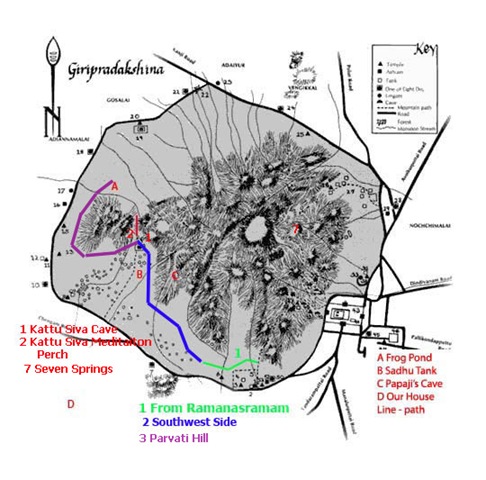
A map is below. The Parvati Hill section of the Inner Path is shown in purple.
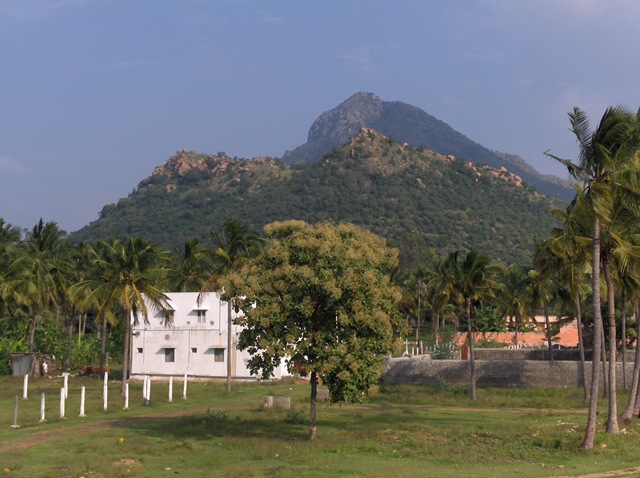
Another way to visualize this is by the look of Arunachala from this location. From the correct place on this side of Arunachala, one can see Arunachala rising behind the twin peaks of Parvati Hill. Parvati Hill is in the foreground, with Arunachala behind.
Approaching the Inner Path
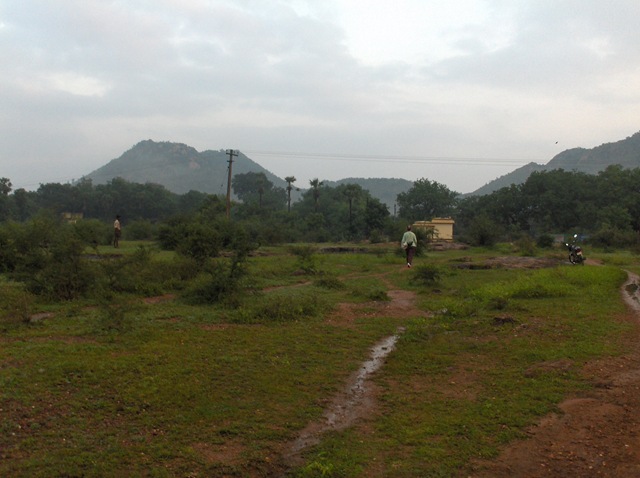
We started from our house on the southwest side of the mountain. The day we walked was after more than one week of rain, after ‘a cyclone’ hit Tamil Nadu. As you will see, much of the path was under water, and the catchment basins and tanks were filled with water.
It is a cloudy day, and Arunachala is behind a cloud.
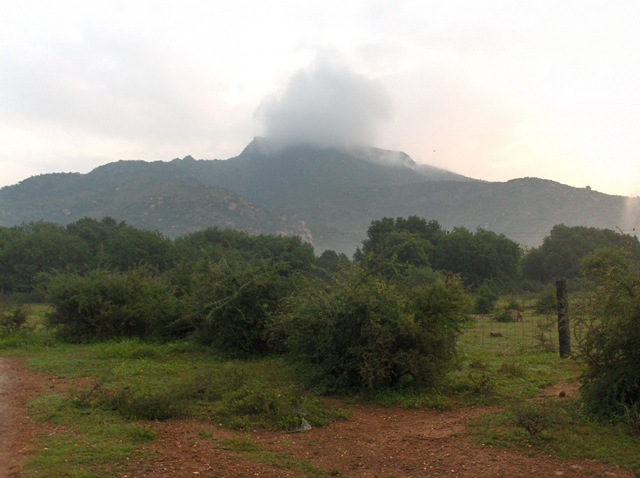
Parvati Hill is to the left. Arunachala goes off to the right.
Sadhus are bathing at Kattu Siva tank.
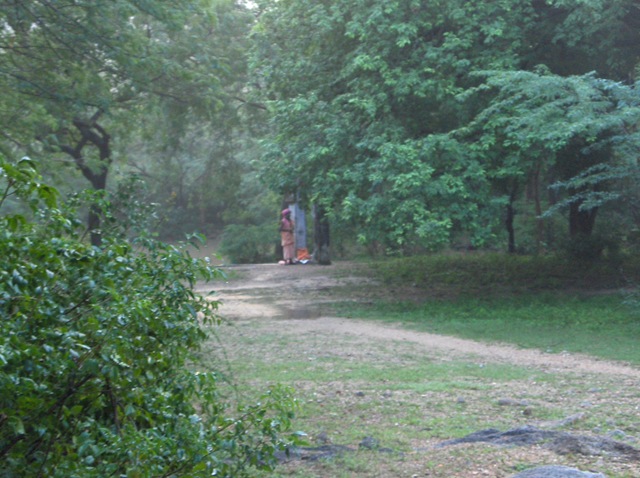
The trees at the Arunachala Kattu Siva Plantation are gone, a sign of the changes this organization is going through as it tries to deal with new people in the local Forestry Department. I hate it that they felt they had to move away from the mountain. See this link for more information about the important work being done by this organization.
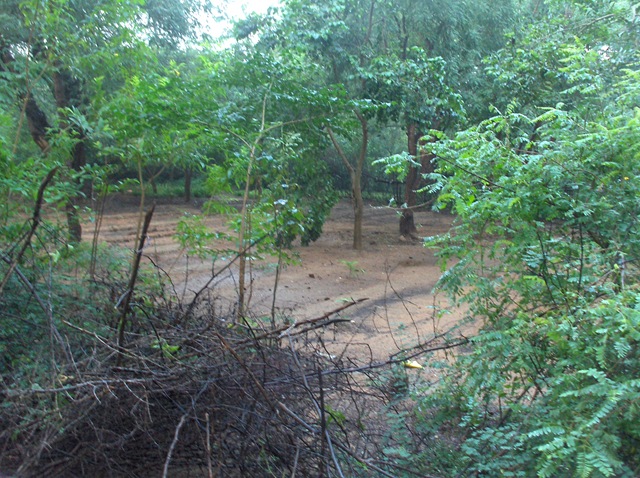
From this area, you can also walk to the Kattu Siva Cave, or take a Path Across Arunachala.
The deep water pump and beautiful water lilies remain.
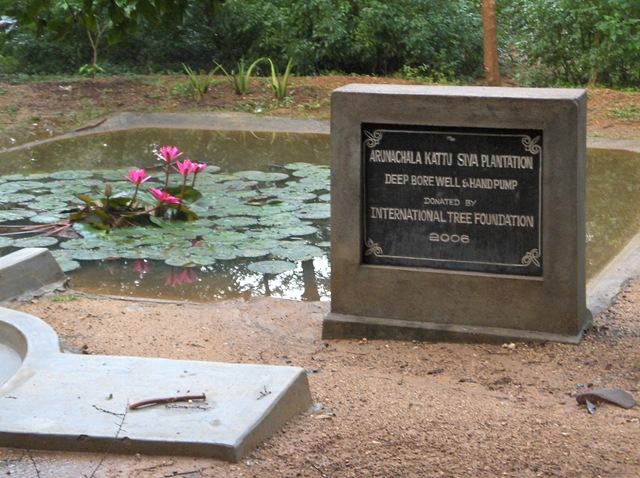
Now we start on this section of the Inner Path. Follow the path, generally north.
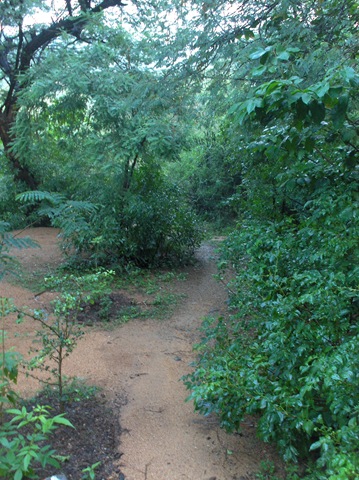
Across a creek, full of water now, the path that goes to the Kattu Siva Meditation Perch branches off to the right.
Carol is taking the main path. The east end of the peak of Parvati Hill is in the background.
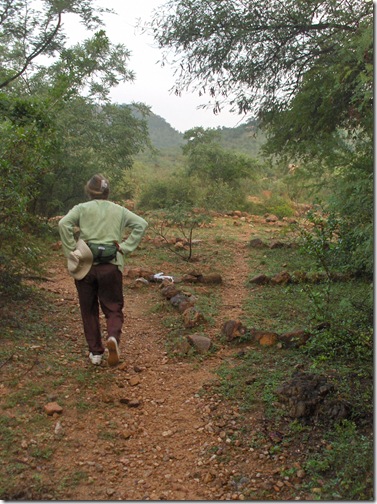
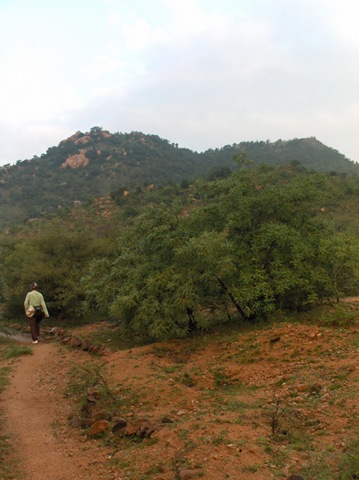
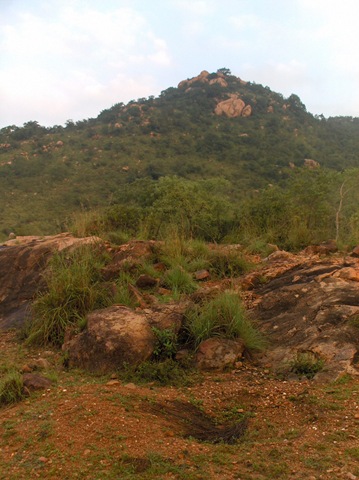
Here are both peaks. These also carry the names of Siva and Parvati. These two peaks are the only part of Arunachala hill that have the same look from both sides of the hill. I will show the other side in a photo later in this article.
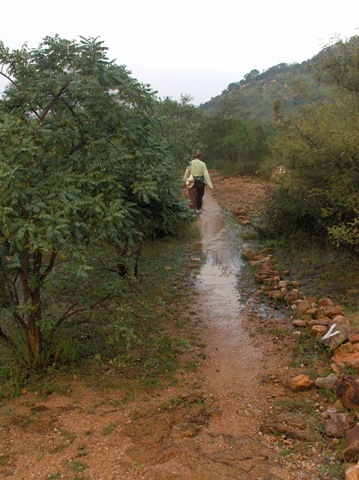
After all the rain, the path, in many places, seemed more like a creek than a path.
After a bit of walking, you will come to this tank. Today it is very full. There is a path on the other side, too, but now it is under water.
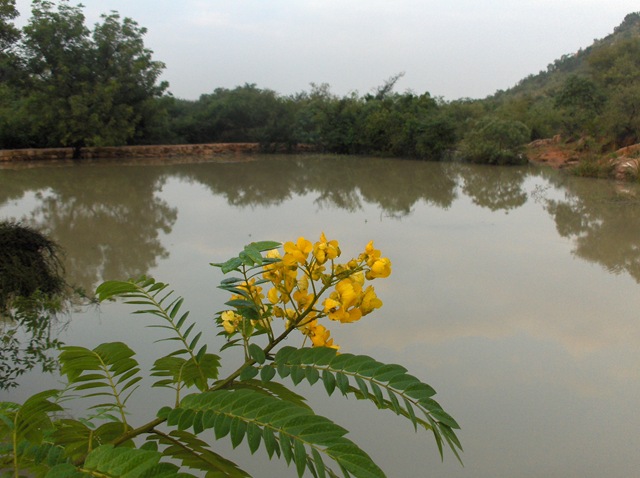
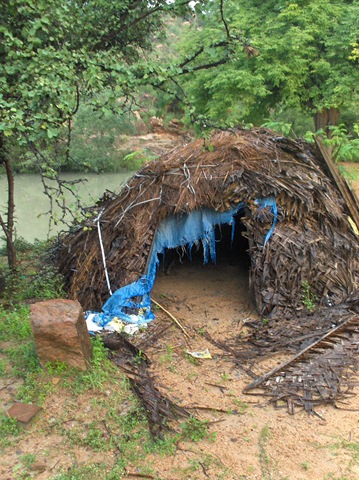
There is a sadhu’s hut by this tank. The winds during the cyclone have torn his plastic ‘door’ to shreds.
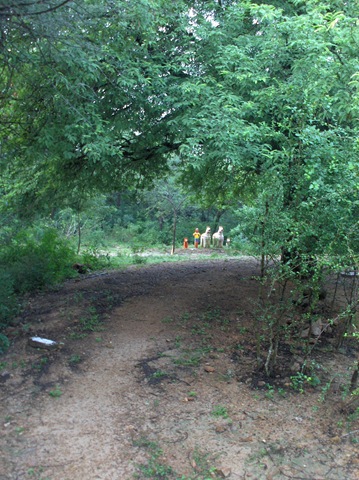
On the other side of this tank, we see some statues.
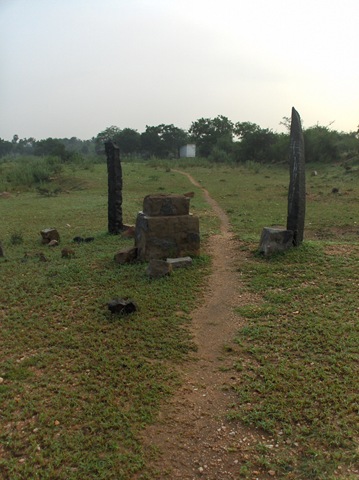
We come closer to these statues. Investigating, we have found that they represent a tribal God, Vediyappan (god of wilderness, or forest). These horses are seen near many temples is this area.
This shrine is located in a spot considered very sacred by the local tribal people. They say that you can hear the gods’ footsteps in this area. That is why the shrine is located here.
I have talked to other local people about these horses, and while they may not know about Vediyappan, they know that these horses stand ready for the god to ride out whenever someone needs protection.
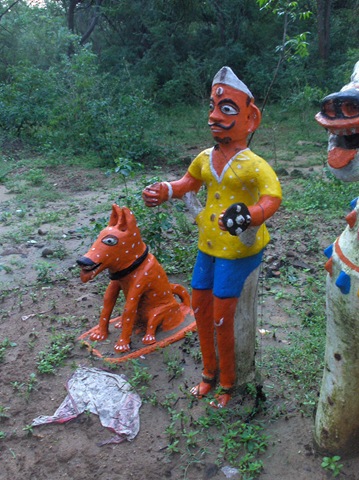
Here is a closer photo of the horses, the god, I guess, and the dogs that are the escorts.
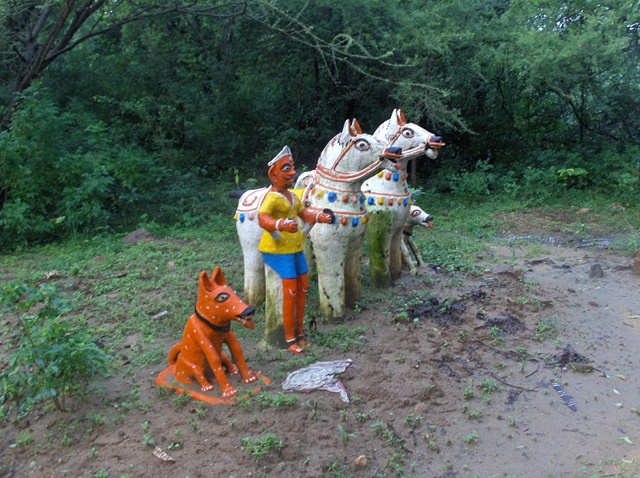
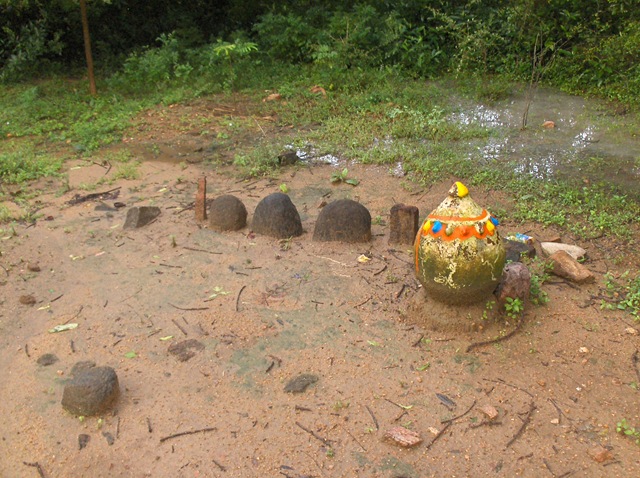
At the side of the statues is the “primitive” forest temple, with natural rocks worshiped as lingams, etc. These kinds of shrines are in many places in South India. I think one can see the progression from natural shrine, to outside altar, to small holy building, to temple, to temple complex.
Below, a close-up of the watchman. You can see a shield in one hand. The other hand, though empty now, once held a sword. These figures are the protectors of the forest from predators, standing ready.
I have researched Vediyappan and not found much. But I did find Ved Ayyappan, said to be the third son of Siva, and to have overcome a forest-thug, Udayanan. Here is a link for Ayyappan. Here is a second link. Maybe this local god is a local version of this legend? Further research makes me think that this a local name for Ayyanar. Ayyanar is definitely associated with the white horses.
Arunachala, enshrouded in clouds.
Now to follow the path onward around Parvati Hill.
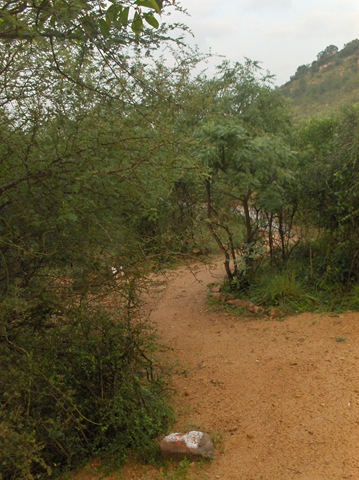
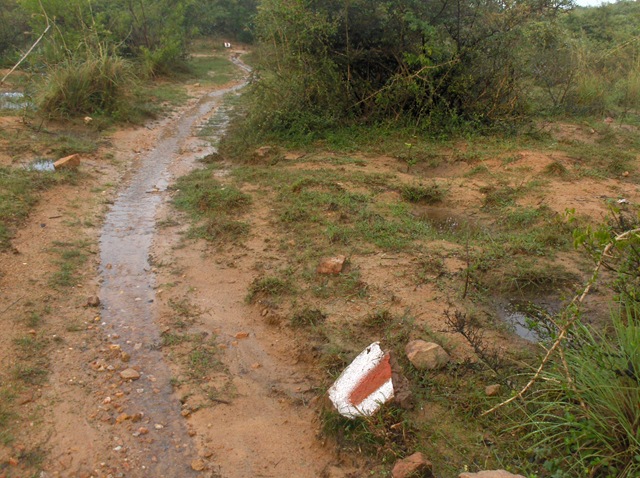
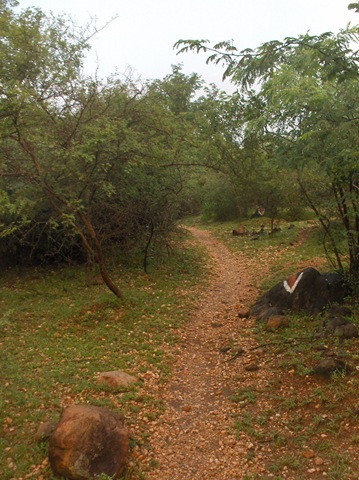
Still wondering if this is the path or a creek? I see a white and red path marker ahead, so it must be the path.
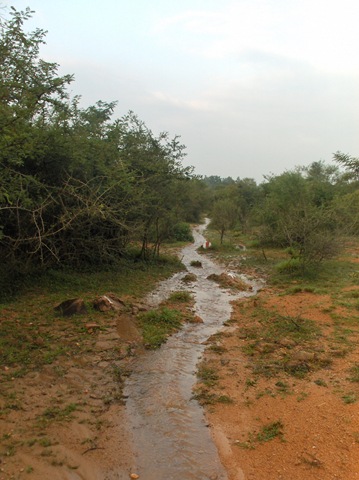
One of the peaks of Parvati Hill.
The old Inner Path section that is being restored goes to the right here. Here are two posts about this path. Part one. Part two.
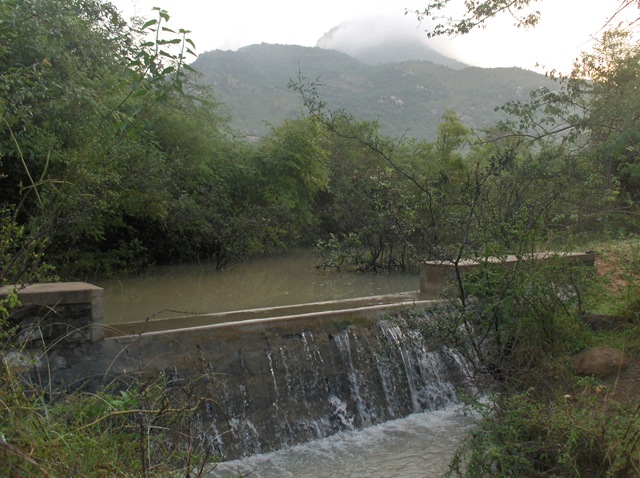
Water pours over this catchment dam, with Arunachala in the background.
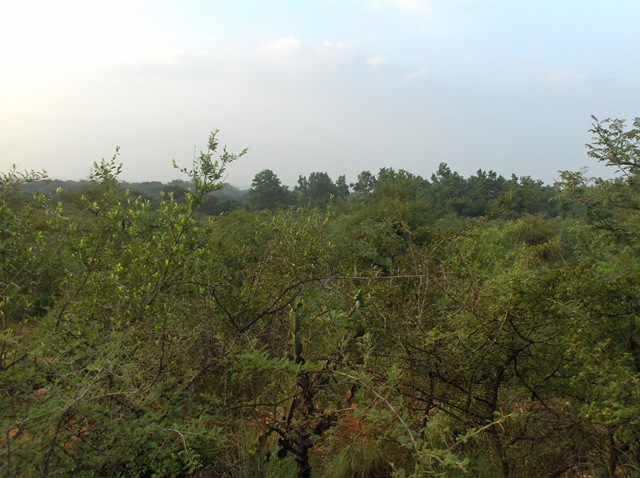
Looking away from the hill, one sees the forest that surrounds the path on this side of the hill.
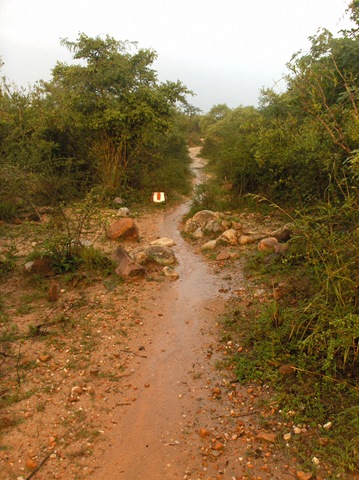
The path slogs on through the water.
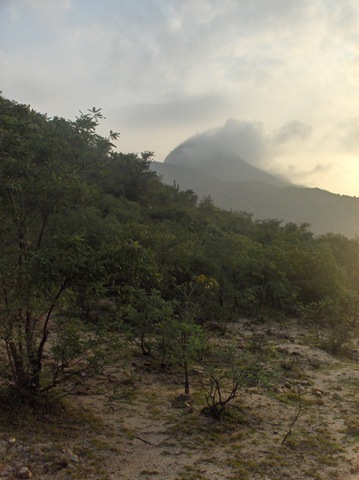
One last look at Arunachala before it is occluded by Parvati Hill.
On the other side of Parvati Hill one sees a big tree and rock to the right of the path.
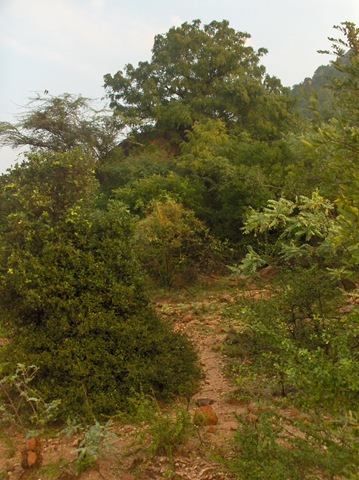
Coming closer, you can see a path off to the right.
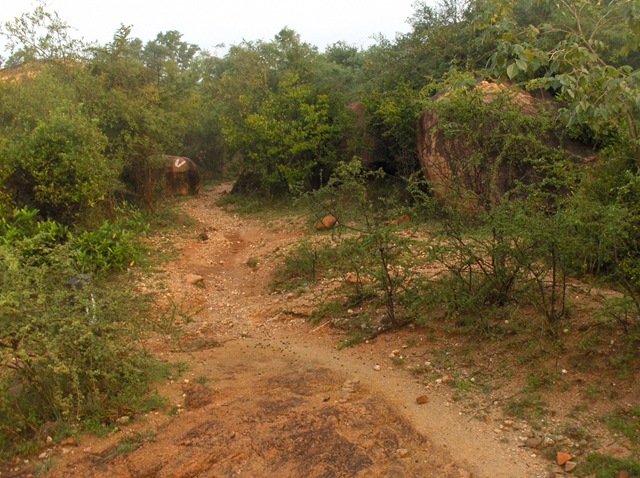
The side path leads through the bushes.
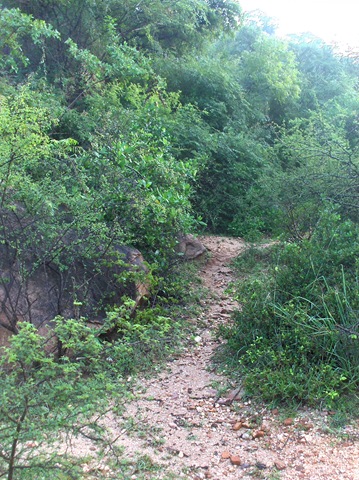
And to a nice cave, just off the Inner Path. We had walked by this spot for several months without noticing this cave.
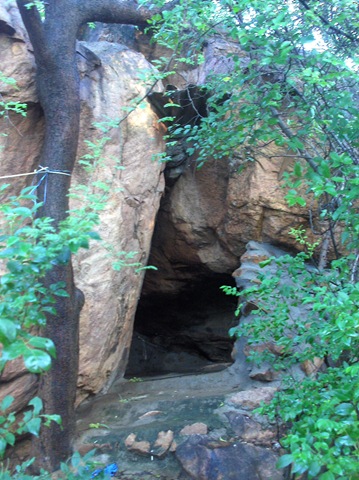
Inside the cave is a cement floor, dry even after the last week of rain. Notice the rock and cement work to the right of the doorway.
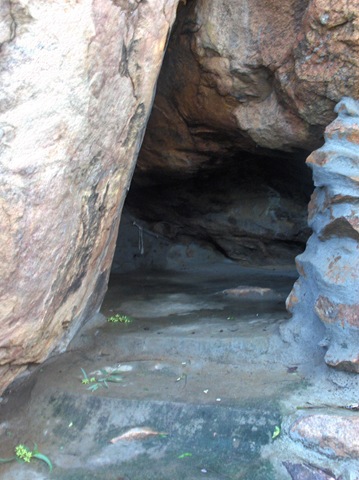
Back on the Inner Path.
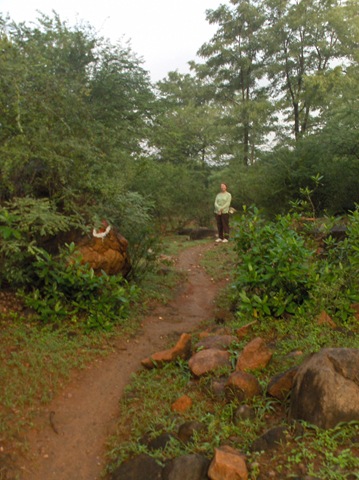
For a bit, the trees change, the general color seems a darker green, and there are the big trees like these behind Carol.
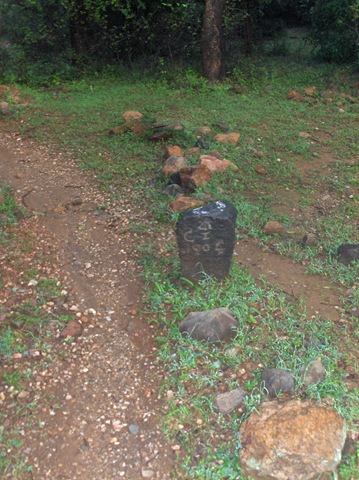
Here is a stone survey marker dated from 1904. There are several of these around the hill, all from the same approximate period.
To the left is a big intersection with another path.
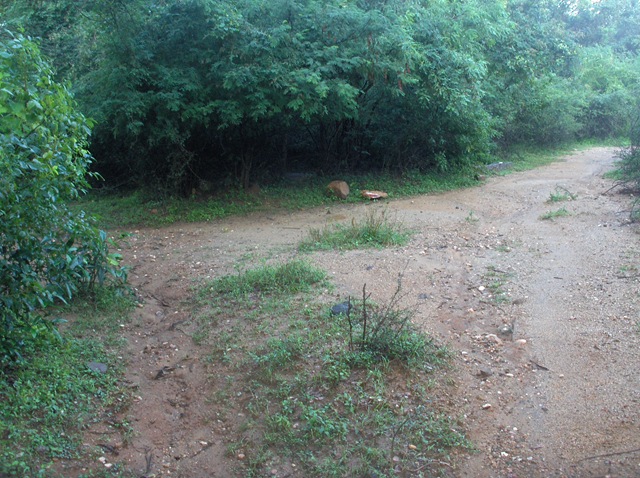
Follow the path to the left.
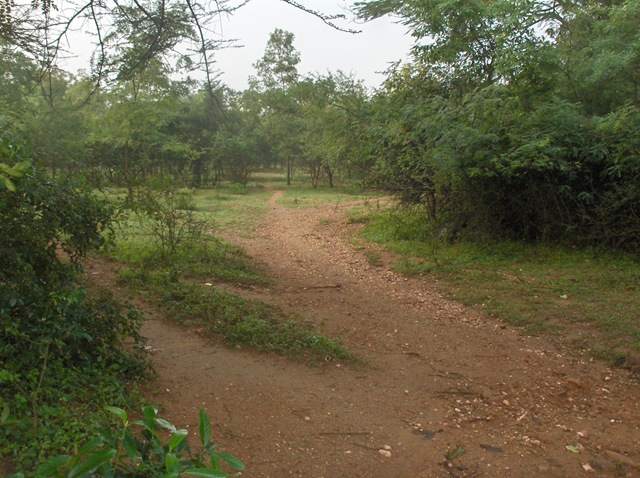
You come to Kannapar Shrine. There is a path from Girivalam Road that takes you right to this spot.
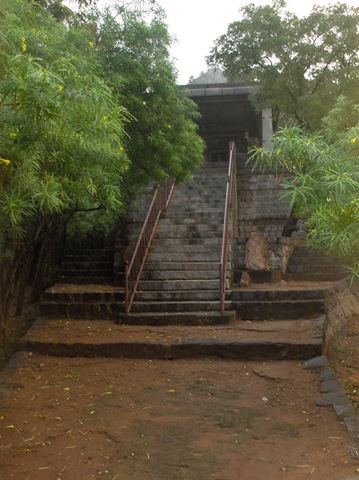
Newly built next to Kannapar Shrine is what I think of as a ‘lingam field.’ This is one of the young Nithyananda‘s facilities. Here I think there are 1008 lingams.
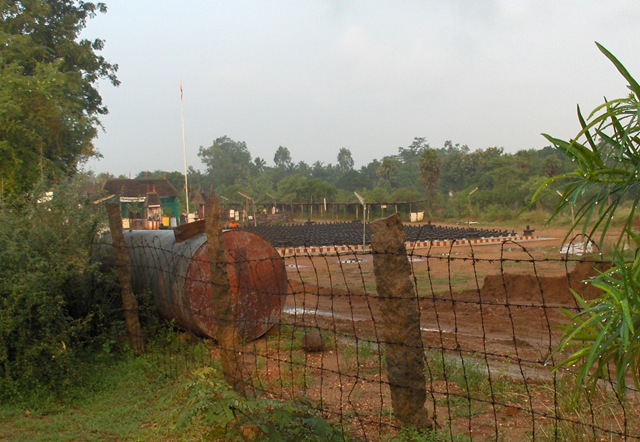
Back on the path, now on the north side of Parvati Hill. The path is pretty wide here.
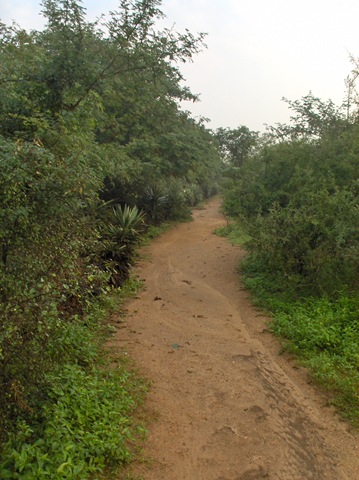
After a bit more walking through the trees and brush, the terrain opens up.
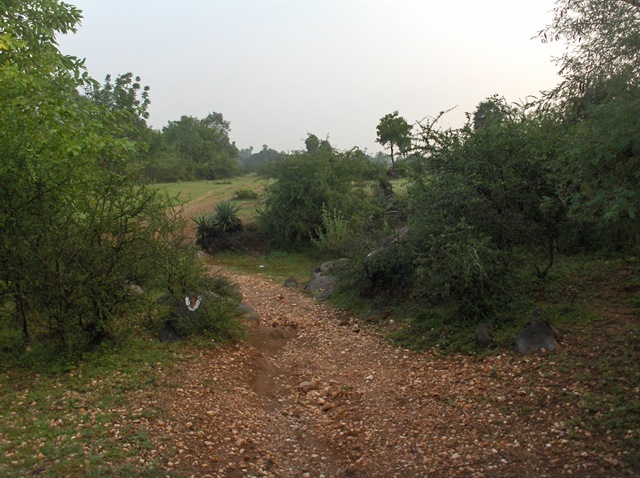
We walk through a wide open grassy area. The Inner Path goes to the right of this photo. We walk through the center path. It seems easier and more direct.
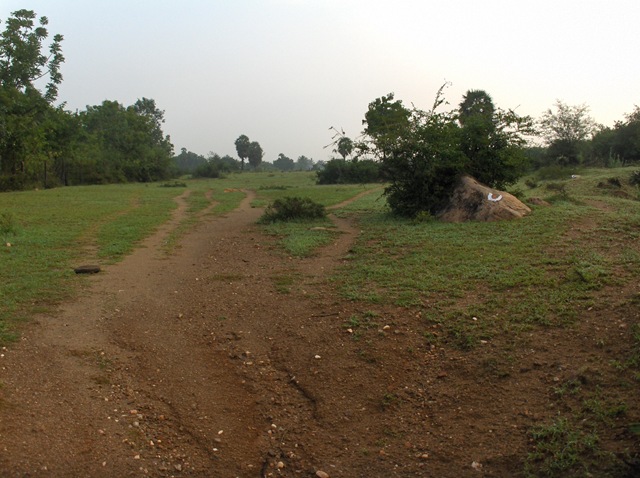
To the left is a field, flooded and being plowed by a man behind two bullocks.
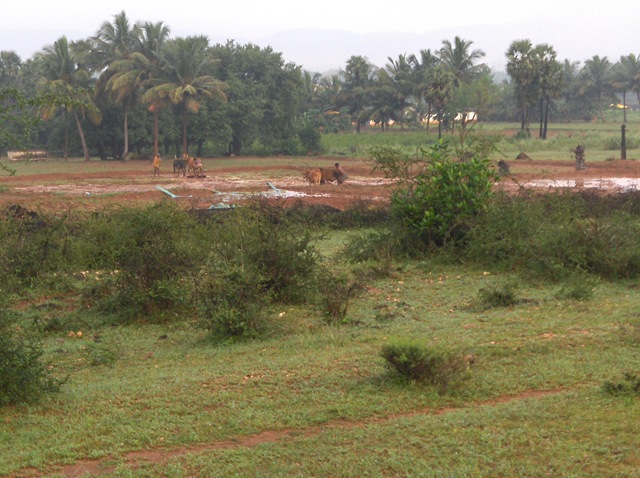
To the right are the twin peaks of Parvati Hill. From the north side this time, though.
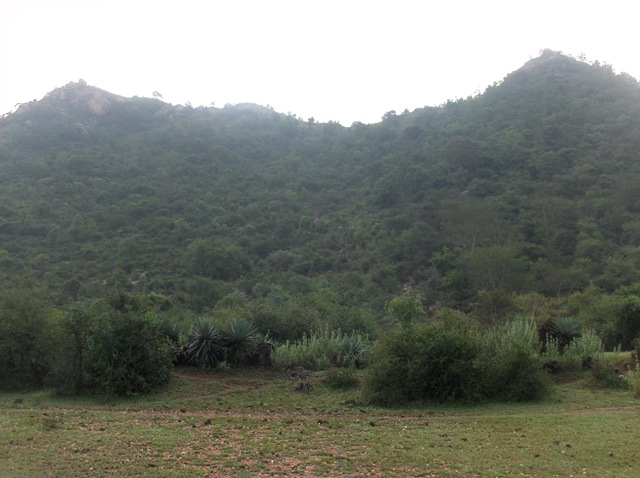
For a panoramic view, I stood in one place and swung the camera from left to right. Panoramic shot 1.
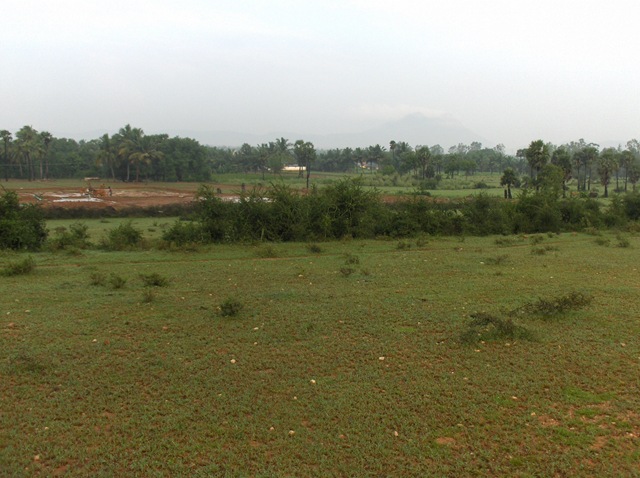
Panoramic shot 2
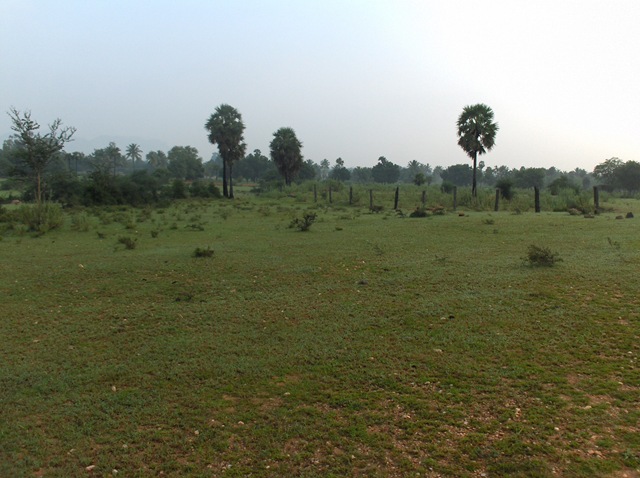
Panoramic shot 3.
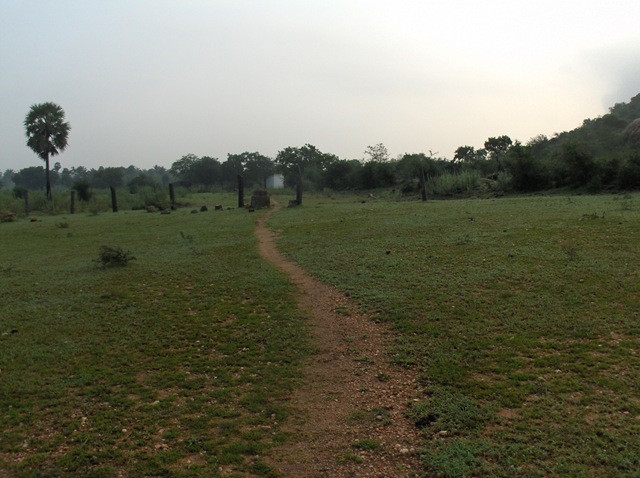
Panoramic shot 4.
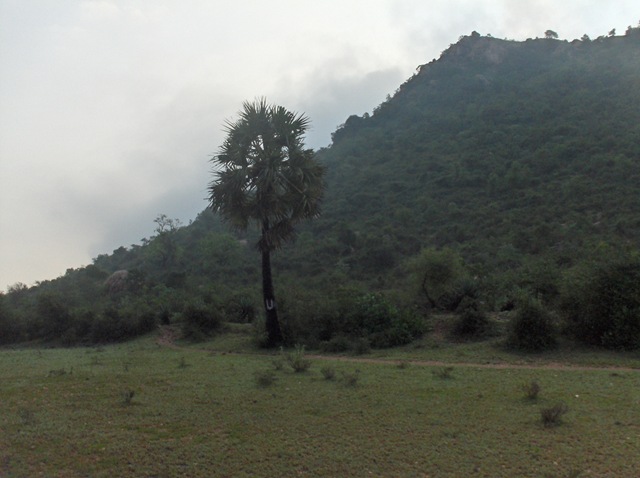
Below, still walking along the trail. This small house is the only one close to the path on this side of the hill. I have seen a sadhu there, accompanied by another man.
In this picture there is another stone marker of some kind. Obviously meant to mark something. But it is not associated with the property line and line of posts.
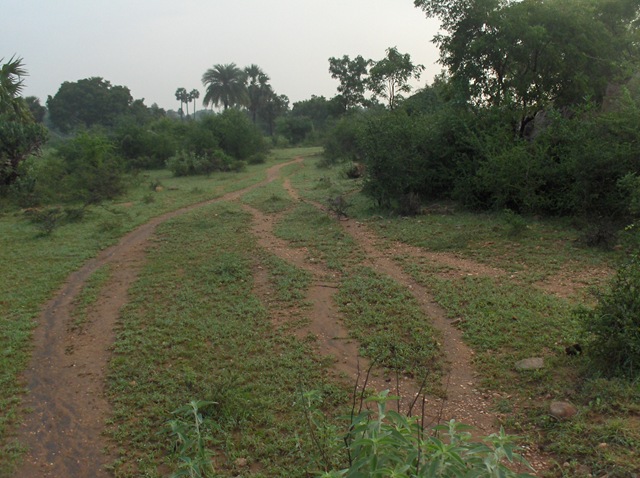
Following the path(s) around the hill.
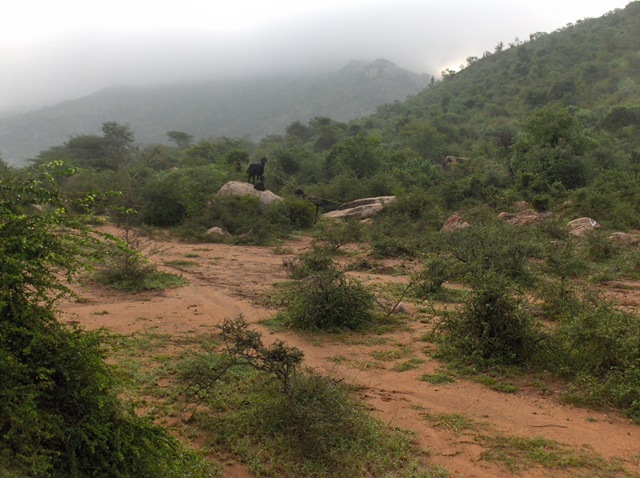
Look, on the rock ahead is a black goat.
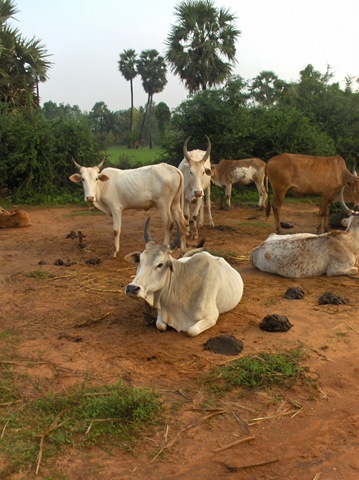
We pass the herd of bulls that seems to live here. They are always in this spot as we pass by in the morning.
The clouds above the hill, a spot of clearing over one of the passes over the hill.
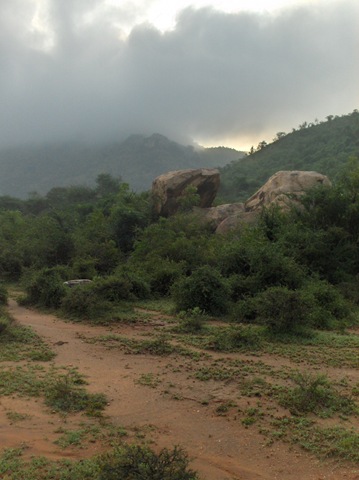
The path goes through this open area towards Arunachala hill. From here, you usually see the structure, ‘The Elephant.’ Today the clouds obstruct The Elephant.
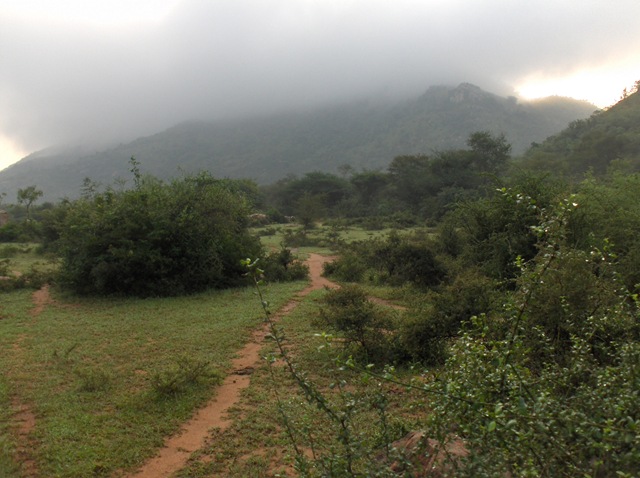
Looking towards the path over the hill.
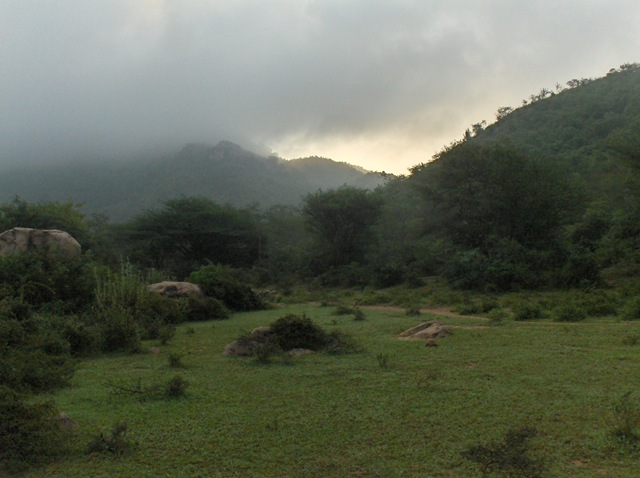
A bit more through the grassy fields and clumps of trees.
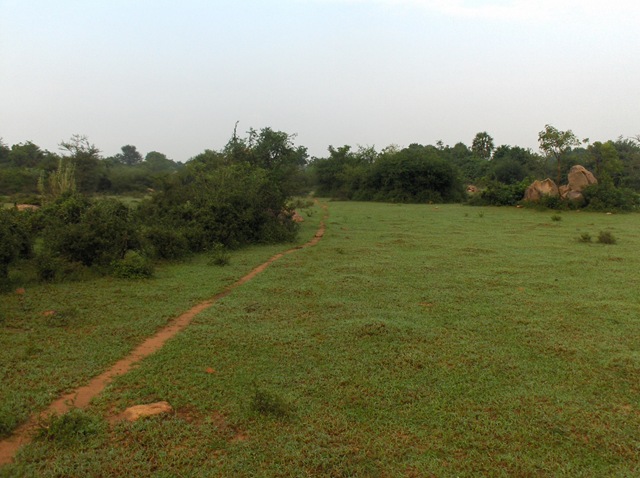
I know we are getting close to the end of this section because of the palm tree to the left of this shot. The path winds through these scrubby low bushes.
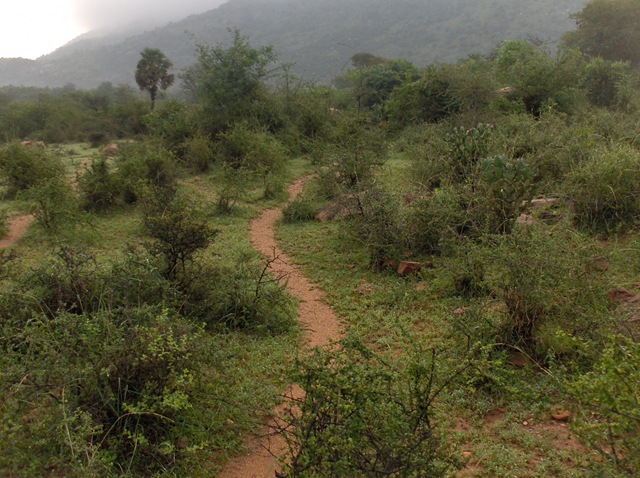
We are joining the main path again here.
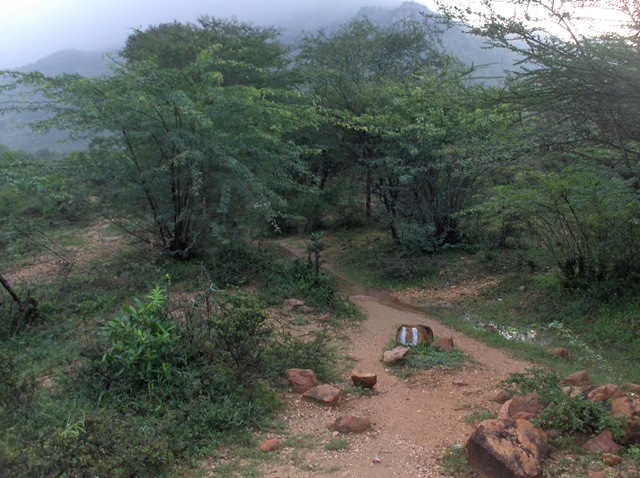
Or is it the main creek?
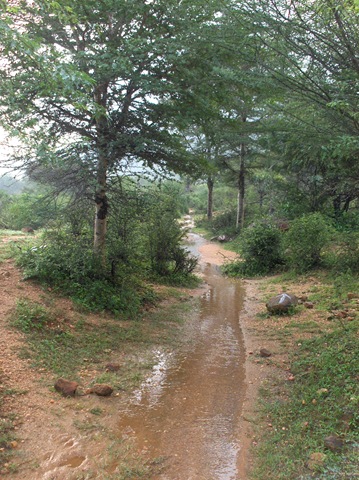
The ‘Frog Pond’ (as we call it) is over its banks. We cannot even get to where we usually sit for a rest without wading through the water. Today we don’t even try.
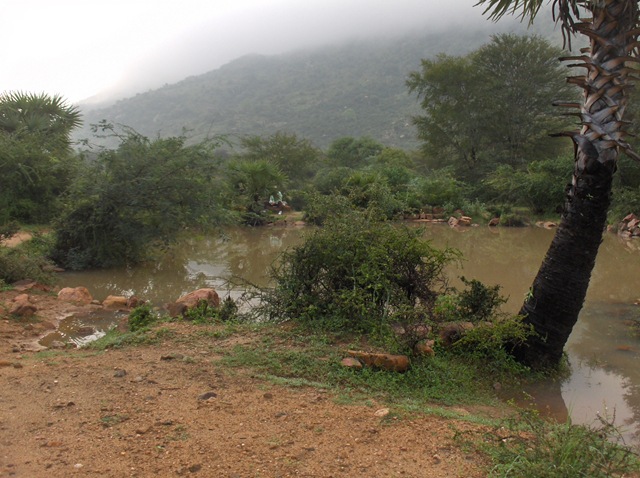
We usually walk to the right here. Not today.
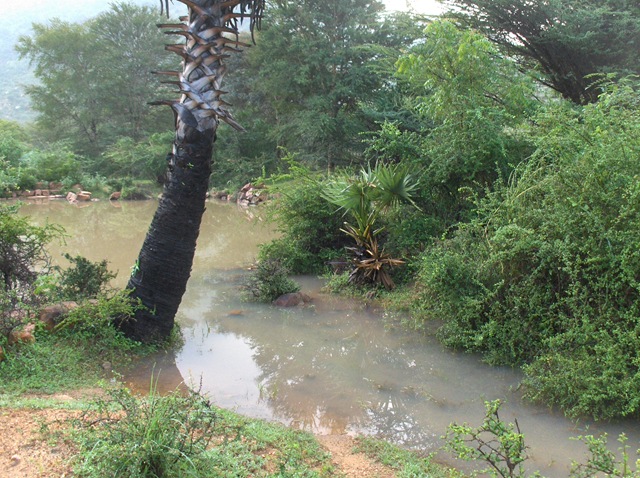
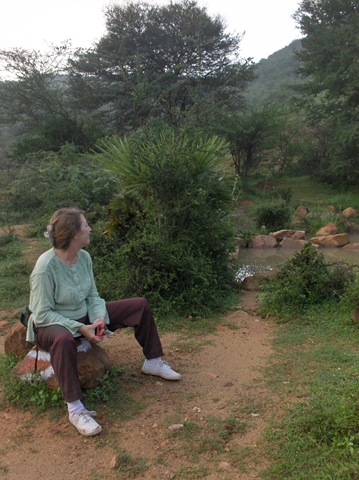
Carol sits for a bit. So do I. This is the end of this section. We rest before we proceed to the next section, which we call, ‘The Elephant.’
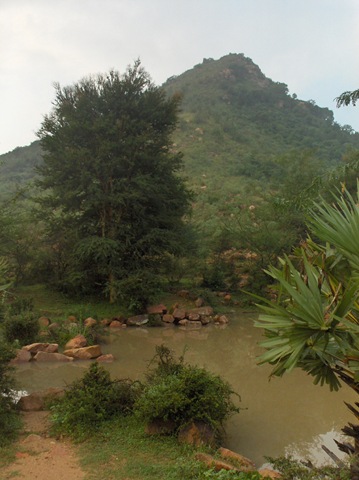
Below, the east end of Parvati Hill from the Frog Pond.
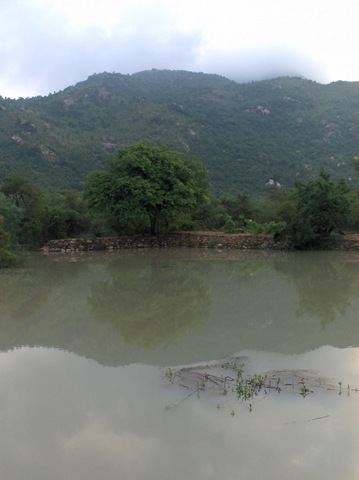
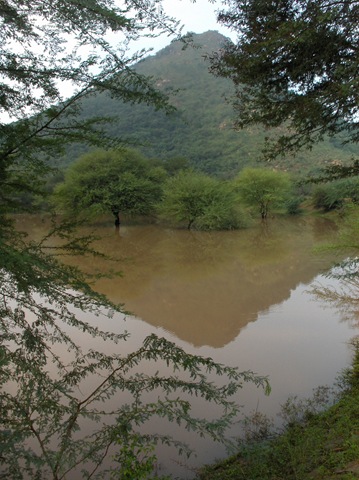
Parvati Hill from a bit further on the path, reflected in the now-full northside basin.
Related Posts:
Kattu Siva path Renewal – part 1
Kattu Siva path Renewal – part 2
Mic’s Visit to India and Meeting Poonja-ji

Dear Friends,
When the HarshaSatsangh yahoo group started in January 1999, about a hundred or so people joined in the first few months. Here is a post of introduction that came to the group from Mic about his going to India and meeting Poonja-ji (also known as Papa-ji). Poonja-ji visited Sri Ramana and considered Ramana his Sat-Guru.
I don’t know where Mic is now, but his letter has stayed with me over all these years and I wanted to share it with you. I have only made minor edits in his letter to retain the original flavor of Mic’s vital spirit that comes through his words.
Harsha
**************************************
Hello all,
A brief introduction. My name is Mic, though most of my friends here call me Mohan. Advaita found its way in my heart as my heart in the summer of 91.
While wandering India, by chance I encountered Sri Poonjaji, a disciple of Bhagavan Ramana Mahrishi. I stayed with Poonja-ji and the small gathering there for two months. It was a time of great joy, intensity, revelation, and incomprehensible silence.
I mostly recall the great stillness. The presence of this man, Poonja-ji. In this dirty town of swirling dust storms and buildings swimming in the heat before me.
At night candles cast a golden hue upon the Indian markets, dancing in the buzz of bicycle songs and branches of lush red lychees being sold on the dusty streets.
The silence. The torrential flow of humanity, pulsing through the hot polluted streets, watermelon stalls.
The astonishing passion of seekers at Poonja-ji’s house. It was like the sweetness of sugarcane juice. It was the end of seeking itself in the embrace of the always so.
Like many there with Poonja-ji, I had also walked other roads in my search.
I had come to India on a Buddhist yatra, with plans to finish the journey in a Thai monastery. Yet relaxing into this resplendent heart of being, the seeking and the struggle fell. The seeker and the story melted away as monsoon rains of India drenched me in joy.
And I finally saw the True heart of advaita, as my own.
Leaving India, with the blessings of the mountain, I felt almost drunk on the ringing clarity of these words from the Tripura Rahasya;
” Know yourself as Pure Consciousness, the unaffected witness of the phenomenal world.”
Integrating this with a world that demands commitment and authenticity, I meet with surrender and an open heart.
Some days I struggle, some days I sing. The devotion I feel to Shakti I know is but a reflection within consciousness of this love.
The silence.
And it is in this love I am earthed in freedom, and can play out my role in the theater of this world in peace.
Warm regards,
Mohan (Mic)
Arunachala – On the Inner Path: Southside from Ramanasramam: By Richard Clarke
This posting is the first in a series in which I will try to show some of the experience of walking Arunachala’s ‘Inner Path.’ The Inner Path is a pradakshina path that has been maintained by various volunteers for many years. This path is close to the Holy Hill, much less traveled, and many find it to be the most quiet and peaceful way to walk around the mountain.
To give a good sense of the Inner Path, there will be a number of postings, one for each of what I see as ‘sections’ of the path. For many of these sections I will have one or more postings of what we have found near the path. I will call these postings, “Off the Path.” I think this provides a good framework to show you what we are finding as we continue to explore Arunachala.
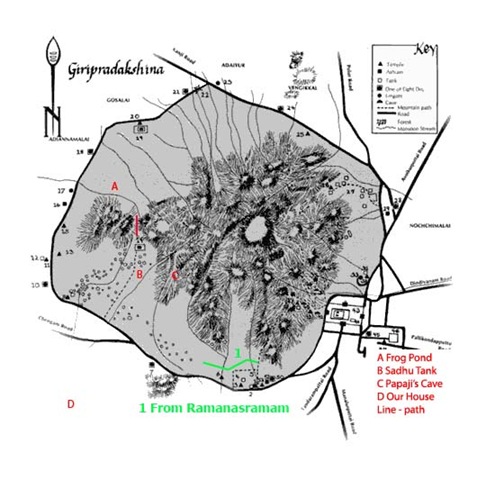
This first posting covers the path from Sri Ramanasramam to the location near where Perumpakkam Road meets Bangalore Road, and there is a popular walkway from the road to the Inner Path.
This is shown in the map view below, marked in green:
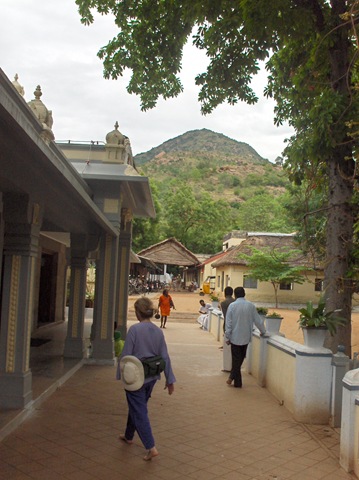
Starting from Sri Ramanasramam
Arunachala from Ramanasramam
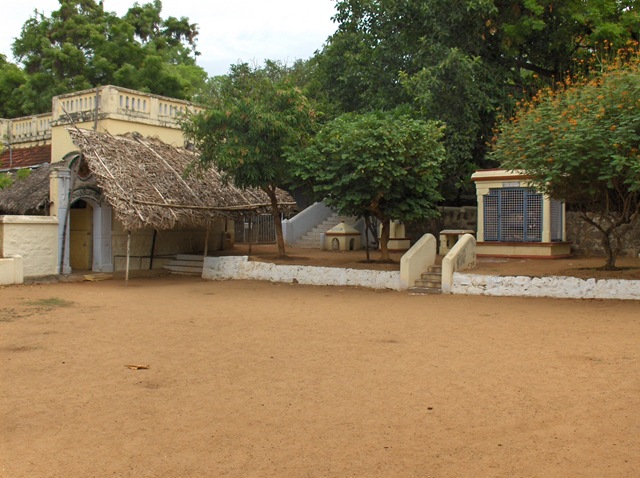
The to back gate
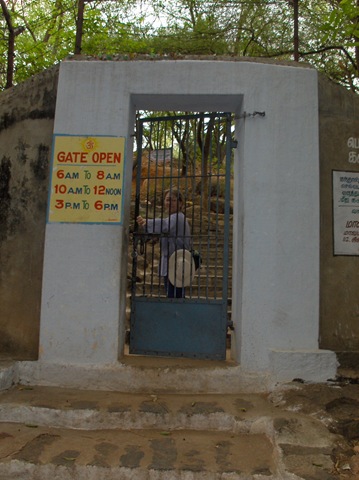
Through the gate
Starting up the Path
First, a few steps from the start of the path. Often there are one or two ‘mountain guides’ sitting here who can be engaged to assist newcomers and make sure they can find their destinations.
We started out this day about 7:15 AM, and none were there yet.
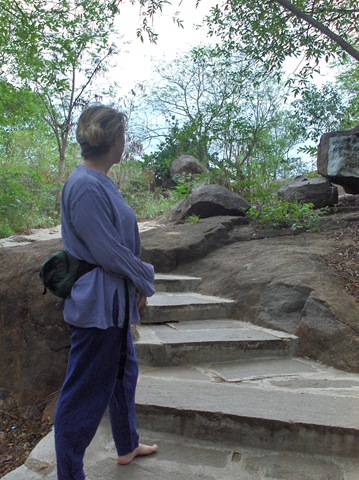
Up the path
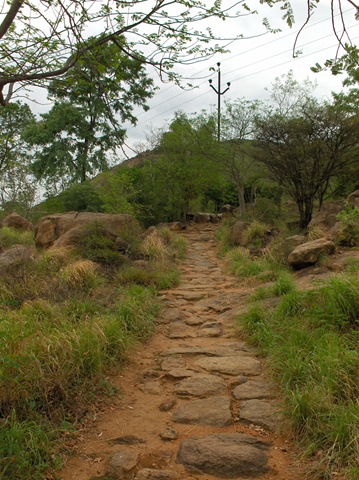
Take the left branch of the path here.
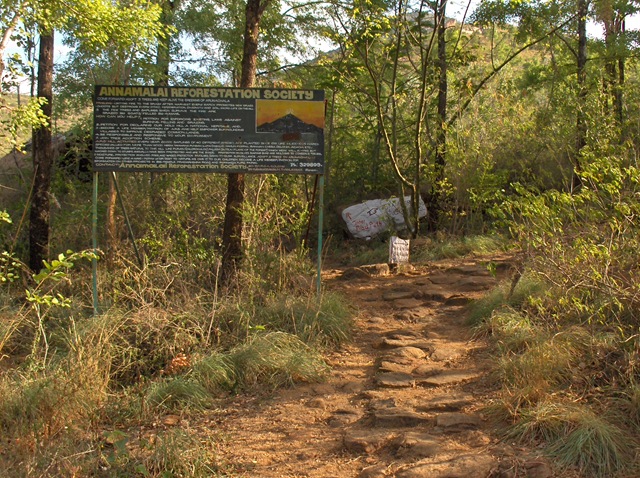
Starting on the Inner Path
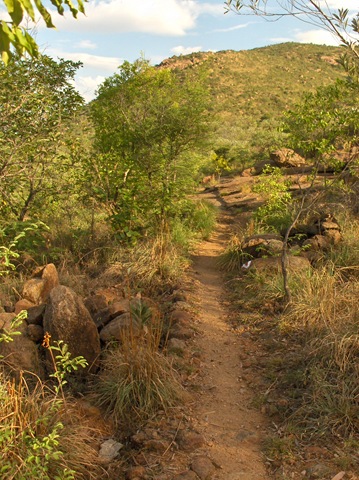
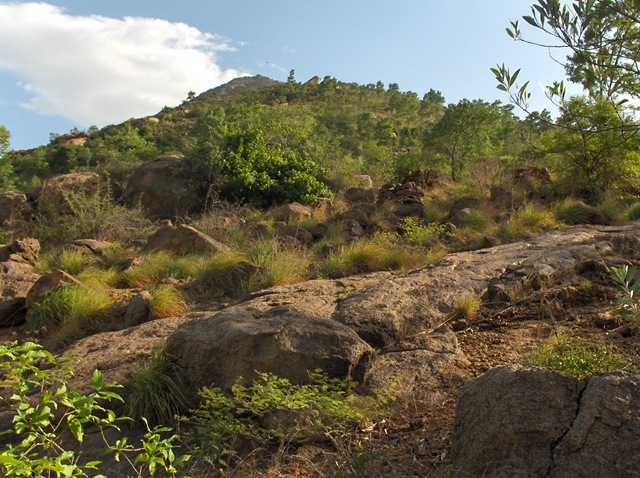
Looking up the hill.
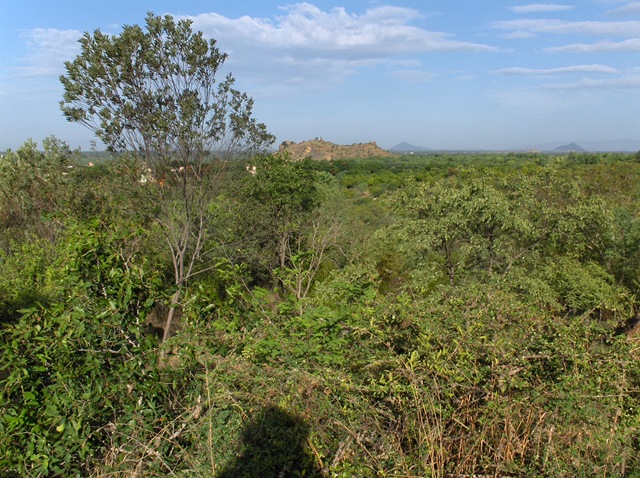
Looking away from the mountain. Here we are looking west from the path. A small hill can be seen. This hill is off Bangalore Road, before the turnoff to Girivalam (“Hill-Round”) Road.
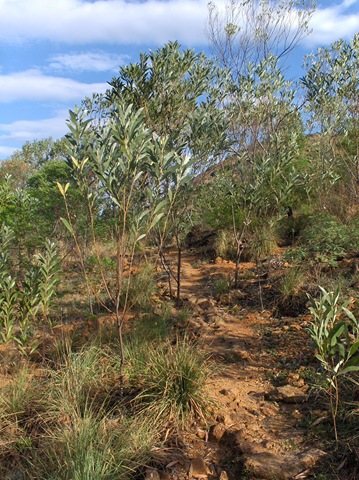
Following the path.
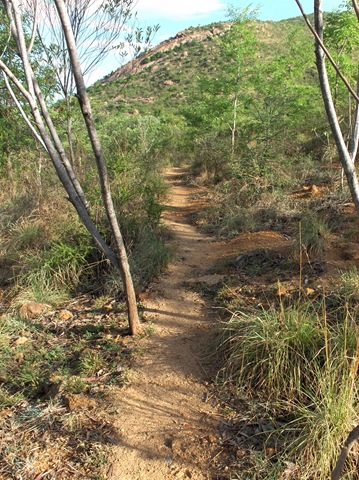
Looking up at the hill, the first view of the peak.
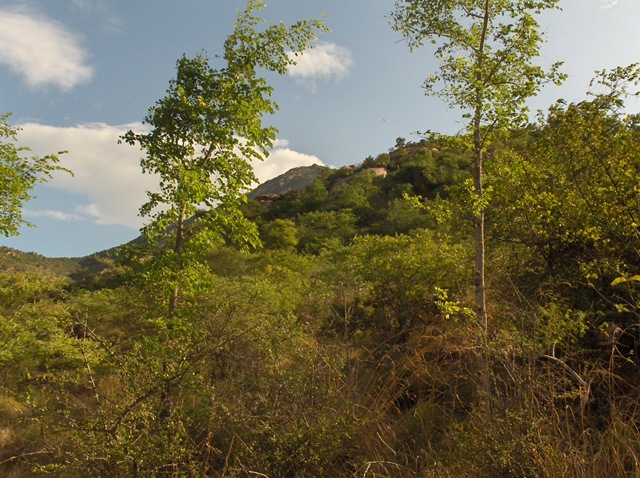
Ahead is one of the ‘arms’ of Arunachala. In the map above, you can see this to the left of Ramanasramam, jutting out from the mountain. This arm is one of the main landmarks of this part of the path.
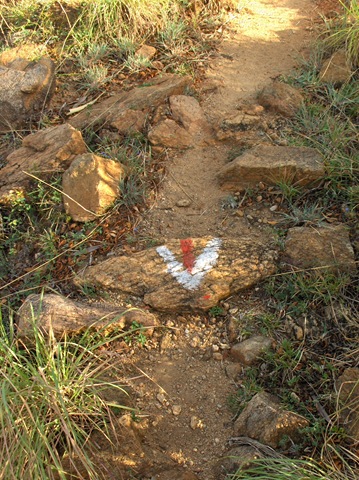
Trail markers line the path so walkers can be sure they stay on the path. These markers remind me of the fire in the cauldron at the top of Arunachala each year at Deepam.
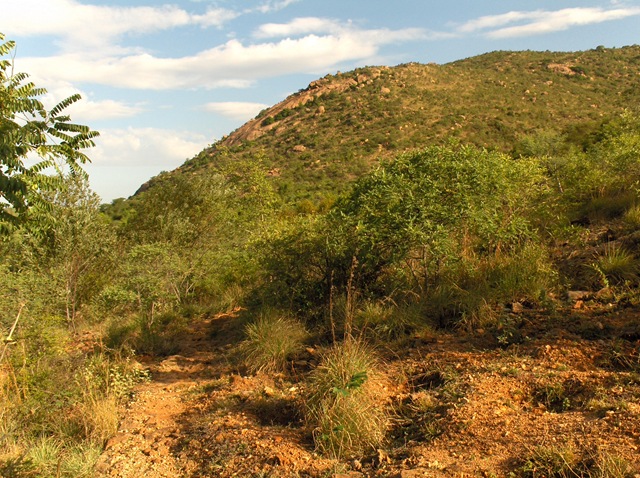
The peak is more visible now.
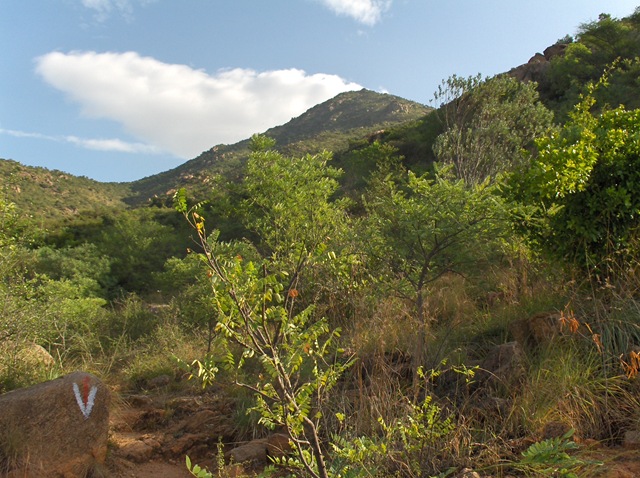
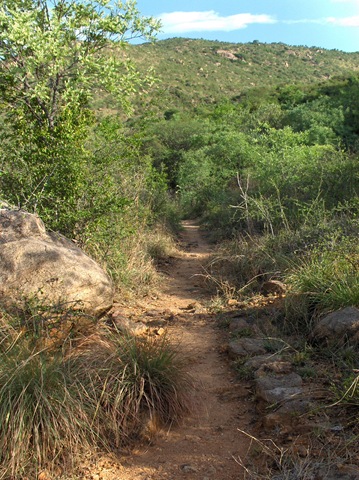
Walking the path.
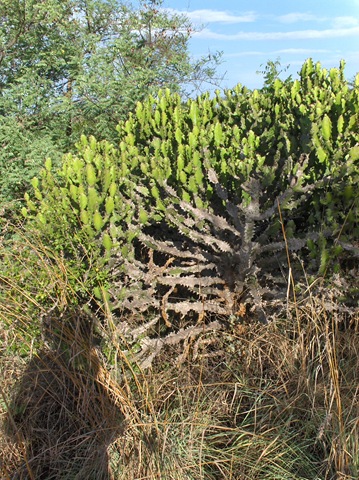
This type of cactus is found in many places around Arunachala. They remind me just how hot the weather is here most of the year. This cactus is about eight feet high.
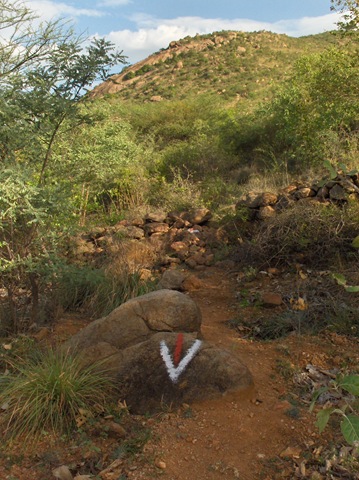
There is a stone wall. Cross it and turn left, down the hill.
We turned right once, to explore a rock formation up the hill here. We found a tribe of Langur Monkeys up the hill. As we approached, the young monkeys and their mothers scampered higher up the hill. The king of the tribe held his ground, and as we approached bared his fangs several times. We “pranamed” him to show that we do not want to give him any trouble, and we turned around.
A bit more about these monkeys can be found at this link to ArunachalaGrace.blogspot.
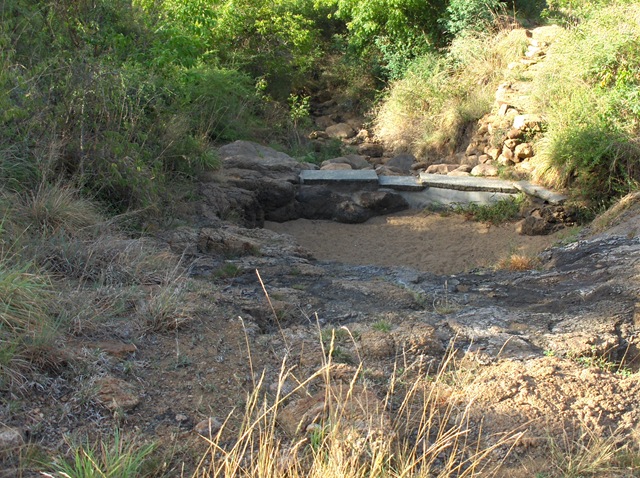
We come to a stream, with a water catchment basin. Both are dry now. Sometimes you will see people sitting here.
Onward on the path.
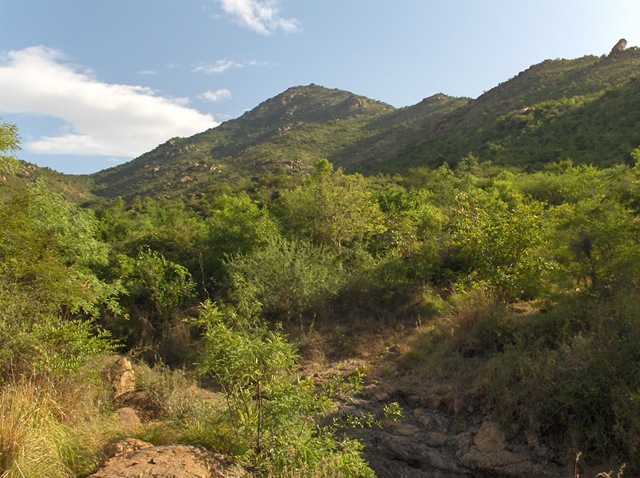
Arunachala from this location.
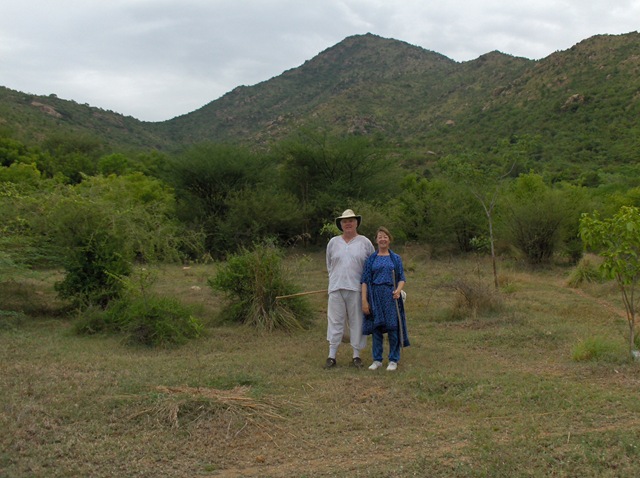
Carol and Richard, with Arunachala as backdrop.
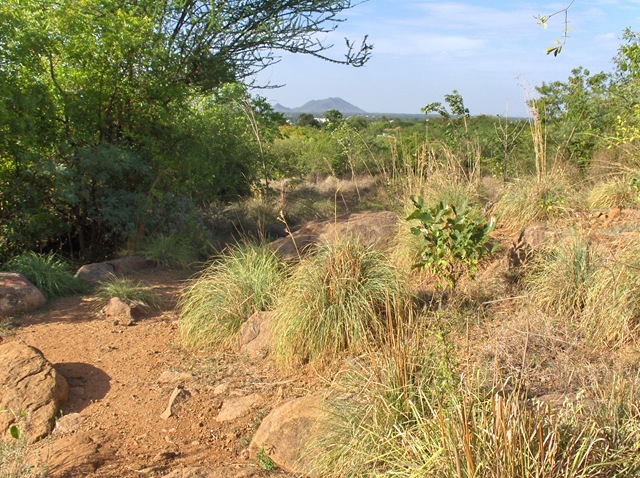
We follow the path along the stream. Bear left. The right fork is a shortcut. I will show this in a later posting.
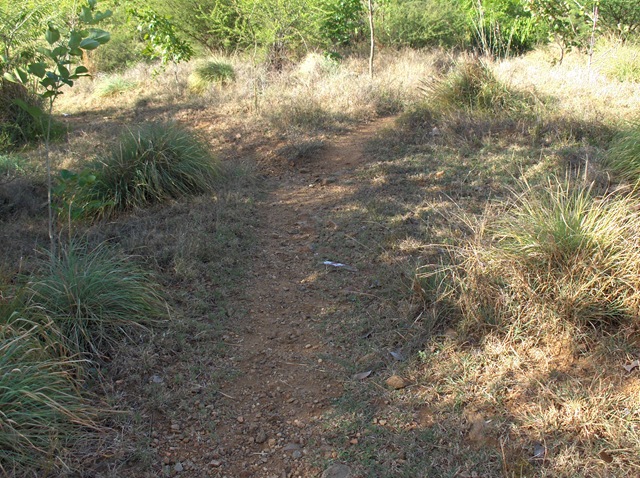
Following the path.
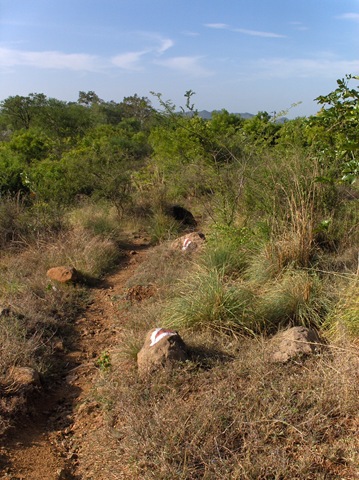
The streambed is to the right.
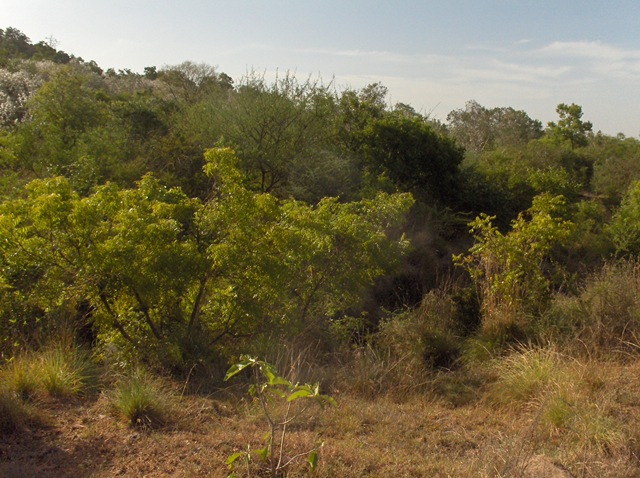
Another view of Arunachala …
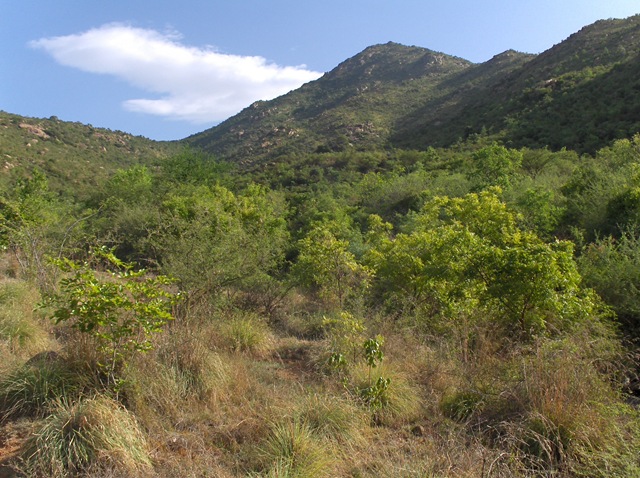
And we keep walking the path.
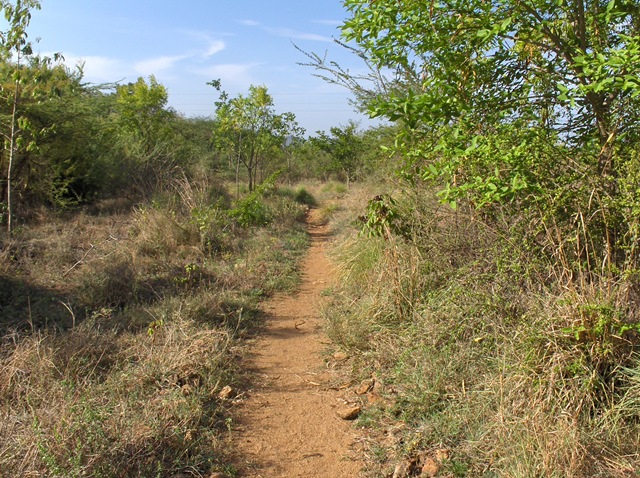
We are approaching the area where one of the major Arunachala Reforestation efforts operates from. Here we get the first view of the Museum/Visitors Centre at the Mountain of Medicine, currently under construction.
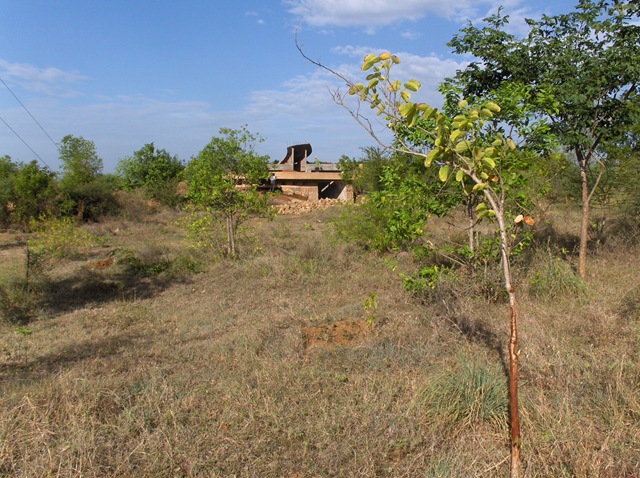
Here is a close up.
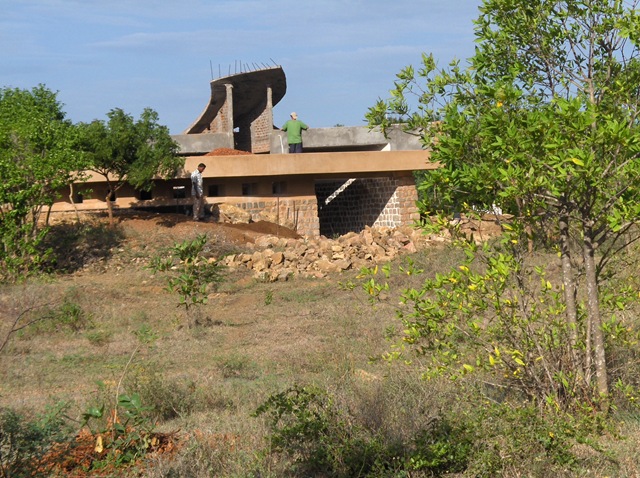
And another view.
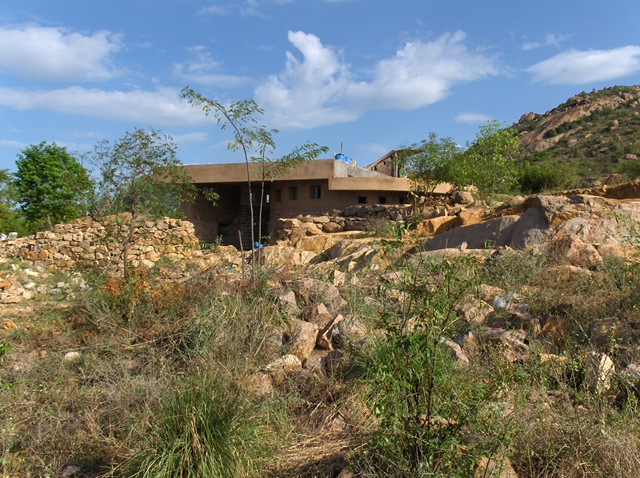
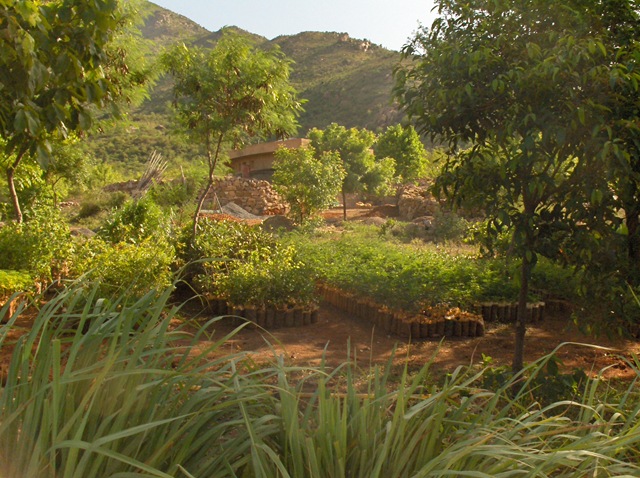
Walking through the area, you can see all the seedlings being grown up to planting size.
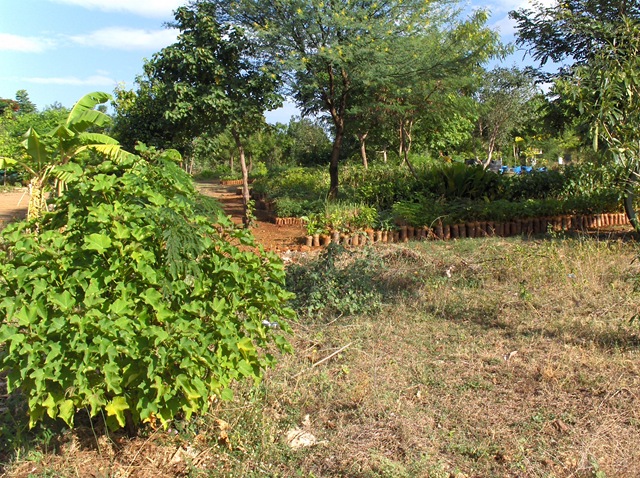
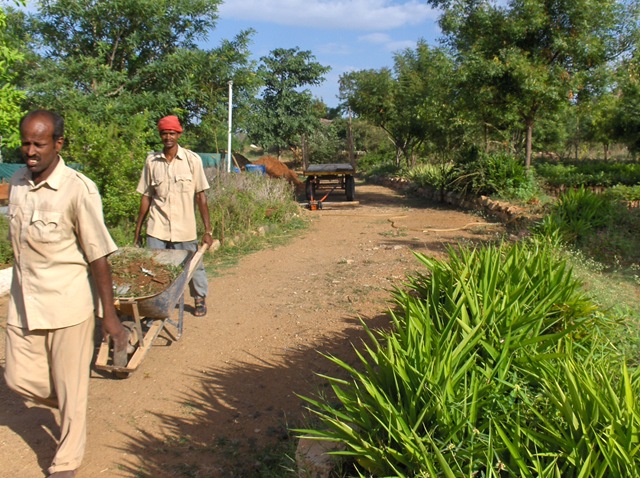
And workers.
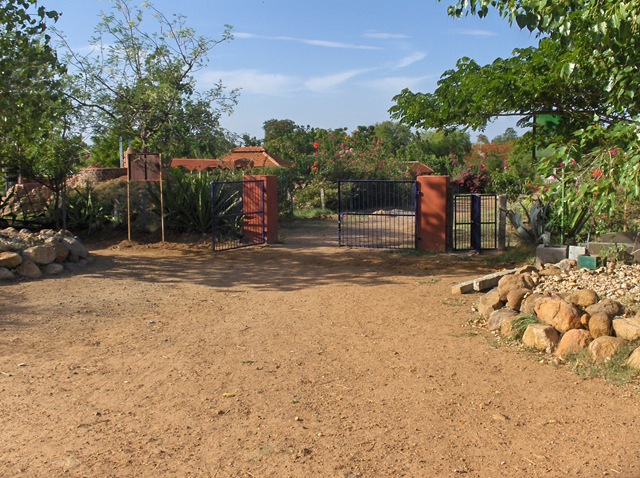
The gate out, to Bangalore Road, and the Children’s Park.
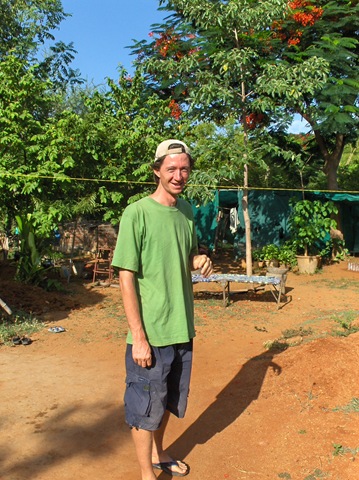
Govind, the Westerner that is behind all this good work.
Arunachala, from the Mountain of Medicine.
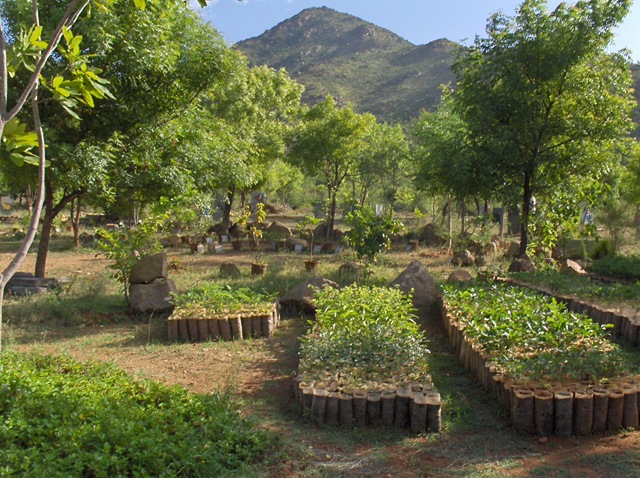
Leaving the Mountain of Medicine, to continue on the path.
To find our more about this wonderful effort, view this posting by David Godman.
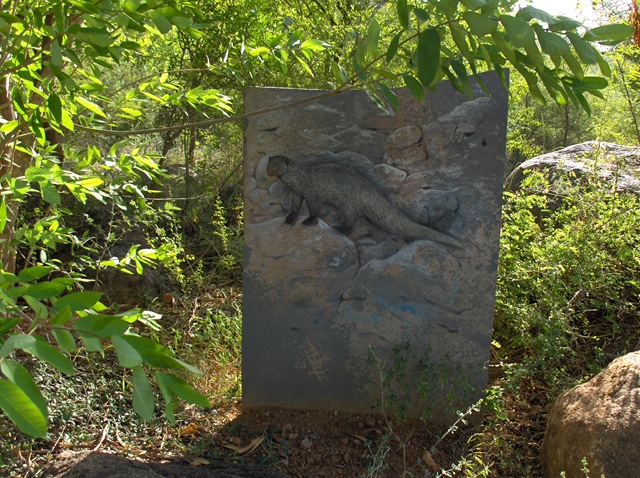
One of many paintings on rock slabs of local birds and animals.
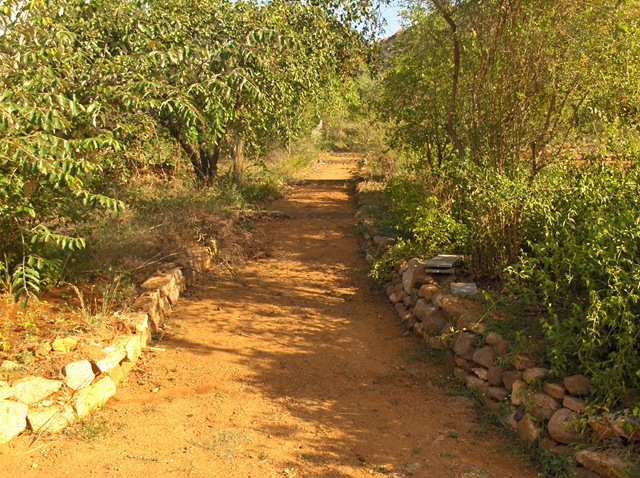
Back on the path.
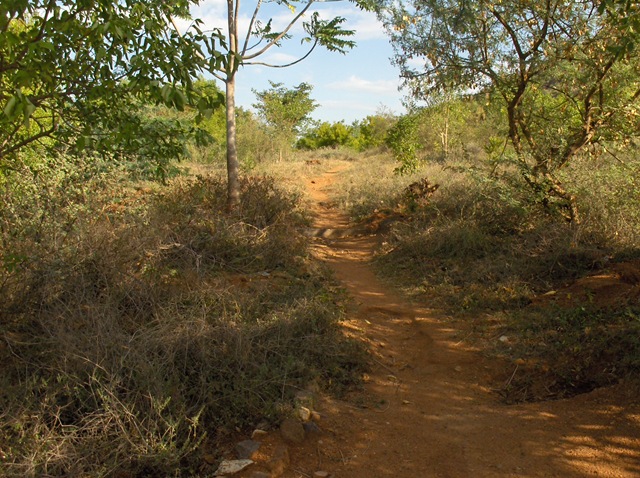
Looking towards the Hill.
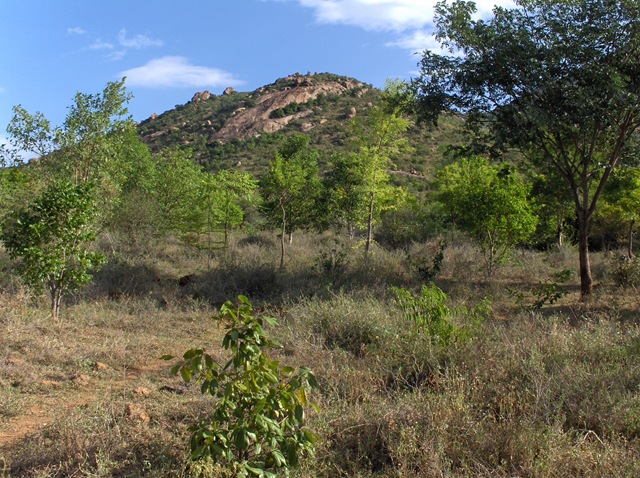
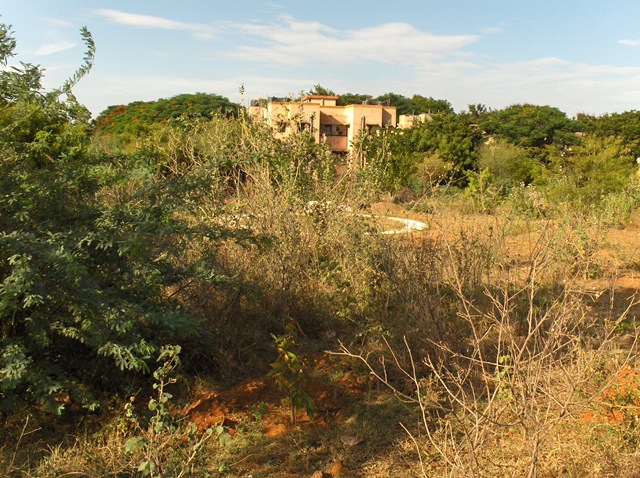
Looking towards the street. Here a housing development can be seen.
Tree planting, recently done.
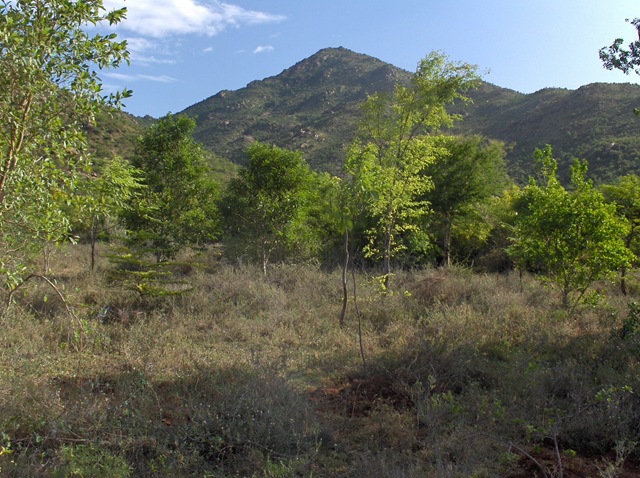
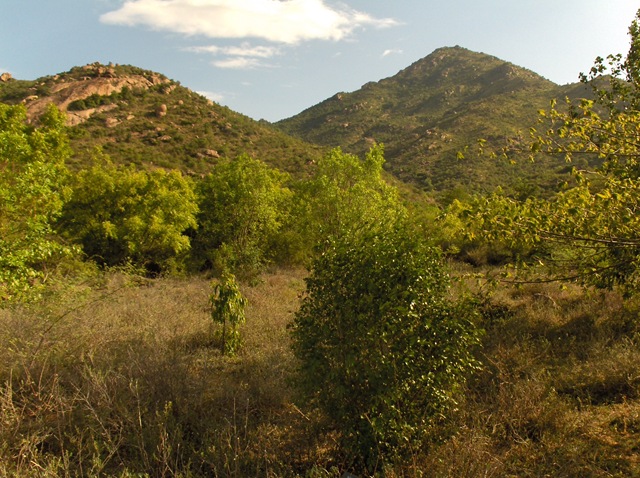
Views of Arunachala.
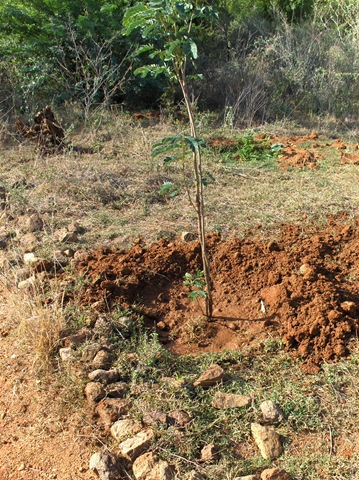
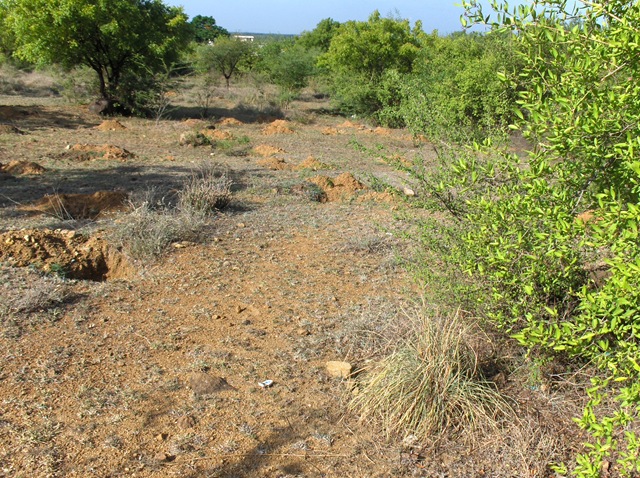
More holes are dug, waiting for rains before doing more planting.
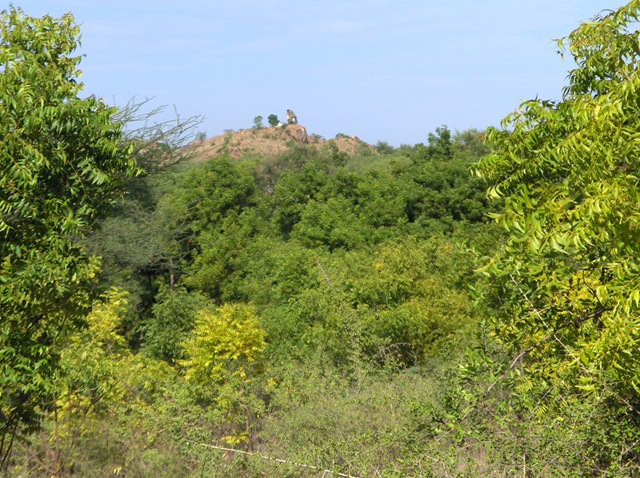
The view away from the mountain. If you do a close-up of this hill, you will see an ancient altar at the top.
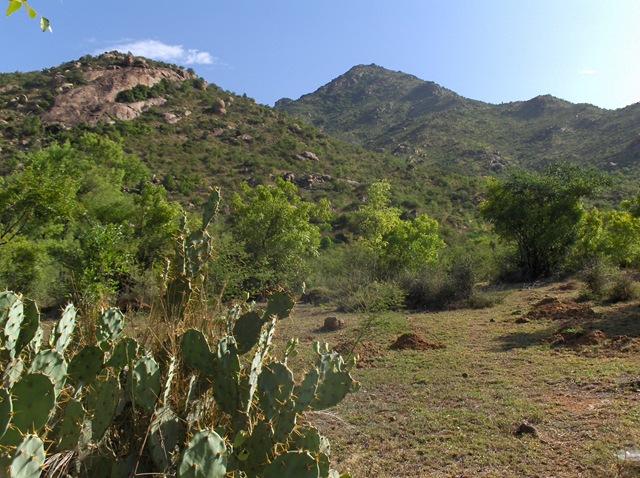
One last look at Arunachala. Notice in the foreground another of the types of cactus that are to be found around the mountain.
Then the gate that marks the end of this section of the Inner Path.
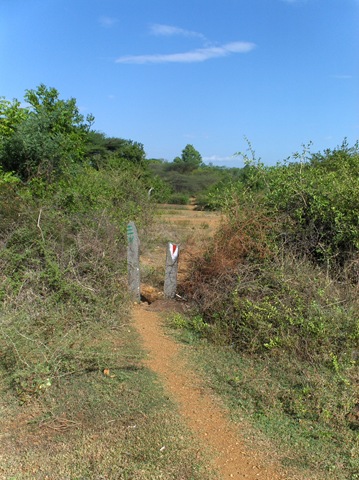
Looking out to the road.
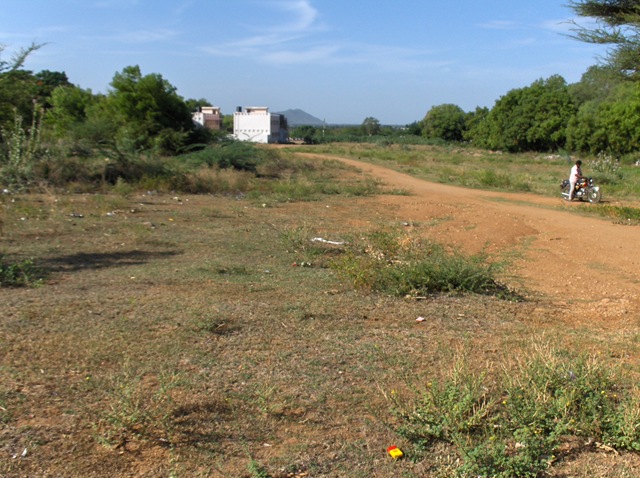
Looking forward to the next section of the Inner Path.
Indian Village Life – Samuthiram Villages Prays for Rain: By Richard Clarke
This week we were invited to another Indian Village function–an annual ceremony where they ask the gods to bring rain. This is always held on the same day of the year. So on June 23, 2008 we went into Samuthiram Village to see the ceremony.
The rain is particularly needed this year. There are two monsoons that bring the bulk of the rain to the area. The Northeast Monsoon in October and November, and the Southwest Monsoon in the summer. The Northeast Monsoon failed to come last fall, and so far the Southwest Monsoon has failed to arrive as well.
Tamil Nadu has vast agricultural areas, much of which are rice fields farmed as small plots by village farming families. The rice fields can grow three crops each year, but they use lots of water. The English, when they came to India, said that these South Indian fields were the most productive in the world. They depend each year on the monsoons. Now we may have had two monsoon failures in a row.
We were invited to the ceremony by Dakshinamoothi, a man in the village whom we assist with his local organization, Quality of Life Trust. He told us to arrive at 1 PM, thinking that this celebration, like all such events, would start late. He then called us about 12:30 and said that we should be there. When we arrived a few minutes later, we found that it had already started.
It was being help at the village temple, a small building by the road that we have gone past many times. When we arrived, people were already gathered at the temple, the puja was over, and the next part of the rites had started.
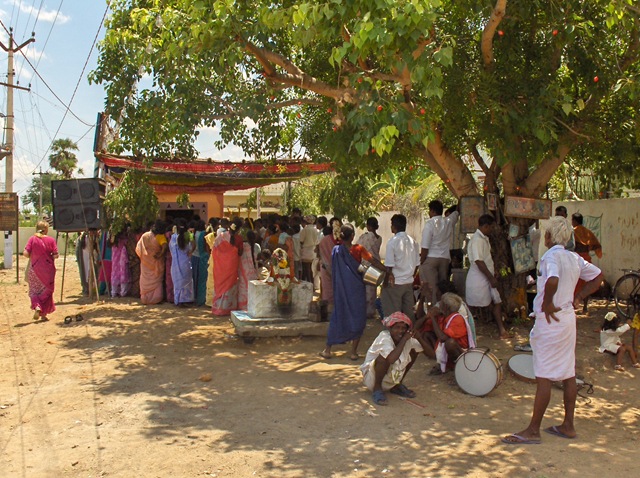
The villagers were gathered under the awning put up for the day.
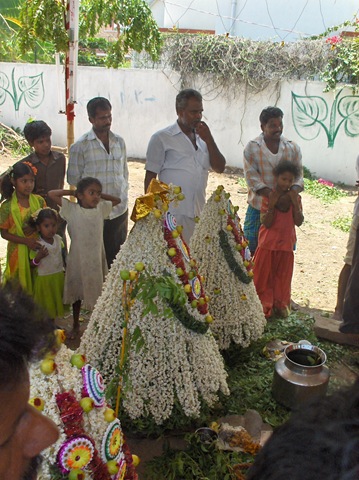
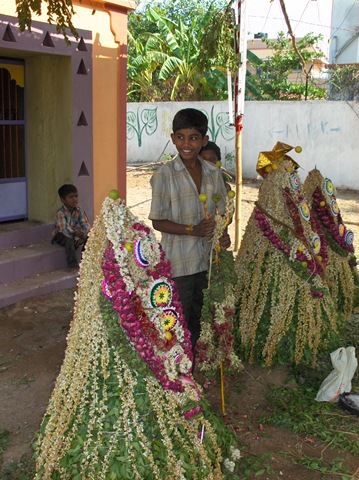
There were three cones, decorated with flowers, several priests, and an open space in the middle of the crowd.
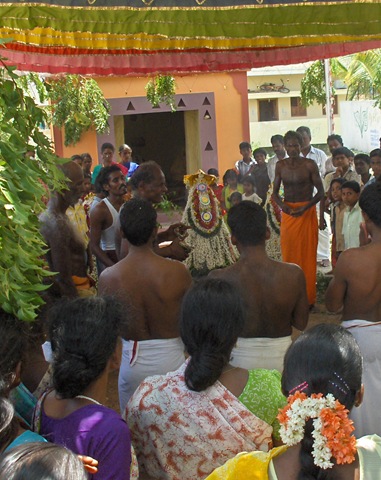
Much work was done decorating these cones.
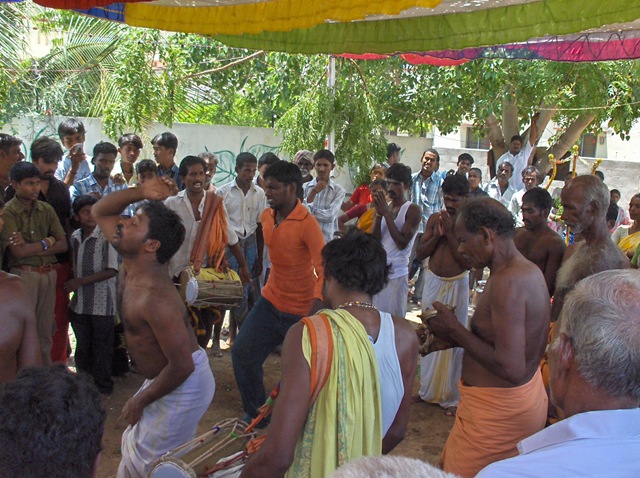
In the circle there were drummers, beating out a rhythm, and someone dancing in the circle, an elderly lady. It is not usual at village functions to see women dancing, it is usually just the men. The ‘dancing’ seemed particularly energetic and expressive, and not any formal dance at all.
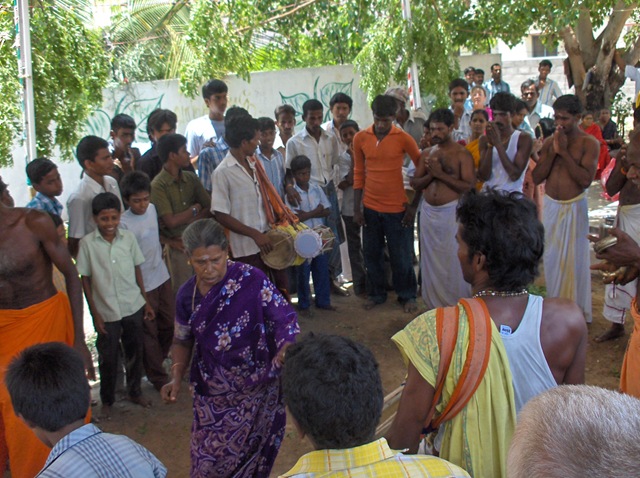
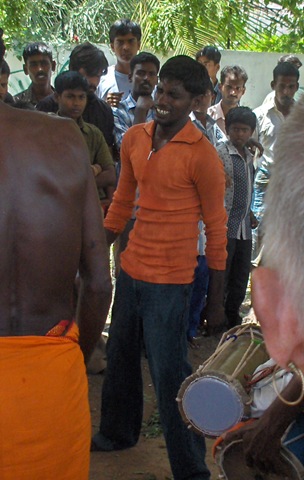
After she left the circle, a young man, seen above in an orange shirt, stepped into the circle. Before he started moving, he spent some time, in what seemed like working himself up into some state. I wondered if perhaps he was drunk.
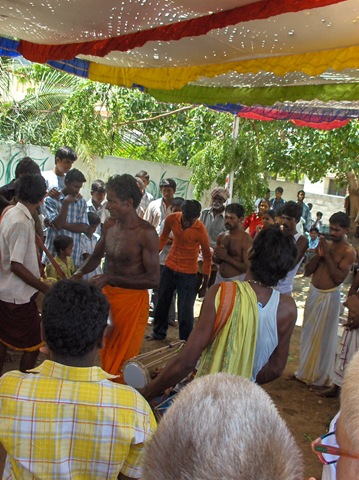
Then he started to move wildly.
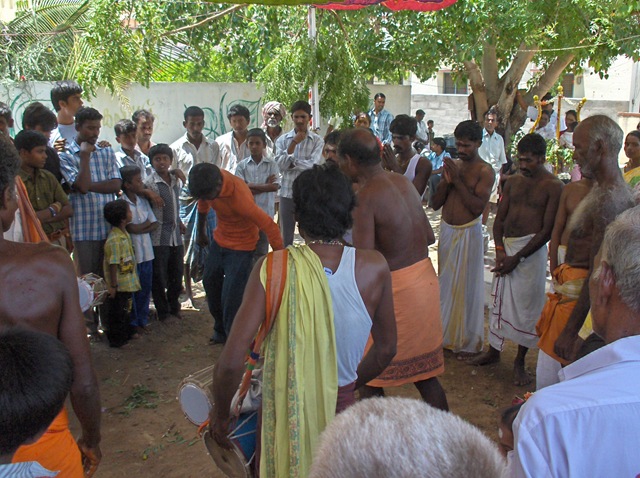
I think his eyes were closed, and there is an expression on his face, almost, I thought, of pain.
There was another man in the circle as well, in a white dhoti.
The man in the orange shirt dropped to the ground, and was writhing around. I could not get a good picture of him. The view was blocked by a drummer.
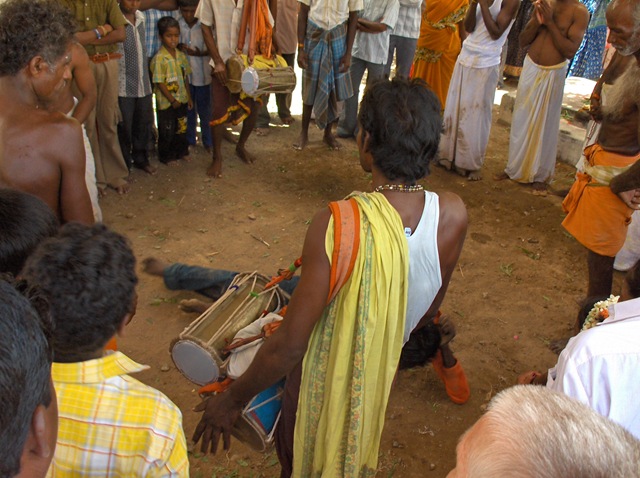
After this was over, he was exhausted, and had to be helped walk to where he could sit down.
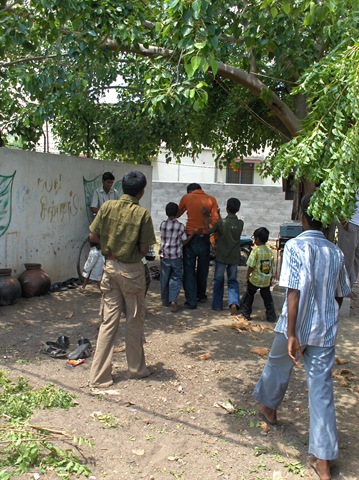
I found out later that these people were, in this ‘dancing’, surrendering themselves to God, and probably asking for something from God.
After this, the crowd broke up, and the next part of the rites got underway. We went to the Satya’s Cafe in the village to wait.
First came the drummers, who seem to lead all these village processions.

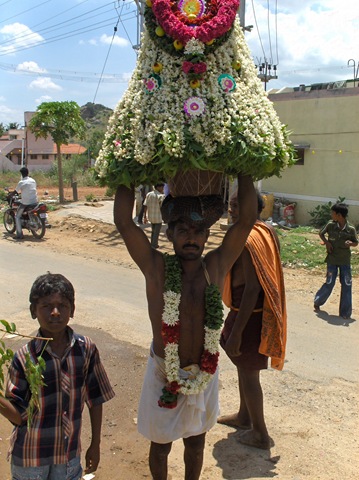
Then after the drummers, came the cones, each carried by a man. We had seen similar cones walking through the village where we lived, and we wondered what they were about.
They stopped across the street, and the occupants of the house came out with puja items to offer, and received blessings from the priest who walked with the group.
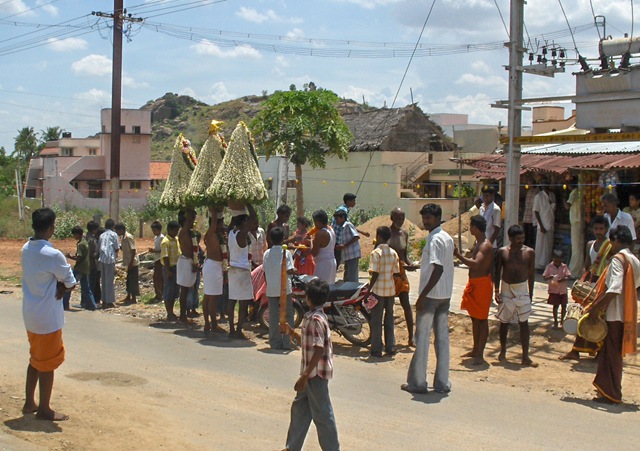
Then they walked to Satya’s Cafe, where we were waiting. There were some boys walking with the group, too, naturally.
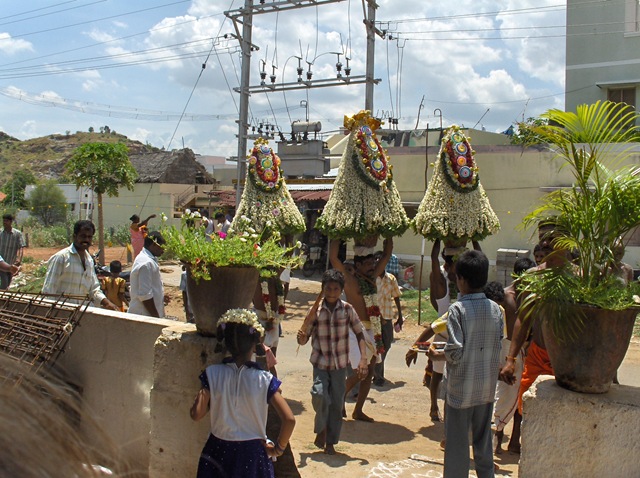
At Satya’s, the owner, our host, Dhakshinamoorthy, had three malas ready and waiting to offer. He gave them to three western women who sometimes help our his trust, Vishni, Shivani, and my wife Carol, who in turn placed them onto the cones, after puja items were offered.
First the puja offering.
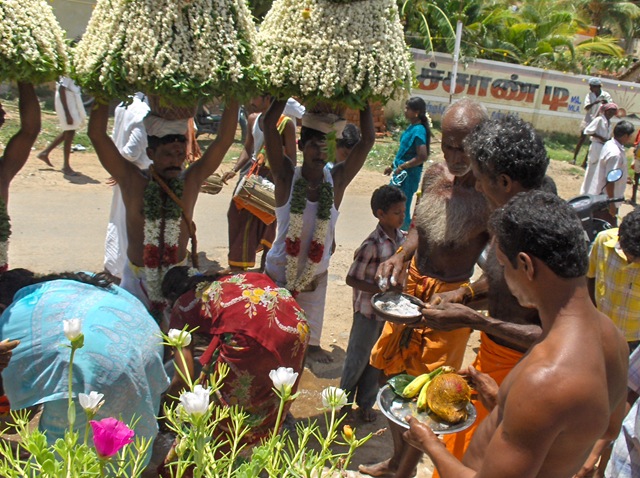
Then the malas were placed.
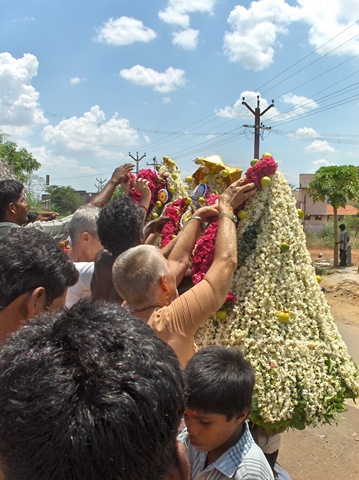
then off to the next house.
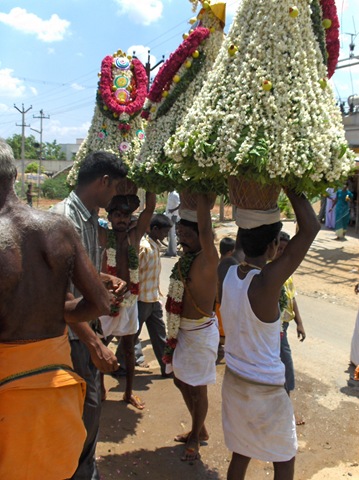
One man stopped for a photo.
Here are shots of the temple, the next day.
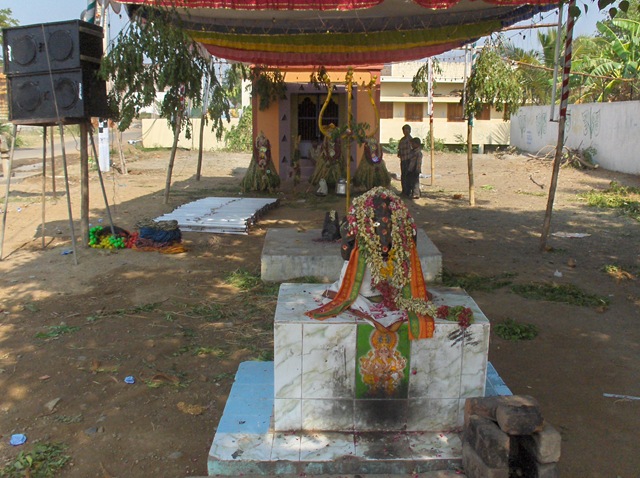
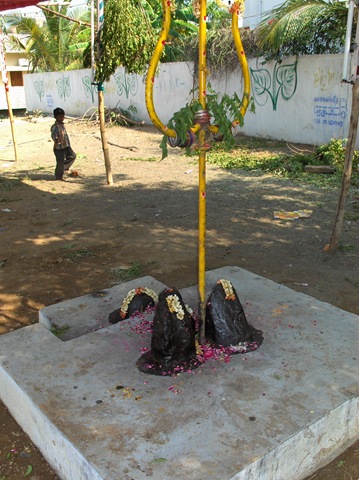
All the ritual items were still there, waiting to be cleaned up, which was to happen soon. Boys played among the cones.
Temple gods watched the unfolding of the whole event, remaining silent and full of peace.
Family Feast in Gondapatai Village, Tamil Nadu: By Richard Clarke
Yesterday, on Guru Purnima day, our rickshaw driver, Rajan, had invited us ‘to the temple.’ We, thinking nothing of it, and thinking we were going to some temple in Tiruvannamalai, said OK. Rajan said the he had to go early with his wife and children, and so would send someone to pick us up. We were a bit surprised when a car showed up, rather than a rickshaw, but again thought nothing of it. There were two other rickshaw drivers in the car as well. Again, I thought nothing of it other than thinking they must be going to the temple, too. But when the driver turned away from town, I knew that something was different.
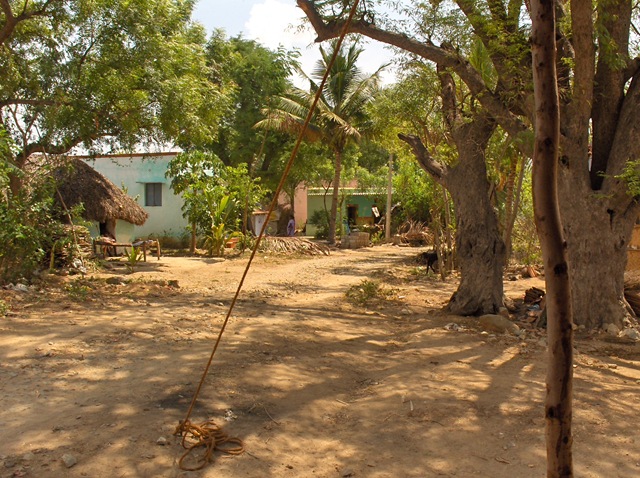
I remembered that Rajan frequented a different temple than the main one nearby, Arunachaleswar Temple, and I thought that it must be out of town and we were driving to it. I just let it play out. Then we kept going further away, going through Chengam, about 30K to the west of Tiruvannamalai, on the road to Bangalore. I knew by then that something different was happening than I had thought, and I continued to just let it play out. We went about another 30 KM, then turned onto a poor quality dirt road, and drove into a village about 2 KM off the main road.
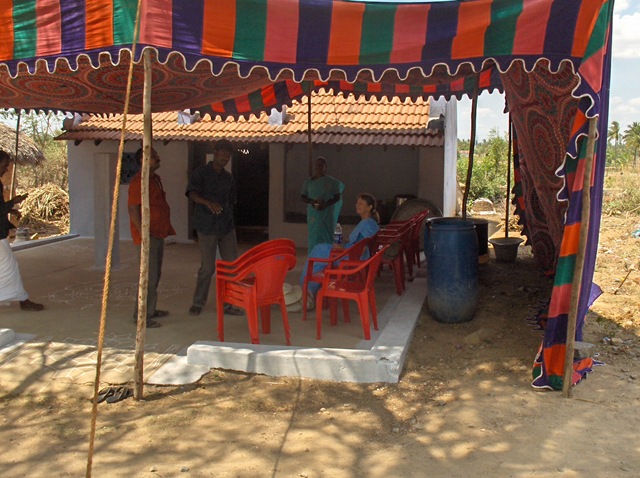
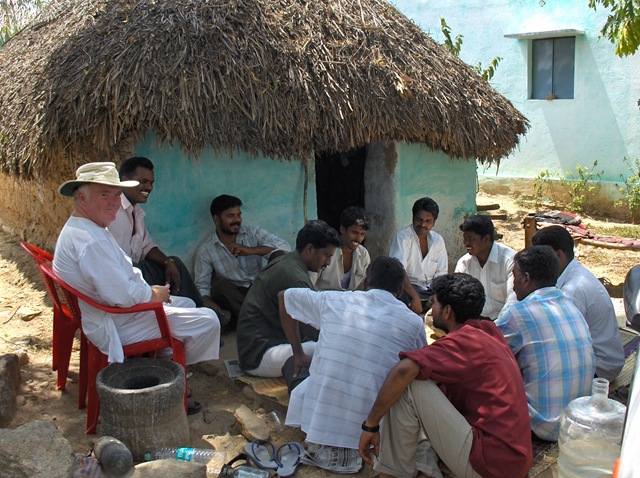
We stopped at a house that was set up for a special function. The awning and chairs are typical of such functions, we know now. We learned that this was the house of Rajan’s uncle.
Here is the taxi and driver who took us to the village:
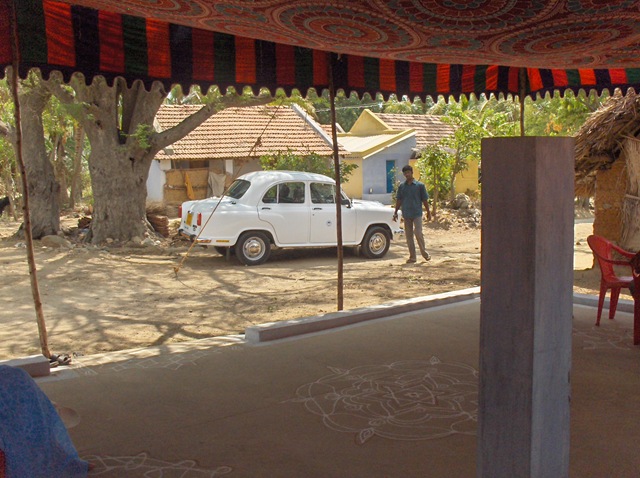
I found out later this was Gondapatai Village, in the Krishnagiri district of Tamil Nadu. This is the village in which Rajan’s father was born. It turns out that we were invited to an annual function where the family does a puja at the nearby temple, makes an animal sacrifice, and prepares a special meal for friends and family. Rajan has a truncated relationship with his father, because he died when Rajan was in the Third Form, maybe eight years old. Rajan had to drop out of school then, being the oldest boy, and start working (for just a few rupees a day). Now he must preside at this annual family function, done on the same day each year.
We were the first westerners to ever come into the village. There was much interest in us from the villagers.
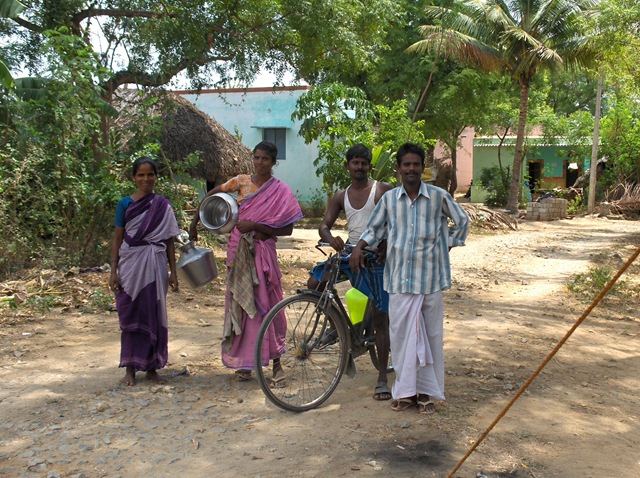
I asked their permission before I took the photo. It turns out this was the right thing to do. We were told by one of the rickshaw drivers that some village people believed that having their picture taken reduces the number of days that they will live.
Now more people started to arrive. There were two groups, family, and Rajan’s friends, mainly other rickshaw drivers. They drove their rickshaws 60 KM to get here.
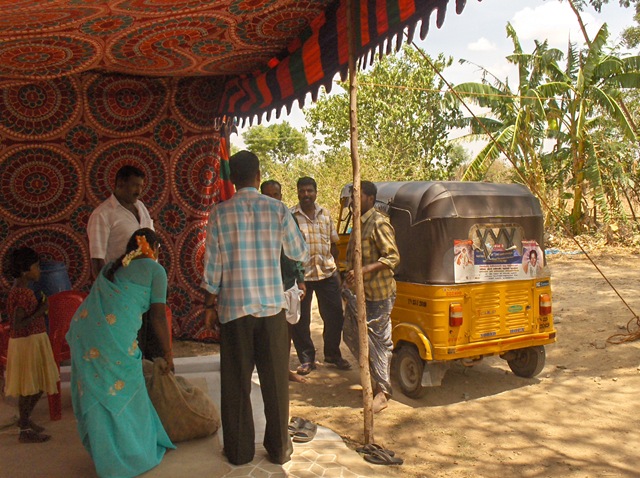
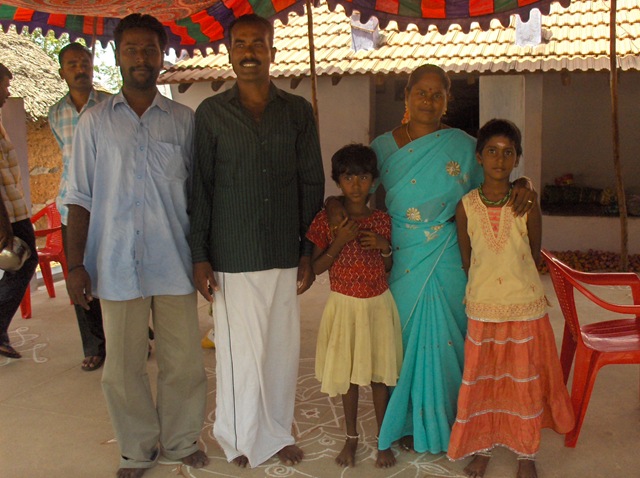
Here is Rajan, to the left, with his uncle and his uncle’s wife, and the daughters from the two families. Rajan is in the blue shirt. Behind Rajan is a cousin, Ranjit. Ranjit used to have a good job in Chennai, but quit the job to return to Tiruvannamalai, where he always feels the peace of Arunachala. He feels that this inner peace is more important than a good job making lots of Rupees. So now he is a rickshaw driver, like Rajan.
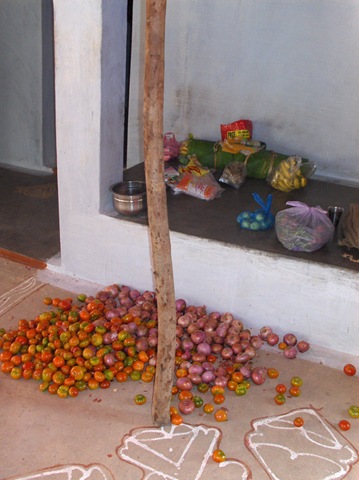
Materials for the puja and feast are brought by various people, and set out for later use.
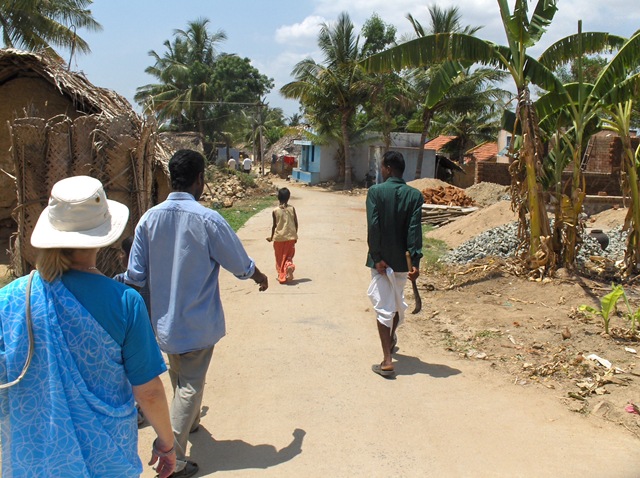
We then started to walk to the family temple, through the village.
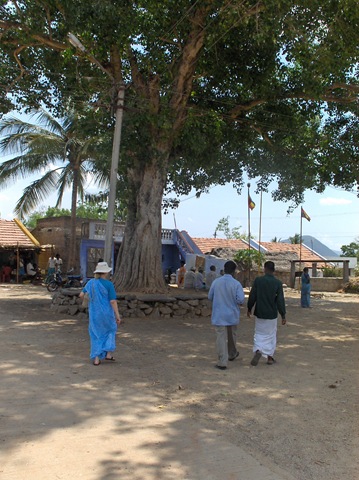
Walking through the center of town we came to an ancient tree, with a raised area around it where people can sit. Village men (the village elders, I think) were sitting there and talking (while, I think, their wives were getting the mid day meal, the most important meal of the day, ready).
We walk some more through the village …
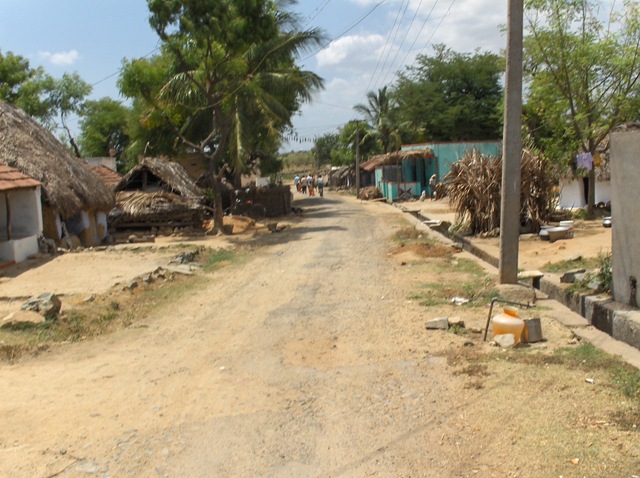
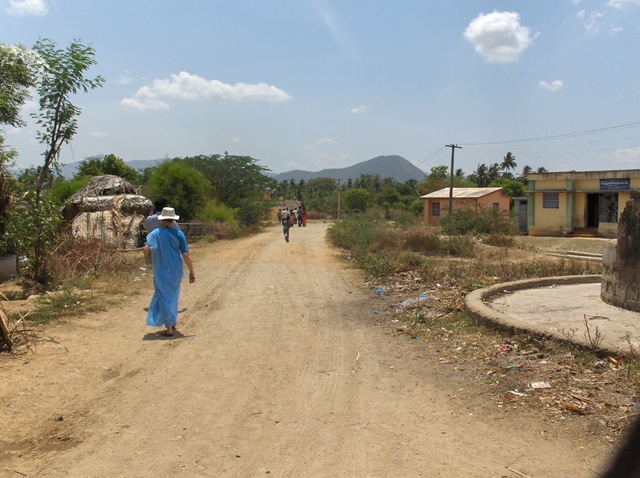
to the family temple …
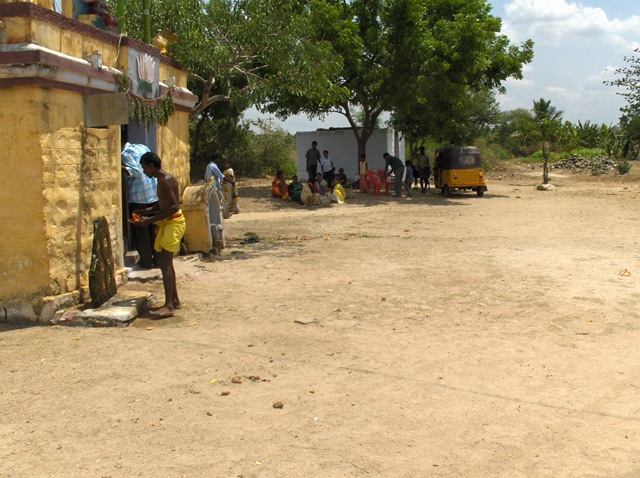
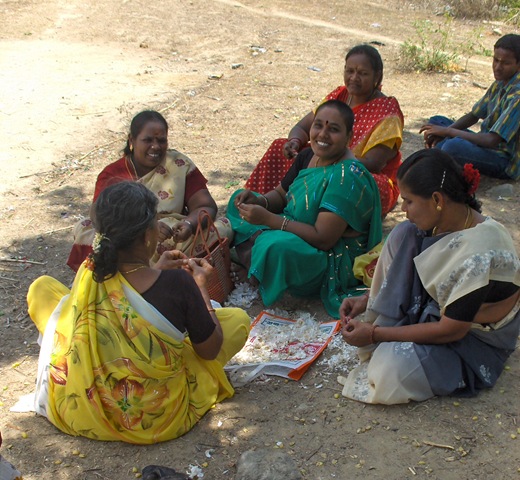
…where beside it sat a group of women and a couple younger boys. The women are cleaning garlic. The woman in the yellow saree is Rajan’s aunt. As the senior woman who is here, she will also play a role in the ceremonies to come.
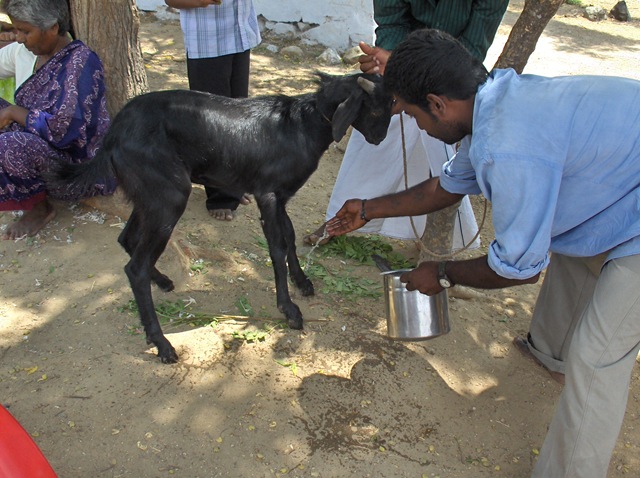
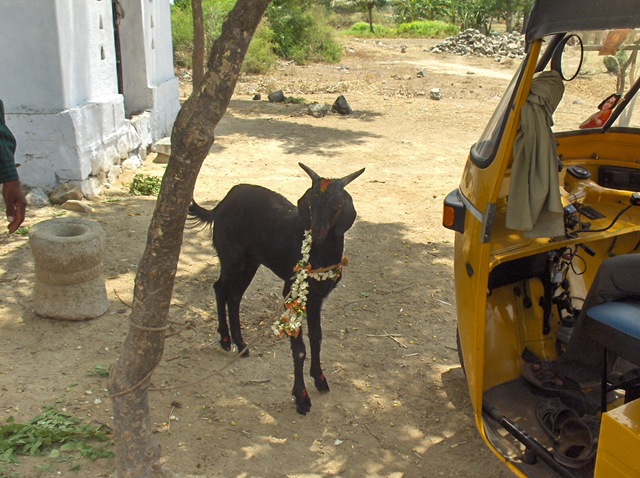
Now Rajan starts to prepare the goat for the puja and rites. He sprinkles water on its head and feet, and then applies yellow turmeric and red kum kum to its head and hooves. Then a flower mala is wrapped around the goat’s neck.
And the goat is ready.
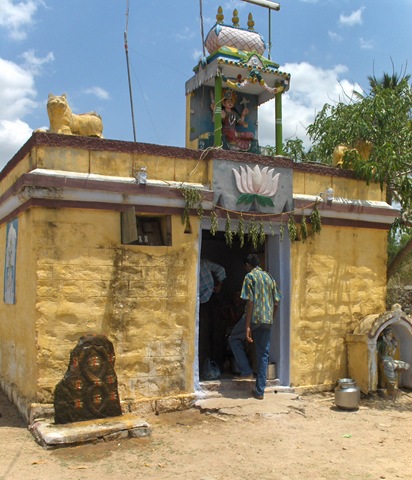
The puja preparation starts in the temple.
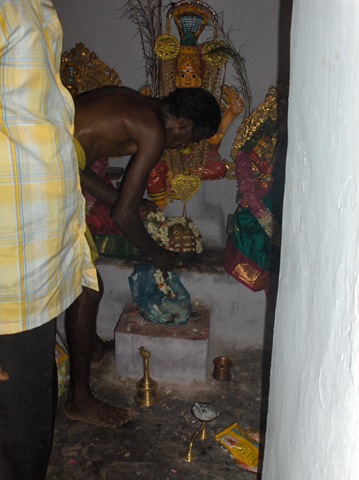
The priest (?) decorates the gods with flower malas (like were on the goat).
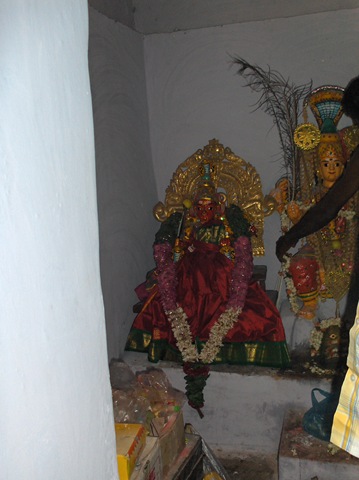
Here are the temple gods, in all their finery, decorated with flowers, etc.
In the antechamber, two more gods are decorated, and ceremonial food offerings are laid out before them.
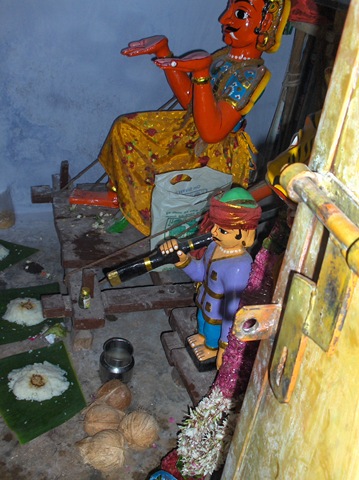
The gods outside the temple are decorated too. None can be left out.
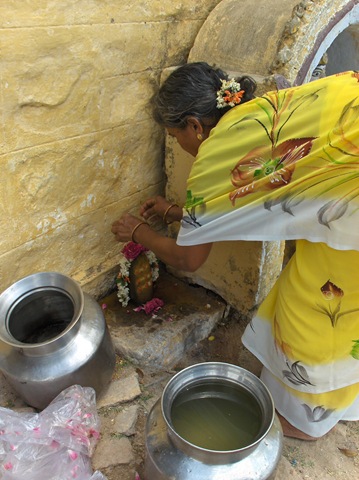
Notice that it is Rajan’s aunt who has the ceremonial role of this decoration. The priest did it inside the temple, the auntie, outside.
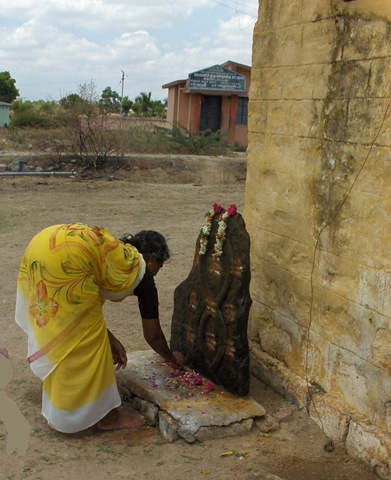
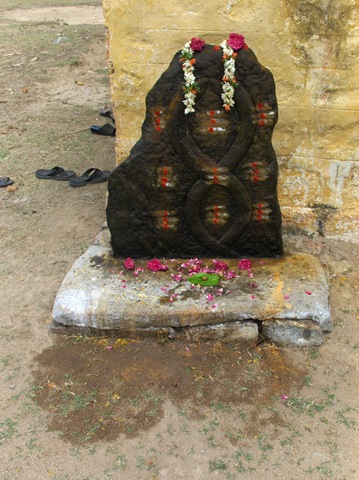
Now these gods are decorated. I think this is a Snake God, a Naga.
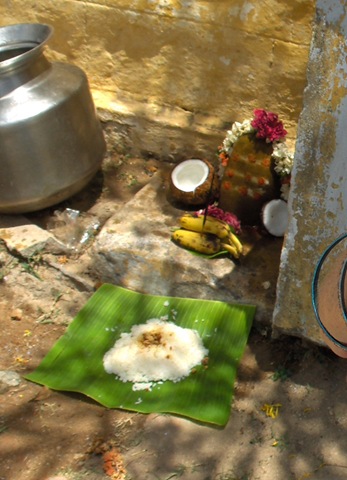
The priest starts breaking coconuts. The broken coconuts are offered to the gods. The coconut milk is saved for other ritual use.
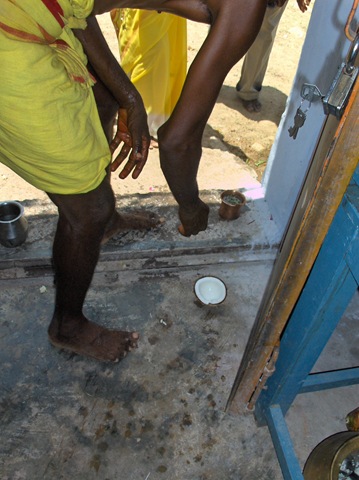
And the final offerings are made to the gods.
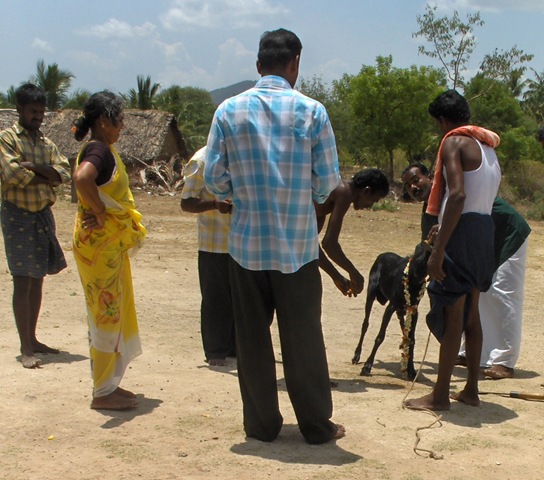
The goat is then prepared for sacrifice. This took quite some time. Rajan told us that they were getting permission from the goat for what was to come. My wife was not sure that the goat spoke the same language. During this part there was much discussion from the older men in the group. We think they were discussing just what was to happen. We have seen this group discussion and decision making in other village activities.
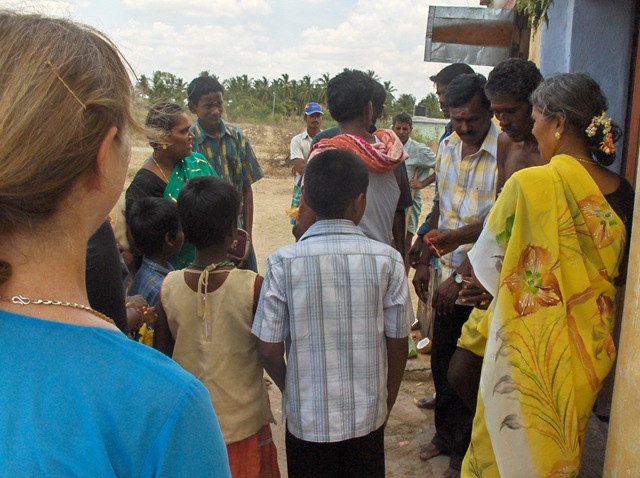
After the sacrifice, during which my wife and I (as well, it turned out, as Rajan) turned our eyes away, the priest came out and blessed each person by putting vibhuti and kum kum on each person’s forehead.
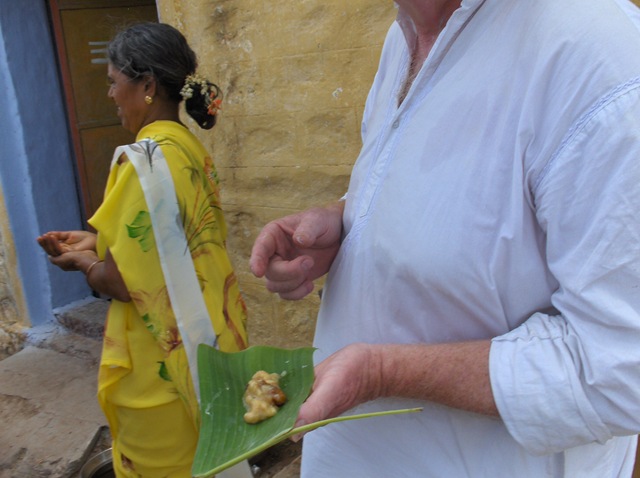
Then prasad was given to each person. Since we were westerners, they served it to us on banana leaves. Others just got it in their bare hands.
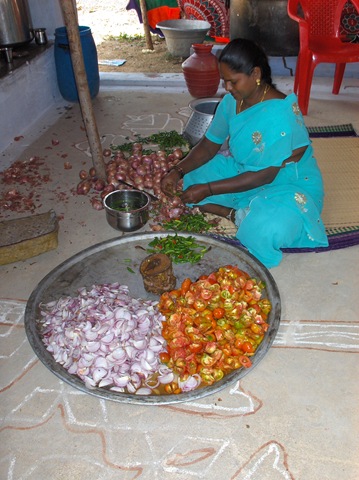
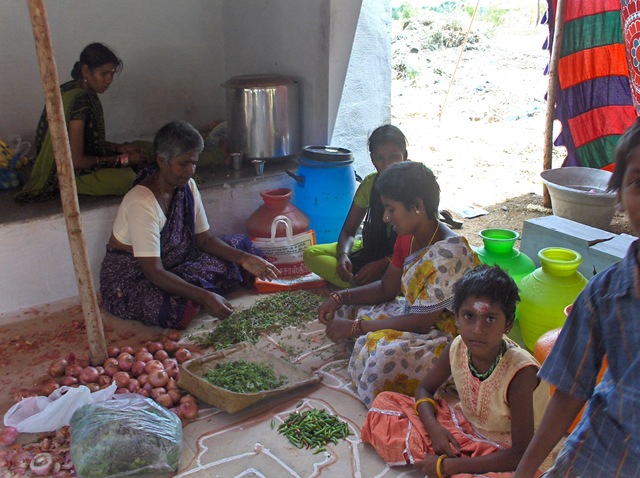
Now it’s back to the house and the cooking. Onions and tomatoes and green chilies are made ready in great profusion.
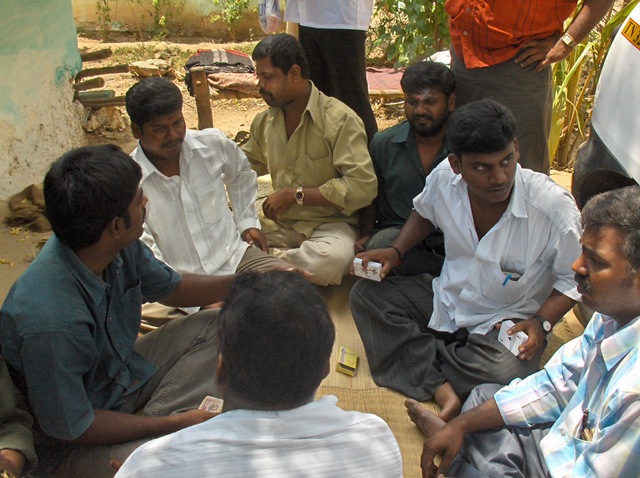
While the women worked, the men naturally did important man stuff. Here they are gambling, playing a form of rummy. Each put Rs 500 into a common pot, to be split among the winners.
The other bit of important man stuff is drinking. 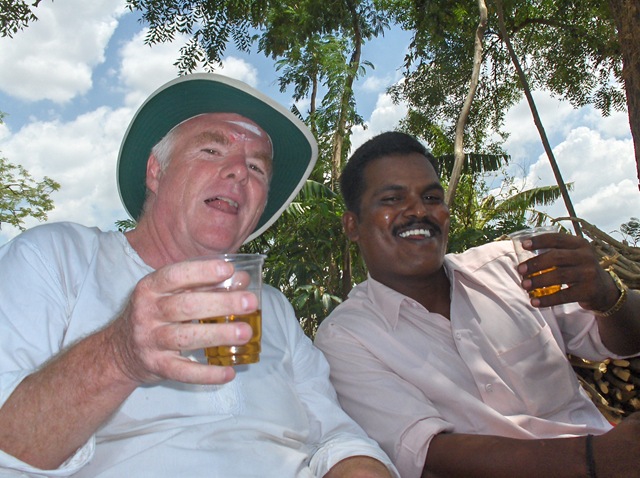
Meanwhile the women are still working on preparation for the meal. Some of the girls help too. Many people are involved in the meal preparation, men and women, other villagers. These meals are really community efforts.
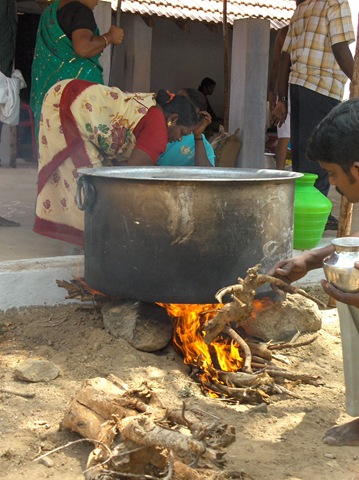
Now the fire is started under the pot.
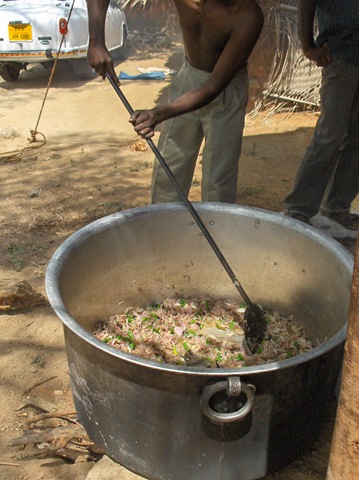
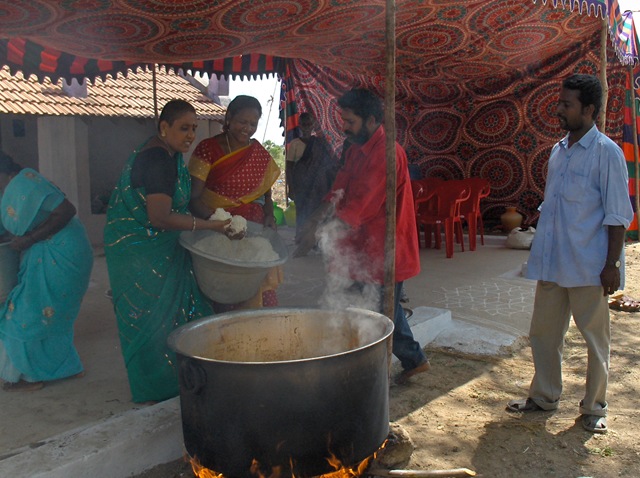
First, bags of peanut oil are poured in the huge cooking vessel, then the garlic, onions and green chilies. They are cooked for a while. Notice that it is a man with the ladle. This is the only time, except at restaurants and food stalls, that we see a man cooking.
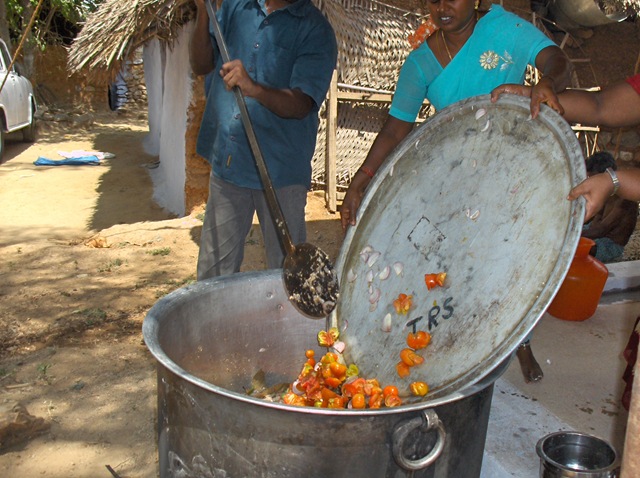
Then add the tomatoes …
And cook some more.
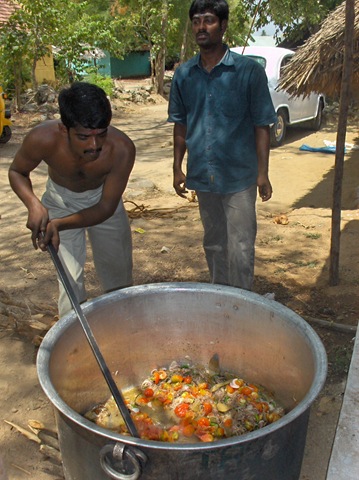
Herbs are added for flavoring. I think this is curry leaf.
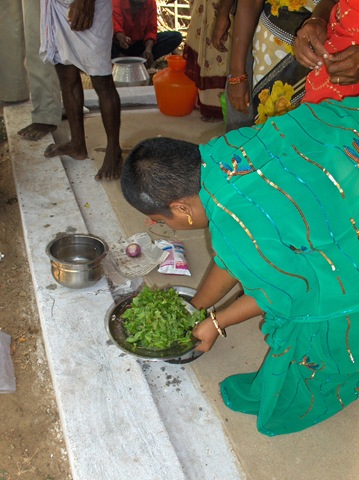
Add a pinch of salt.
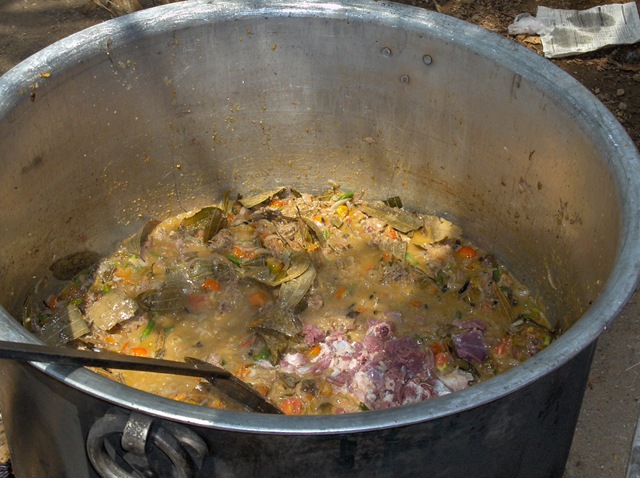
Then the ‘mutton’ is added and cooked.
While this is going on the men are still doing their important work. I am trying to figure out the rules so maybe I can play too.
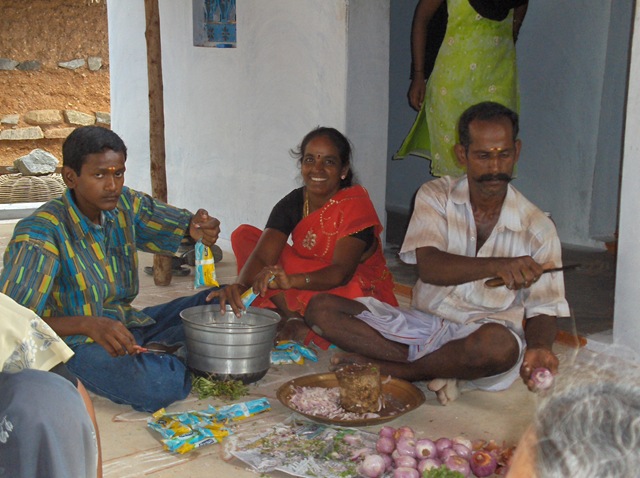
While the biryani cooks, they prepare the ‘curd’ dish – yogurt and onions, and what else I don’t know. Hey, some of the men are actually helping with this!
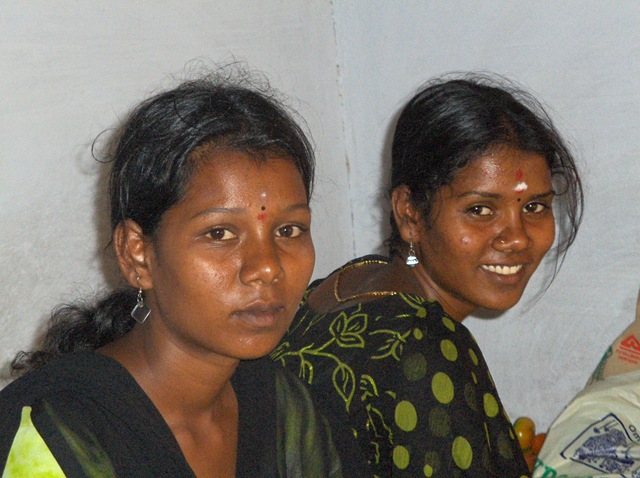
Some of the younger woman sit and watch and talk. You can see that these are school-age women, since they wear salwar (or punjabi) suits instead of sarees, which is what “real women” wear here. Now my wife Carol does not feel properly dressed if she is not wearing one of her sarees.
One of the men:

One of the woman who help prepare the meal:
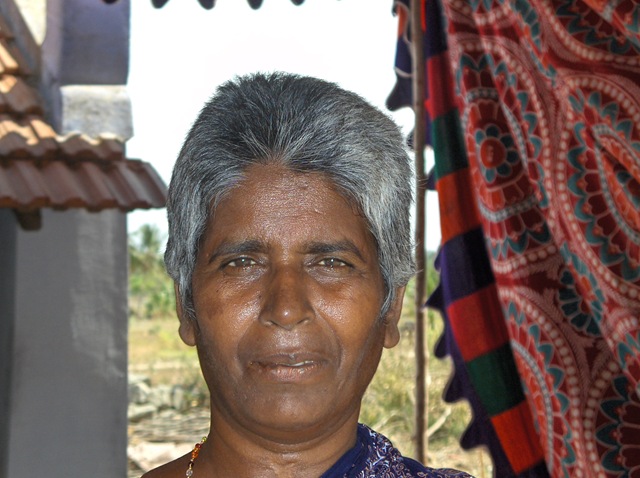
A village woman watching from in front to her house:
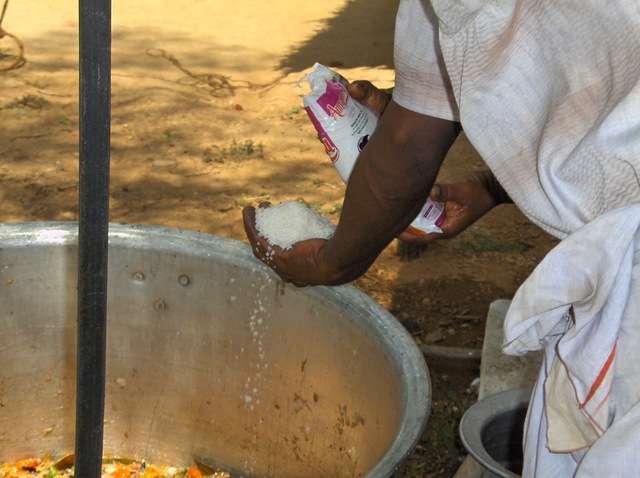
Now the final step, adding a bit of rice (and water).
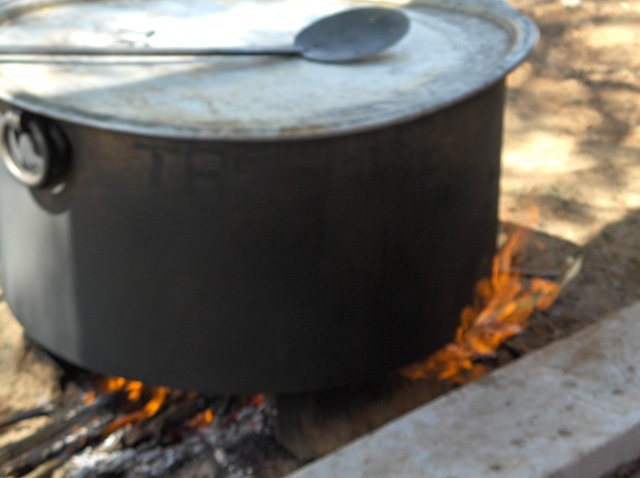
Then the pot is covered while the rice cooks.
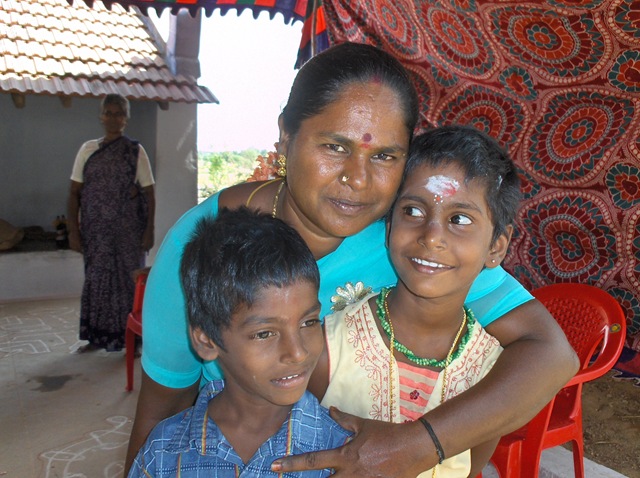
Here is a picture of the ‘hostess’, Rajan’s uncle’s wife, with Rajan’s son and daughter, Raam and Janini.
After the rice cooks for a while, a layer of coals is added to the top of the pot. Maybe to cook the top layer, or maybe to make a crust on the top, I am not sure.
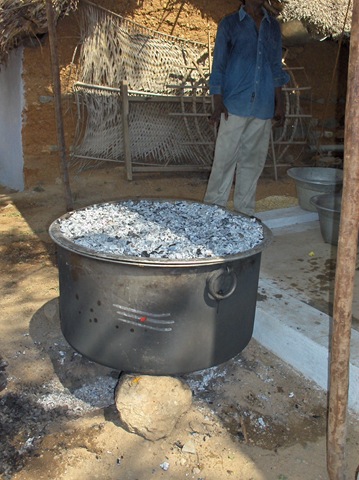
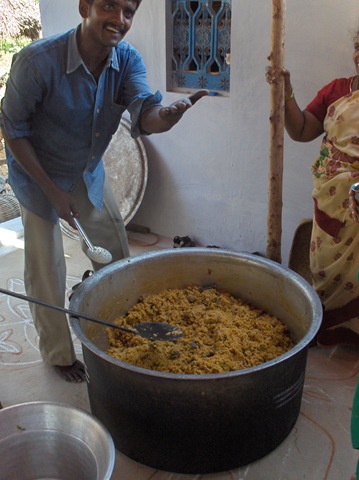
Now the ‘mutton biryani’ is ready!
Banana leaf plates are set out.
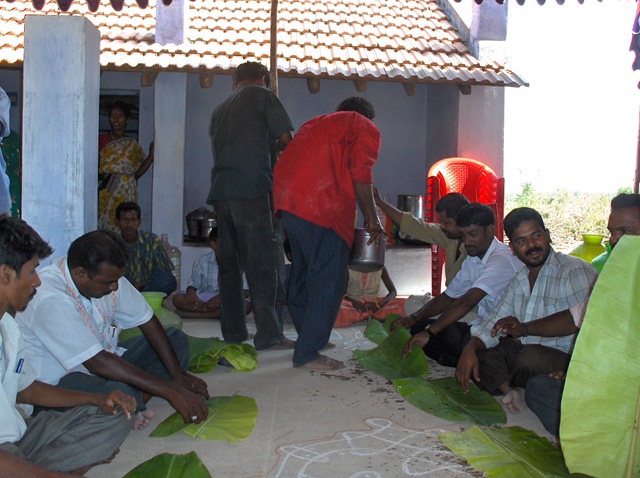
First the guests eat.
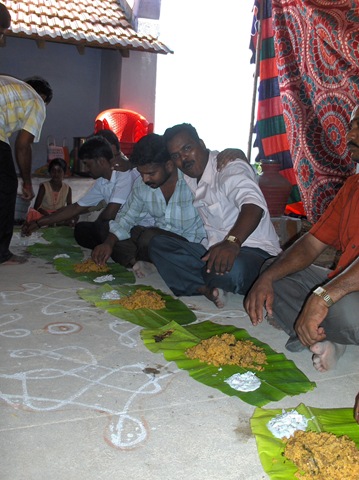
This included even the women guests eating at the same ‘sitting.’ Before, when we’ve been at other social functions where there was a meal, the men eat first, then the women. When eating is done in ‘men first’ order, they let Carol eat with me, since we are Westerners, and apparently the rules are different for us.
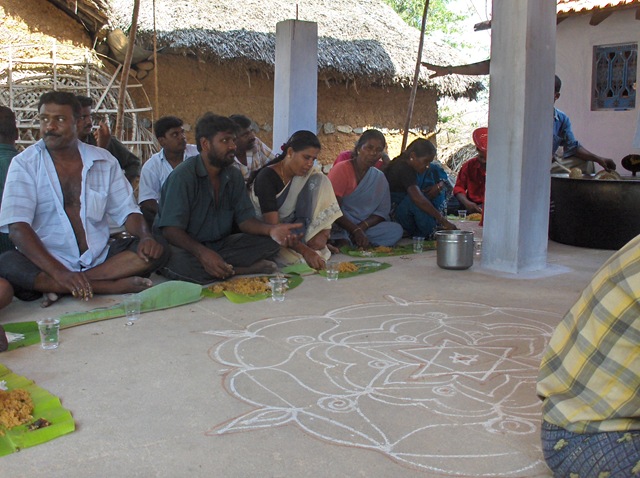
Then finally the family members get to eat.
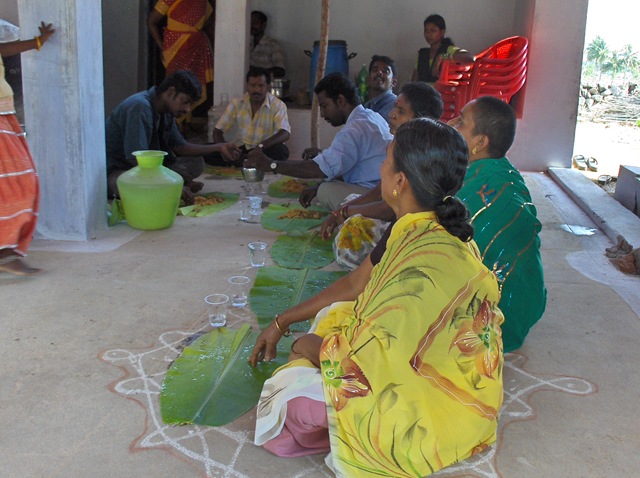
This day was not what we expected. In many ways. But to be involved with such village activities is, we think, a special privilege, and is not something shared by many Westerners.
We felt honored to be invited, and to be able to take these pictures to share with you.
Then we were driven the 60 km. home, to rest and to reflect upon the day. Just another day in India.
A note about caste and diet in South India
We know many people here that might object to a celebratory meal that includes meat eating and alcohol. Tamil Nadu has been very much vegetarian and against alcohol for the last 1000 years (at least for the higher castes). We have found that this is largely a caste issue, with the higher castes like the Brahmins often following pretty strict rules on diet, etc. I suspect that this never was the case in the villages (which are mainly lower caste people), and it certainly is not now. Even though, with the rise of India as a nation, caste discrimination was made against the law, such a change does not really affect the behavior of people in a culture with thousands of years of history, tradition, and social order.
I think even some of our friends might be offended that we participated in such activities. But, if this were some family function with our family at our home in California, we probably would serve BBQ meat and cold beer. And everyone would enjoy it.
Adi Annamalai Temple – North side of Arunachala: By Richard Clarke
Adi Annamalai is the oldest temple around Arunachala. It was built hundreds of years before Arunachaleswarar Temple, which per Wikipedia, “The earliest known record of the temple is in the works of the poet Nakkirar of the third Tamil Sangam period. At that time, the temple might have been a simple wooden structure. The present masonry structure and gopurams (temple towers) date back approximately 1200 years.”
Adi Annamalai clearly predates Arunachaleswarar Temple, so is older than 2000 years. I suspect the gopuram is also about 1200 years old, from the same period as Arunachaleswarar Temple.
“The name of this Temple, Adi Annamalai means ‘first’ or ‘ancient’ Annamalai (Arunachaleshwarar). Its size is small and it occupies only 1/2 acre in size – compared with the 25-26 acre size of Arunachaleswarar Temple on the Tiruvannamalai side of the Hill. The legend of Adi Annamalai recounts that Brahma, after His dispute with Vishnu about the fiery column, made a lingam and went to the other side of the Hill to worship Shiva. Thus, this lingam is supposed to be the first, ancient and original lingam of Annamalai and hence the name Adi Annamalai.” This quote is from Arunachala Grace Blog. Here is a good article from them on Adi Annamalai.
There are many legends about this temple. The one I like the best is of a secret cave that goes from the temple to inside Arunachala, where all the Siddhis are.
You can see the temple in Google maps, click here.
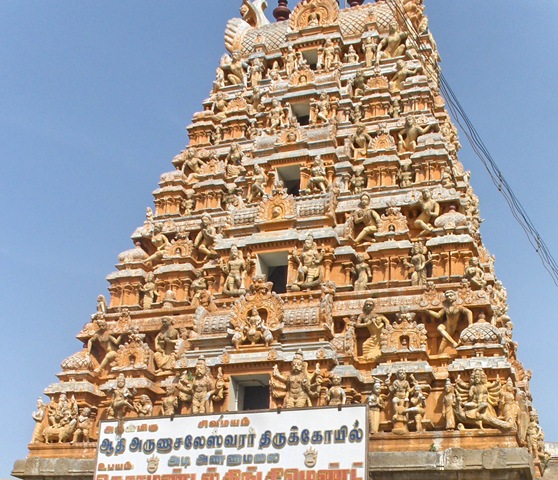
Turning off the Hill Round Road, going through the small village of Adi Annamalai, you come to the temple, with its tower visible from far away.
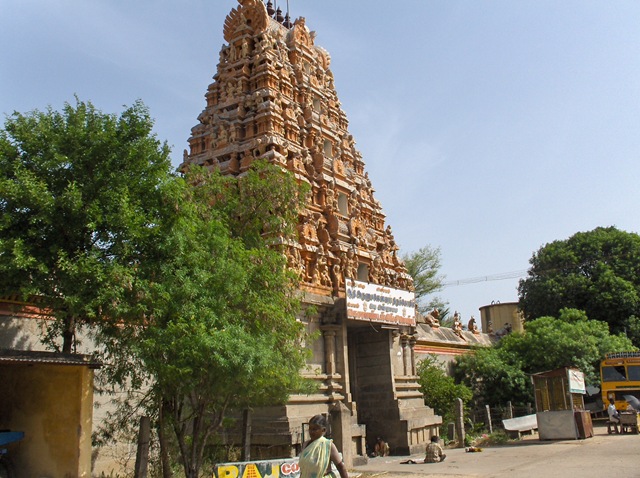 n
n
And enter through the gopuram.
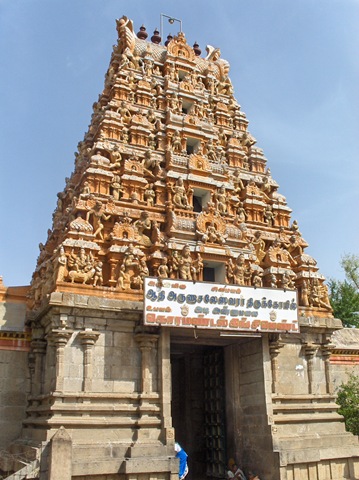
If you look closely at the gopuram, you will see images that illustrate many ancient stories of the gods. A repeated figure is that of a man, straining to hold up the tower. Since the wall has its own support all this effort is not needed. This image is to illustrate the futility of ego-driven action, ‘trying to hold up the universe’ when it is really God, Siva, Brahman, your Self, that is doing ‘all the work.’
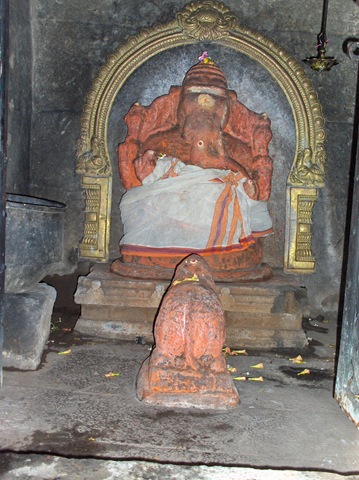
We are not allowed to take photos inside the main shrine. The photos below were taken walking around within the temple walls.
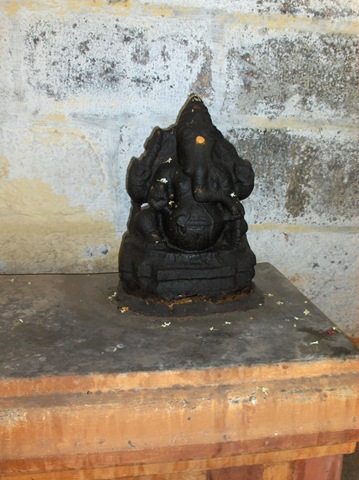
First is Ganesh, the remover of obstacles. This is the first god seen in the Siva temples. Here Ganesh is enclosed in a small shrine that is locked when the priest is not there.
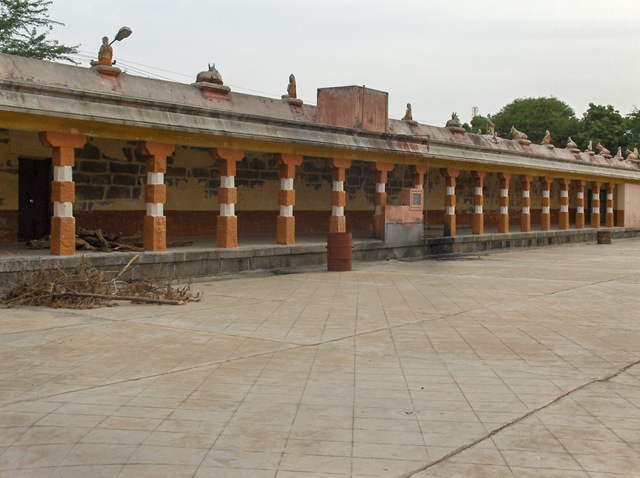
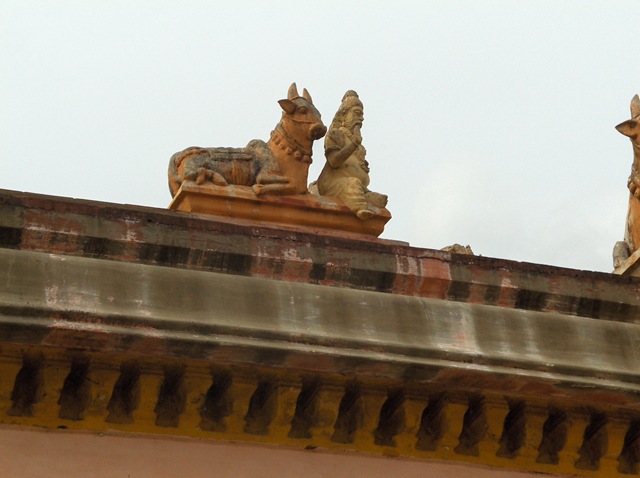
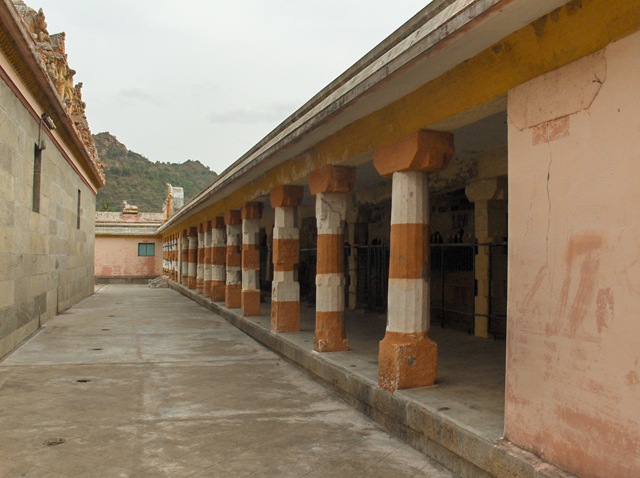
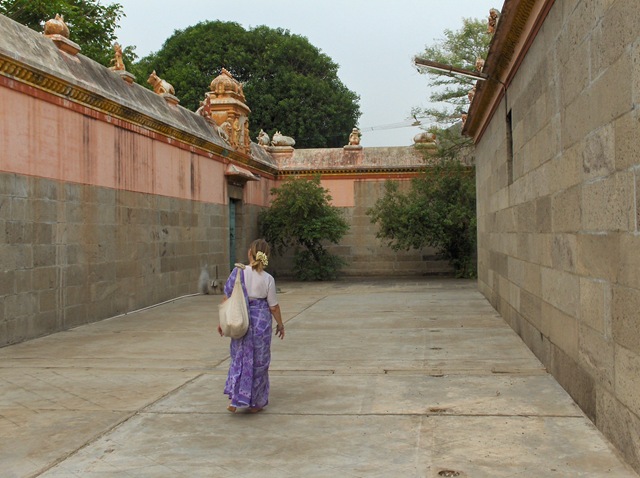
Walking in the usual clockwise direction, here is a hall of pillars. Note all the statues on top of the wall. Similar statues are on all four sides of the temple.
Here is a close up of one on this wall:
Looking to the back of the temple, we can see the Dakshinamurthy shrine protruding from the wall.
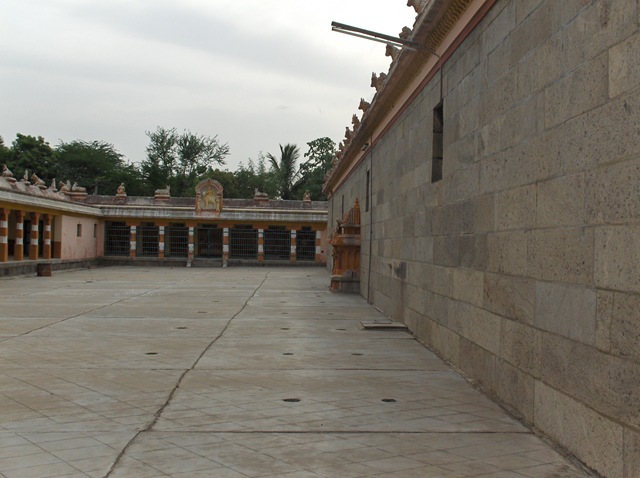
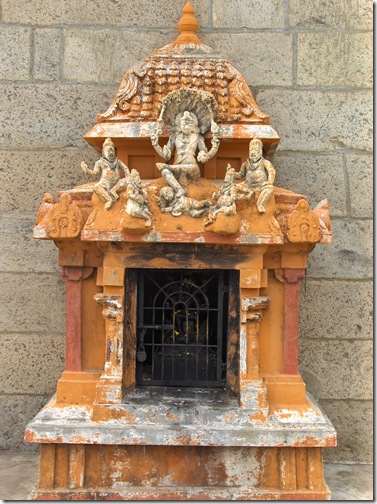
Here is Dakshinamurthy, the Southward-facing god. From the Wikipedia entry, “Dakshinamurti literally means ‘one who is facing south (dak?i?a)’ in Sanskrit. South is the direction of Death, hence change. In every Siva temple the stone image of Dakshinamurthy is installed, facing south, on the southern circumambulatory path around the sanctum sanctorum.”
Dakshinamurthy has a special place in our hearts. Dakshinamurthy is said to be the primordial Guru. He is pictured as a young man, with four older disciples sitting with him. Dakshinamurthy taught only in silence. Sri Ramana Maharshi is spoken of comparing him to Dakshinamurthy. It is also said that Arunachala is Dakshinamurthy. Certainly both teach in silence. Ramana says that real silence is when no ego-‘I’ arises.
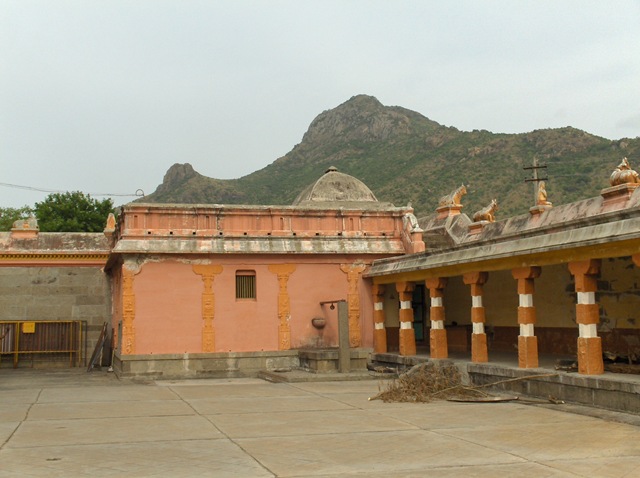
Looking back from Dakshinamurthy, one can see Arunachala. Here is the face of ‘The Elephant.’ I wrote an entry about Arunachala in this area, see
.
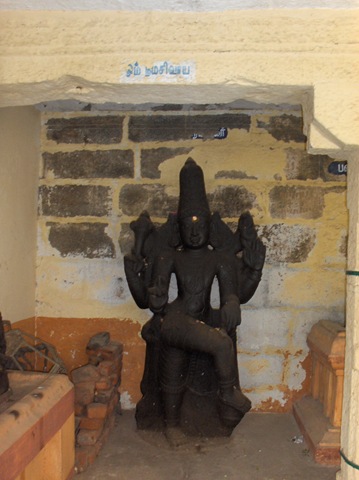
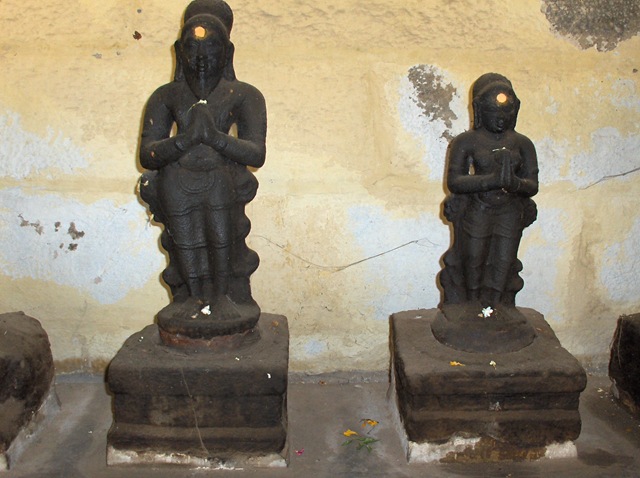
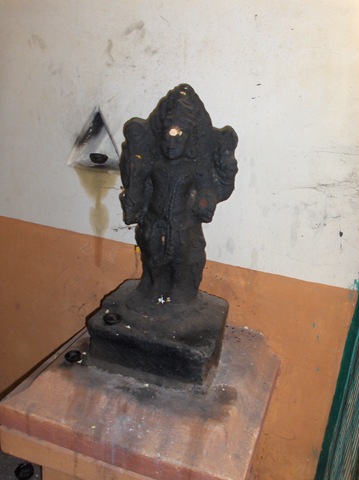
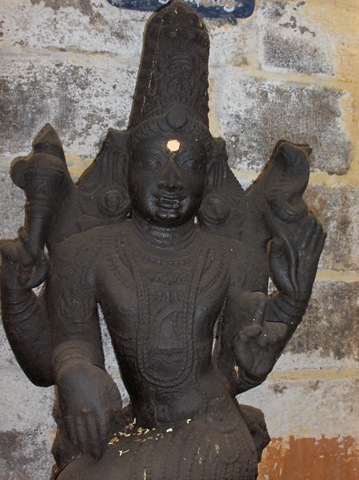
Behind the shrine, behind the pillars on the back wall of the temple, there are quite a number of statues, I think of various local gods, and gods of local significance. You can see, looking at the wear on some of these, just how ancient they must be, hundreds of years, certainly, thousands of years, probably.
Most of them I do not recognize. They have names, written in an archaic Tamil, above each statue. As I find out these names, I will add them to this post. Some are small, just a few inches tall. Others are several feel high.
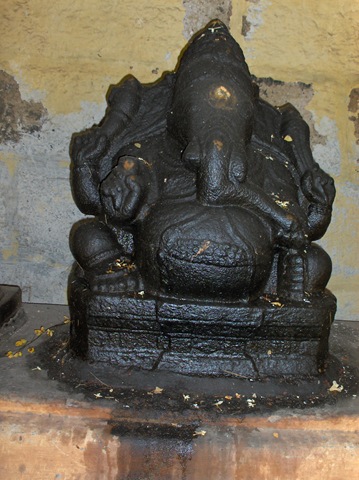
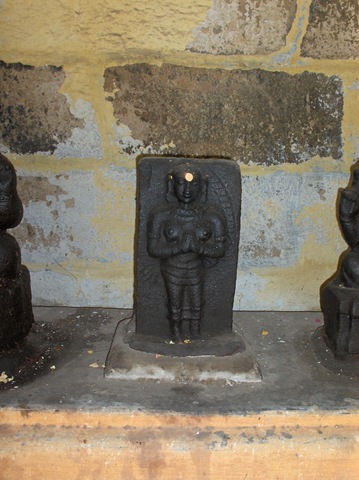
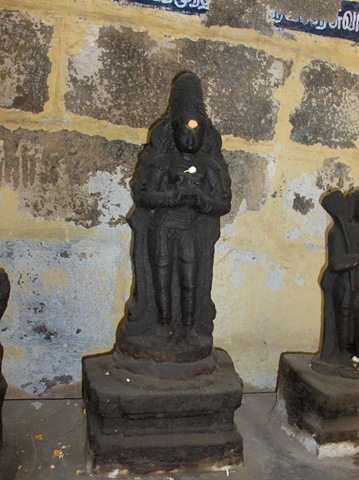
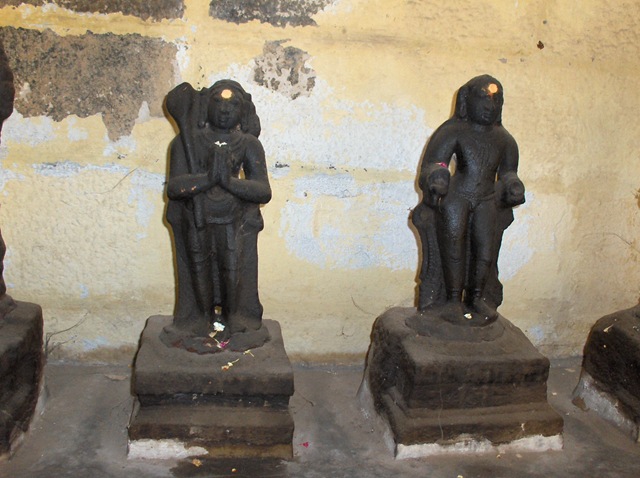
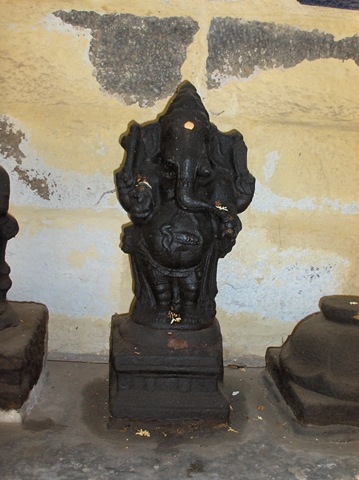
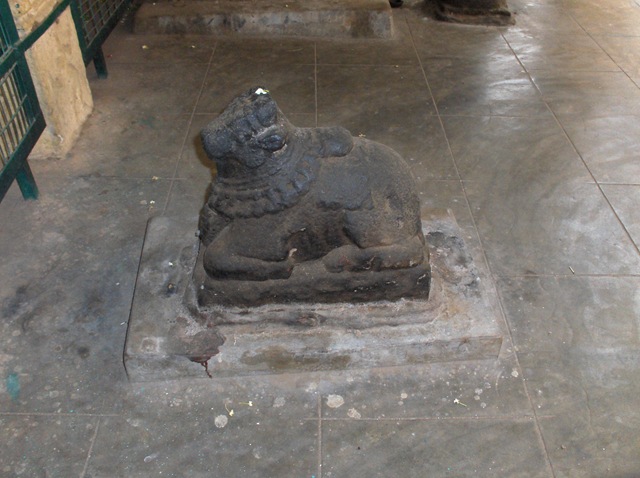
Here is one of three Nandis, guarding several ancient lingams behind the fence.
Here are the first two lingams.
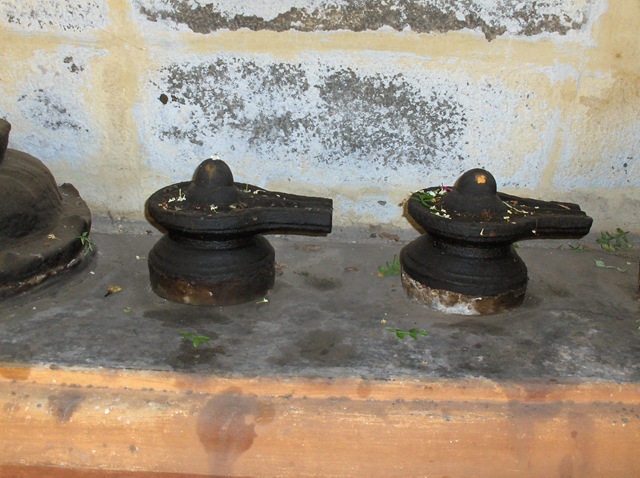
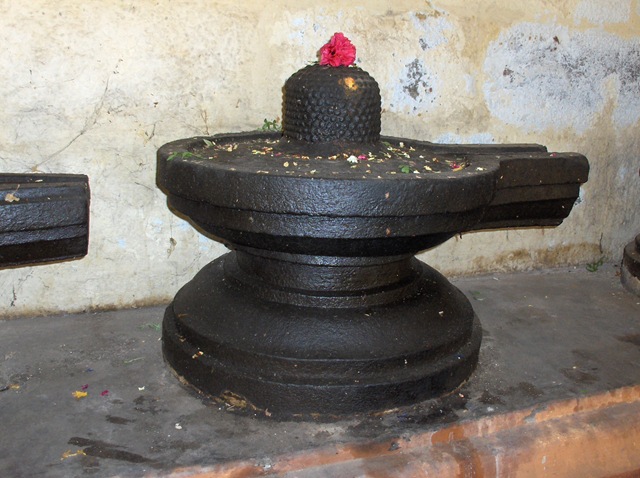
Here is the third. Note the additional carving on the upper part. Someone thought this was special. It is the only one that has a flower placed on top of it.
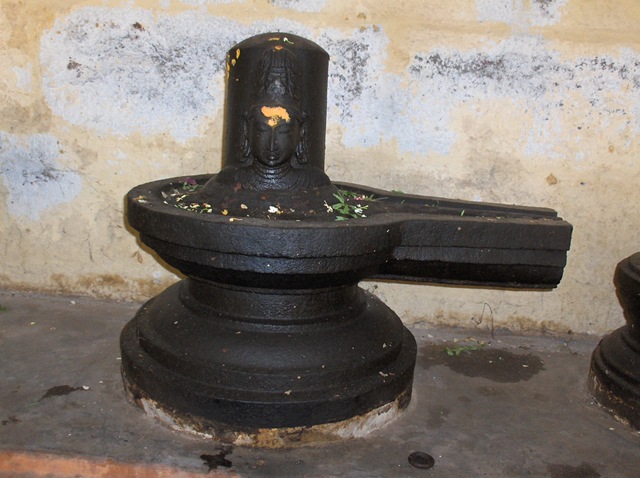
Here is the fourth. Notice that it has a face, surely Siva’s face, carved into it.
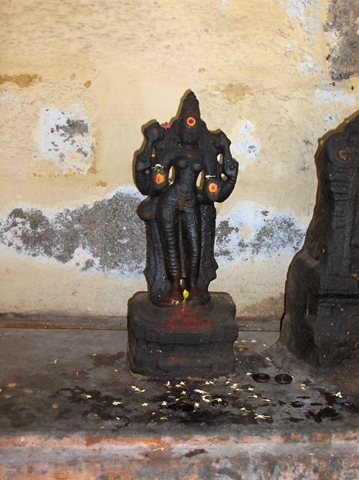
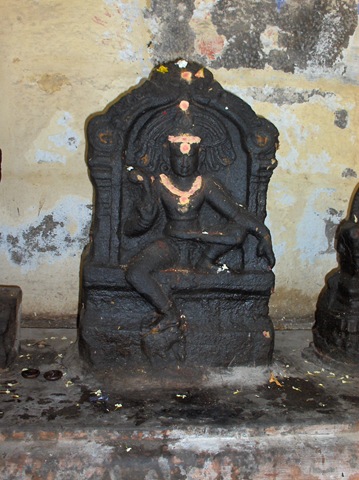
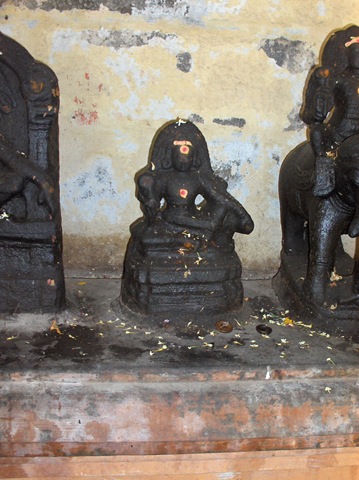
I love this one. Is that Siva on the elephant?
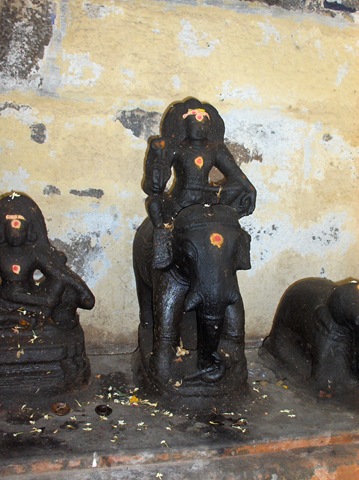
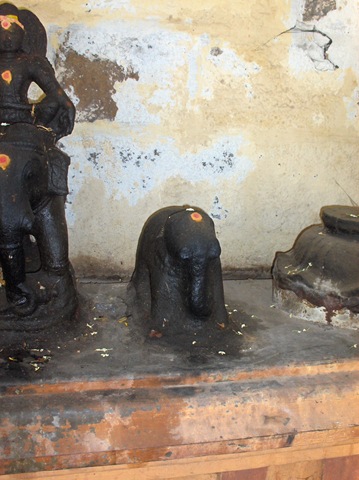
Notice how old this elephant must be. The top of the statue has been rubbed away by countless hands touching it, probably over hundreds of years.
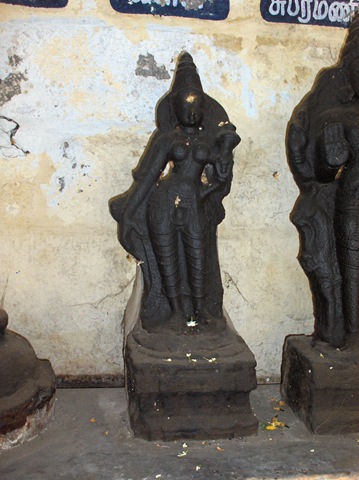
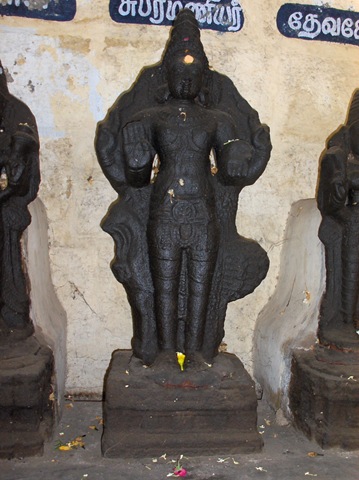
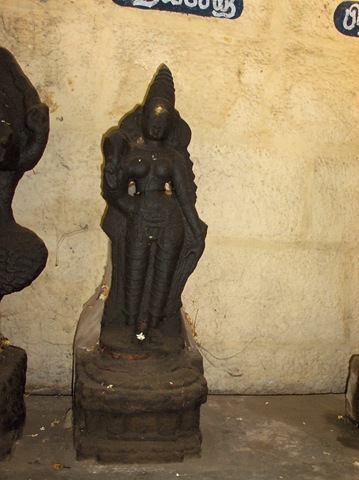
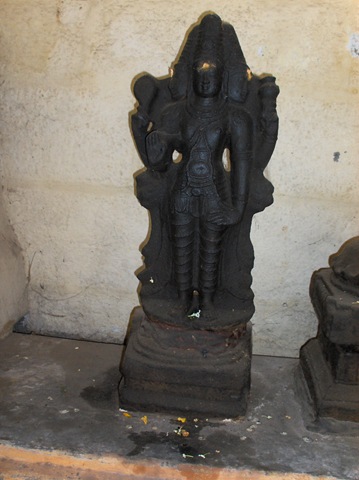
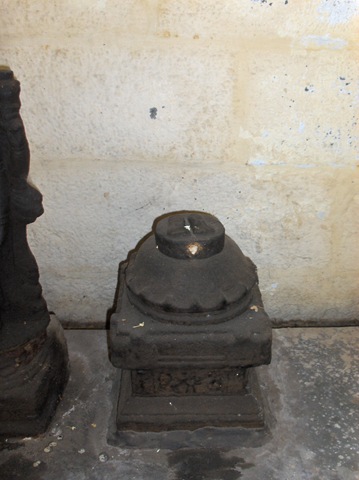
Looking back at the hall of statues.
We walk back toward the front of the Temple.
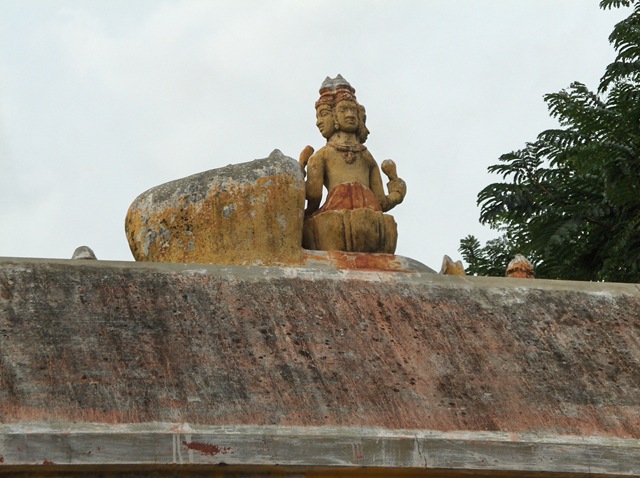
Another statue. This god has three faces (that I can see).
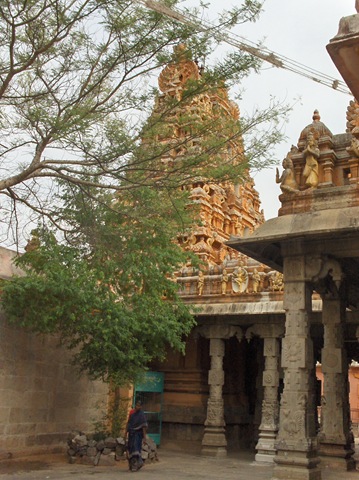
The gopuram, seen from within the temple walls.
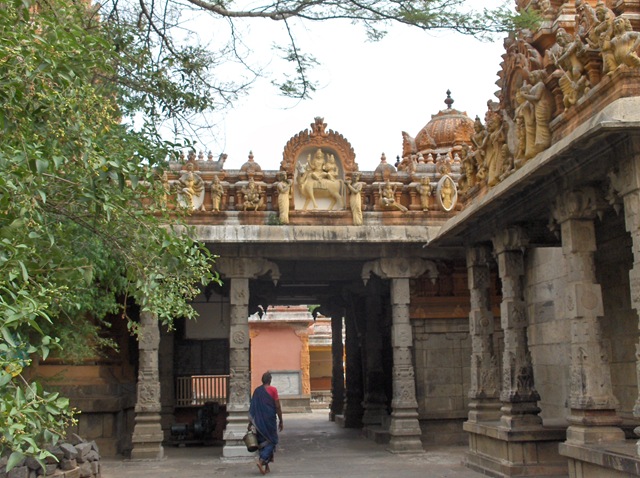
The main entryway, from the North side. To the right is the inner temple. To the left, back outside.
Samuthiram Village – A Night at the Movies: By Richard Clarke
We are working with village leadership in Samuthiram Village. This village is right next to Tiruvannamalai, at the foot of Arunachala Hill, about 2 KM from our house. We go though it almost every day going to and from Tiruvannamalai and Ramanasramam.
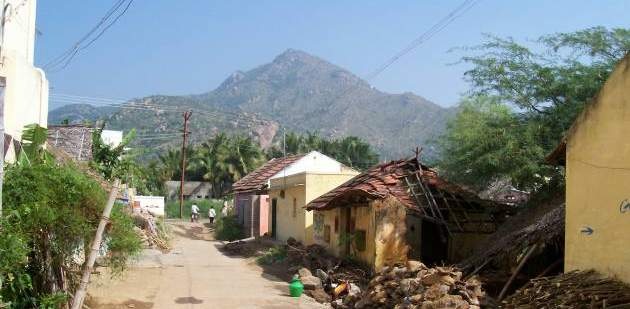
Samuthiram Village has many of the problems from this growing region without receiving much of the benefit from the growing region. These problems include increased crowding, increased disease, urban pollution and greatly increased land and living costs. Like most villages in India, there is much poverty with all its related problems. The additional problems from nearby growth just makes the village issues more severe.
This village is one that gets many westerners as temporary residents during the winter season, when people from around the world are coming to visit Ramanasramam. Contact with westerners has helped village leadership see that more is possible for the village. With the help of some of these western visitors, Quality of Life Trust was organized in 2006 as a means of accomplishing this work. Quality of Life Trust has since put in place a small village elder support project, funded by donations, which provides food and housing to abandoned elders, and an Eco San Toilet (a composting toilet) construction program, funded by BLESS, an NGO in Cuddalore.
I have written a bit about the Trust, see
. My wife Carol posted about a ceremony that Quality of Life held. This can be seen at http://infinitepie.wordpress.com/2008/05/19/our-vip-night-at-the-quality-of-life-trust/. See also their web site, http://www.qualityoflife.in/.The photos below are from a village meeting, where they gathered around my laptop for a show. It was set up on a table outside. Power was strung from a nearby house so we could power the external speakers.
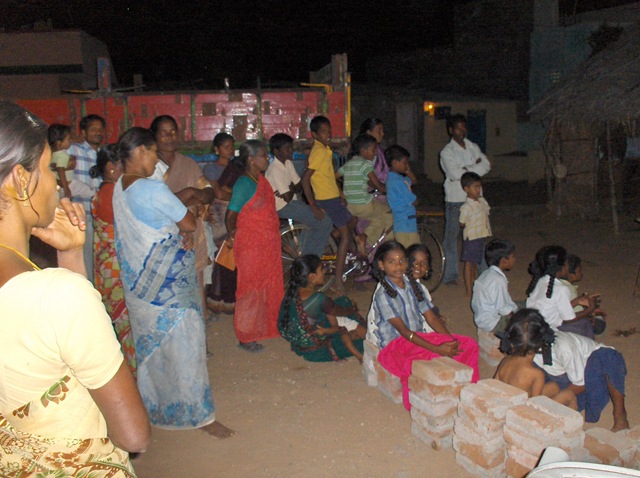
To start, we played a slide show of photos taken at the recent village celebration. First the children, then their mothers and other adults gathered around the computer to see photos of themselves and their family and friends. Then we played a Tamil movie. Finally, we played a video of the celebration (mainly of a meeting with different people talking).
Before we came to live in India one thing we did to give us a tiny bit of flavor of India is to watch Indian movies. These photos remind me of one movie we saw where villagers gathered around a sheet, strung up as a movie screen, to watch a movie. One big difference, though, is that while viewing my laptop, no one broke out in song and dance, as they did in the movie.
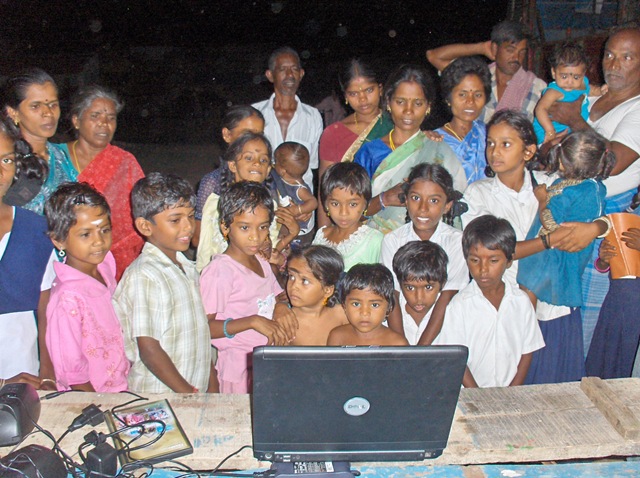
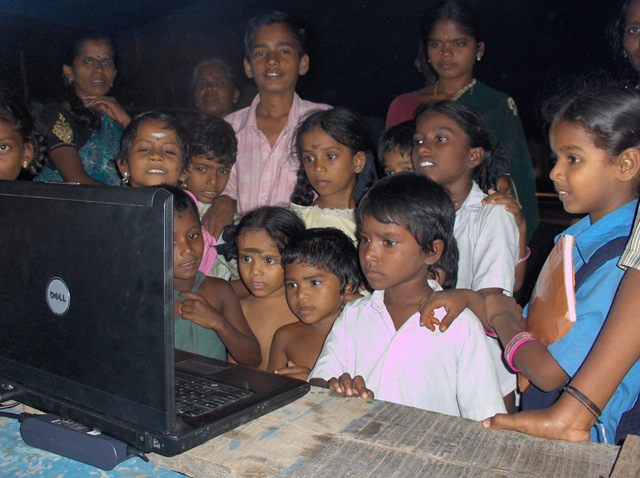
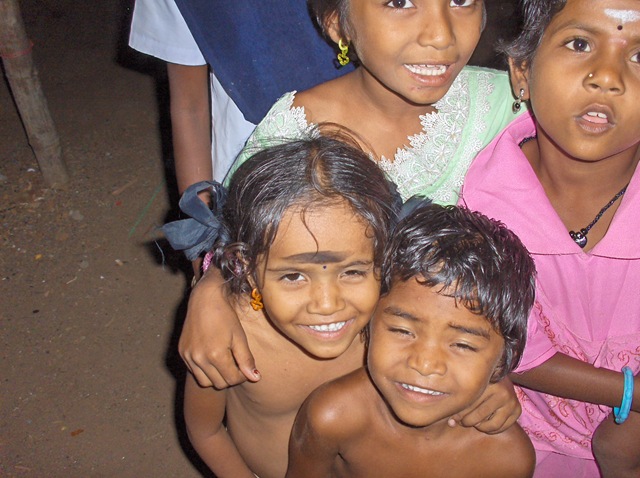
Carol had the camera, and the village children love to have their photos taken.
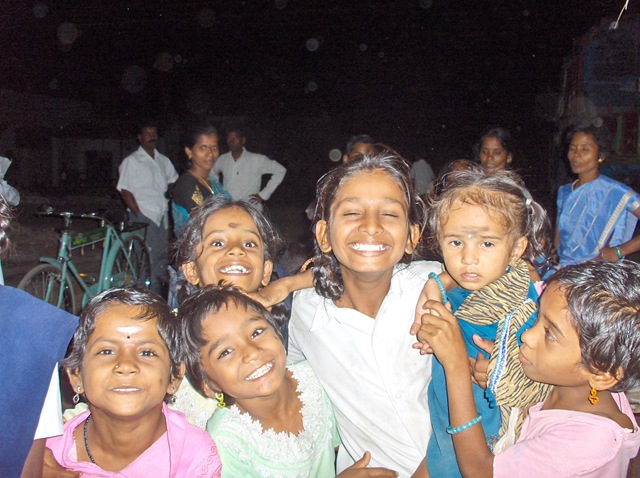
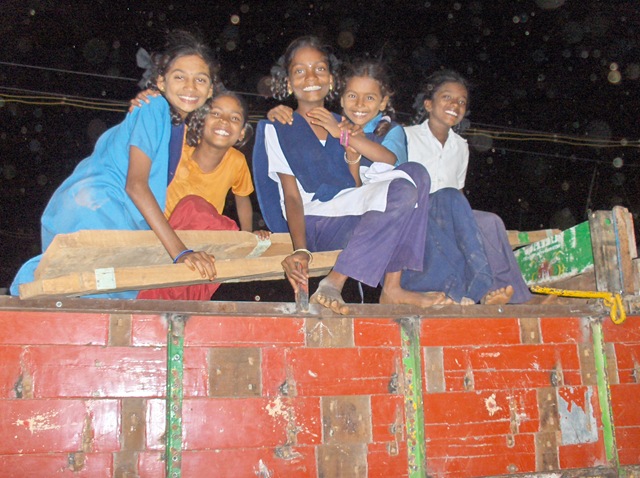
Some of the girls climbed on a nearby truck to get a better view. The girls were not at all shy about climbing around on the truck, even while parents were trying to get them to stop.
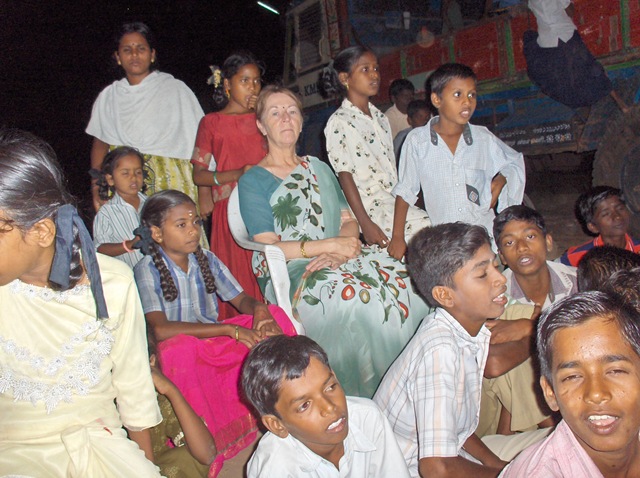
Here is Carol sitting in a chair, surrounded by children. (They made sure that they brought chairs for us to use.)
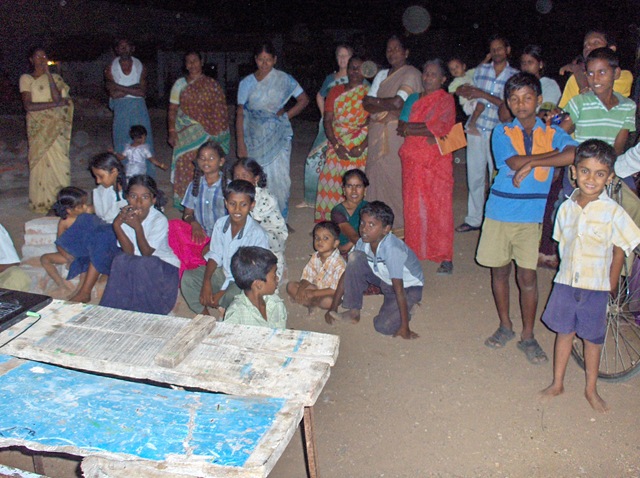
Here the children are seated in front, with mainly village women standing behind.
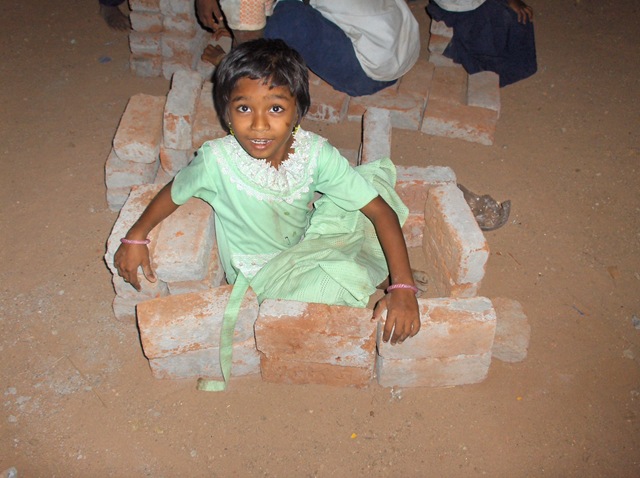
The children naturally, once the movie was over, got bored and entertained themselves. There is construction going on nearby. (This is the case over much of this area, where many people are busy adding rooms that they will be able to rent to westerners during the next winter ‘season.’) So the children started carrying bricks over to where we were and finding different ways to play with them.
The first game seemed to be ‘chairs.’ You can see to the right of the photo below girls sitting on chairs made from piling bricks, with different kids making different designs. Most of the time they got bricks by bringing them from the construction site. Sometimes, while their neighbor was not looking or busy doing something else, they would quickly grab bricks from an adjoining ‘chair.’
After a while, one girl changed the game from ‘chairs’ to ‘houses.’ After this, they all started to build houses.
The performance was over. We all went home and went to bed. Now I hear that the villagers want to do it again. Only this time, just a movie, not a boring video of a bunch of adults talking. I sure wish these Tamil movies had English subtitles.
Arunachala – New Access to Ramana Sites Below Virupaksha Cave: By Richard Clarke
A group of local Tiruvannamalai people have organized themselves and are doing wonderful work to clean up, repair and open up an area on Arunachala that is near to the popular Sri Ramana Maharshi sites of Virupaksha Cave and Skandanasram.
They have organized as a part of “Global Watch Trust.” You can see more about this organization at http://www.globalwatchtrust.com. This site is not yet updated to include this project.
In this area, this project is cleaning trash, clearing brush, repairing and improving paths, planting, and building benches and meditation areas. It improves access to Guhai Namashivaya Shrine and an ancient Ganesh shrine, and provides a way to reach three hillside caves that are said by local villagers to have been frequented by Sri Ramana. The Trust has been given permission to do this work by The Forest Authority, Arunachaleshwar Temple and Sri Ramanasramam.
The Approach
To get to this area, start like you are going to Virupaksha Cave. Below shows where this ‘road’ meets the street, at the northeast corner of Arunachaleshwar Temple.

Walk up the road until you see, to the left, this street. Notice the blue Global Watch Trust sign on the wall.

Continue walking up the hill.

Here they have made a small shrine at the base of a tree.

Entering the area of the Project
Part of the work done is to clean up trash and clear brush away from the paths. This path is marked with stone borders and shows the effects of trash and brush removal. Keep walking up this path.

When you get the this banyan tree, this is the ‘hub’ for the improved paths that access the various caves and shrines on this part of the hill.
IF you look closely you will see a man reclining on a branch of the Banyan tree. This is one of the key people behind all the activity, a young man who grew up around this part of the hill, Saravan. I think this project is largely Saravan’s vision. Saravan guided us through this area and showed us the work that had been done.

To Guhai Namashivaya Shrine
Turn left at the Banyan tree, and take this new path just a few meters to go to Guhai Namashivaya Shrine. I am told this shrine is about 500 years old.

Here are Saravan and my wife, Carol, outside Guhai Namashiva Shrine. This shrine is an important locale in the history of Sri Ramana Maharshi. This is where he provided answers to questions on slips of paper that became the second of his small books, “Who am I?” This is probably the best known of Ramana’s works.
More information can be found about Guhai Namashivaya at http://www.arunachalasamudra.org/guhainamasivaya.html

Up to the Caves
Returning to the Banyan tree, looking up the hill, to the right, outside this photo, is the stone path to Virupaksha cave. Directly up the hill is the path to the caves.
When finished, this area will have a nice stone path in the middle, surrounded by flowers and planting on both sides. There will be benches to sit and meditate and to enjoy this place.

Take the path to caves and a part of the hill that is mainly unseen by visitors.

Looking from the path, Arunachaleshwar Temple can be seen, with gopurams rising above the trees.

One of the Caves
On the path, we pass by a small cave, big enough for perhaps two or three people to sit in.

Old Ganesh Shrine
The next feature is an old Ganesh shrine, with this water tank. This shrine has been vandalized and the Ganesh idol taken. The Global Watch Trust plans to replace this idol.

Here you can see the back of the shrine and the tank.

Another small cave near the Ganesh Shrine. This cave is big enough for a person to lie down and sleep, but not big enough to stand up.

Up the hill to the best of the caves
Climbing further up the path we will get to the crown jewel (I think) of this area.
I would recommend good shoes or sandals and strong legs for the next part of the journey. The path is a bit steep in a couple of places.
Below Carol and Sarsvan are crossing a rock face. Note that they each have clippers in their hands, to work on a bit more brush cutting on the path.

As the path gets higher, the view of Arunachaleshwar Temple is breathtaking. I think the big rock in the midground is a part of Guhai Namashivaya Shrine.

The path continues up the hill. Here it is dirt and pretty easy walking. After this there is a section up through more rocks. This is the only section that I think is tricky. The biggest trick right now is that there is a place where the path goes up the hill and to the left. Take the left. This is not presently marked. Hopefully, this will be done.
Some of this path is a ‘fire road’ up the hill.

Now the cave entrance is visible.
I think this cave is a special place. The people who live on the hill below here say that Ramana stayed in this cave, I guess during what are generally known as the ‘Virupaksha days.’
We have been here just two times and already it is one of our favorite places on Arunachala.

Here is the cave entrance. Saravan and a helper, over the last few months, have put in the concrete walls, floors and benches, and painted them. Flowing water has left stains that make the walls look older than they are.

Behind me on the path, Saravan and Carol have pruning clippers and are cutting back brush from the path.

View from the Cave
Here we are looking east from the Cave across Tiruvannamalai.

Arunachaleshwar Temple view.

Looking up from the cave, we see Arunachala. If you look closely maybe you can see about 3/4 up the photo, on the right, a coconut palm. This is Skandanasram.
If you look closely in the foreground, you will see red oleander flowers. Saravan planted these bushes three years ago. These flowers are used as puja flowers, and he wanted them to be available for those who use this cave for worship.

In the Cave
In the cave, an oil lamp has been lighted.

Carol sits in the cave, meditating.
We think this is one of the special places on this hill. Peaceful and serene, it is a great place to open your heart to Arunachala.

Working on the Mountain – Global Watch Trust
Community Development
The first part of this project was a vision from Saravan as to what could be done in this area, with encouragement from the founder of Global Watch Trust, Sathya. Together they put together a plan and a team to clean up and enhance this part of the Arunachala hill to properly respect the sacred heritage that is here.
An important part of the process has been involving the villagers who live on this part of the hill. This started with a ceremony and a ‘gifting.’ School notebooks were gifted to the children in an evening ceremony that included the local villagers. The purpose of this was to educate the villagers on the importance of this area so they might not use it as a trash dump, and to enlist their help in the work to clean up the hill.
Below is a photo of the books that were to be gifted, and the team from Global Watch Trust.

Here the gifting is being done. Many locals are gathered together here.

As work started, local officials came to the group. Each interaction was similar, starting with “What are you doing?” and “No, you cannot do this.” After some discussion, permission was granted. First were officials from Arunachaleshwar Temple, then the Forest Authority, the Sri Ramanasramam.
The Crew
One big part of the effort was done with a crew consisting of local volunteers and the Global Watch Trust team, shown below. Together they worked to do the major cleanup of the hillside.

So much cleaning and clearing to do
For many years this area has been used for trash. The first thing needed was to clean up the trash.


Brush has overgrown the paths and area around the Banyan tree. All this needs to be cut away, and cuttings disposed of.

While the brush cutting is going on, a part of the team gathers to discuss the details of path repair for this area.

More trash to be cleaned.


The path cleaned and cleared, ready for repair
Here is the approach path with trash cleaned and brush cleared. Now work must be done to repair the path.

Clearing around the Banyan Tree
The ancient Banyan tree is to the left, with rocks built up at its base. In the surrounding area, brush and small trees have grown up, crowding each other for space and sun. They need to be cut back so the area can be opened up and a new path built.

Here they are clearing brush from the base of the Banyan tree.

Results of the Team’s work
The path is repaired
Here is a part of the path shown above that needed repair. Now it is easy and pleasant walking.

Standing proudly by Old Tree
Saravan stands by the Banyan tree. Now it is cleaned up, brush cut back, trash picked up, etc.

What has been shown here is just a part of the job. to continue the job, Global Watch Trust has been sponsoring a small team to work with Saravan to continue with the path building, planting, and improving these areas by adding cement benches to sit and meditate, etc.
There is a need for financial support
Work has stopped for now. Global Watch Trust needs to find people who are able to provide some support for this work.
Global Watch Trust has funded the effort that you see in these pages out of their own funds. Those funds have run out, and for work to continue donations are needed. Evan small donations are a big help. Rs 1000 ($25 or 15 Euros) pays for one day’s work on the project. 40 days work have been done so far, and so much has been accomplished.
If you are able to help, donations can be made through the Global Watch Trust web site. Go to http://www.globalwatchtrust.com/ and click the ‘donate’ button. Credit Cards and PayPal are accepted. Also they ask, until their site is updated, that you also send an email to ceo@levicent.com and let them know that this donation is to be used for the Arunachala Hill project.
Arunachala Pradakshina – June 2008 Full Moon – Part One: By Richard Clarke
After walking ’round Arunachala in April in the moonlight, amidst a crowd said to be 1.5 million people, we celebrated THIS month’s full moon by walking around in the morning. We found this to be much more harmonious, and easier to take pictures than during the crowded night walk.
Shown below are photos taken June 18, 2008. They are all on the ‘Pradakshina road,’ from the junction with Bangalore (Chengam) Road to where this road meets the main road back into Tiruvannamalai, so from the viewpoint of Arunachala, from the South West, to the North West sides of Arunachala.
I have tried to put in names of temples, shrines, etc. I am unsure of the spelling of some of them, so if there are errors, let me know and I will correct them.
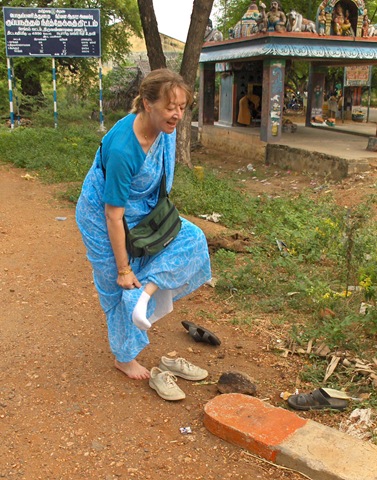
Carol Getting Ready – Removing her shoes
It is the tradition that Arunachala is a temple, and the path around the temple, for good punya (merit) should always be walked barefoot. IF you look closely you will see that most Indians do this. Carol frequently walks barefoot, as she can. I still hold more to shoes or sandals. Even with this, I have had several blisters and foot sores that caused restricted activity for a while as they healed.
Jyoti Vinayaka Shrine
This shrine is right at the intersection of Bangalore Road and Pradakshina road.
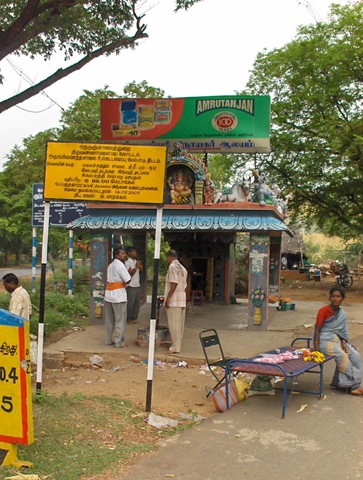
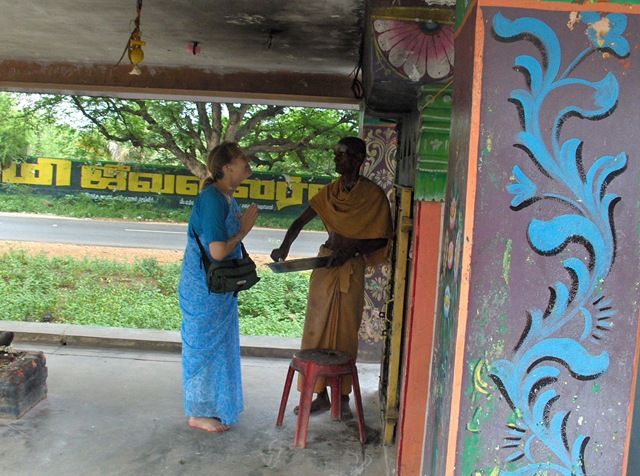
Carol is getting blessed by the priest.
Along the way
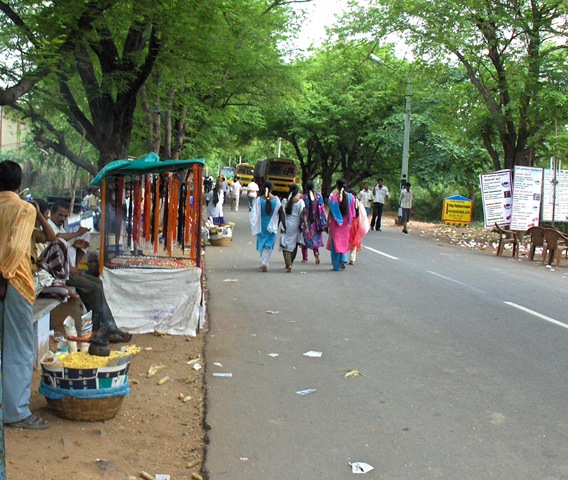
Much of the road is lined with vendors and stalls. There were still many people making pradakshina this morning. In the photo below there is a group of young women walking. You can tell they they are young because they are wearing ‘punjabi’ or ‘salwar’ suits, instead of saris, which is what are worn by most Indian women.
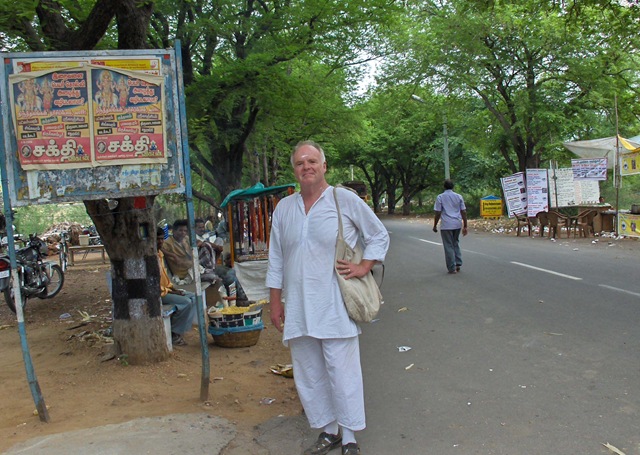
Here is Richard. Note the vibuthi, placed on my forehead by the same priest that blessed Carol.
Another Temple
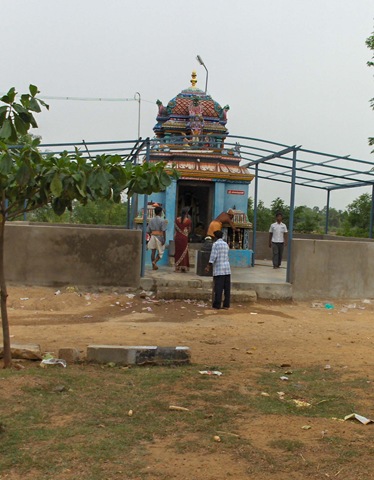
I am not sure of the name of this shrine. To its left is a big building that says it is a ‘Free marriage hall.’ I believe they let sadhus sleep there overnight.
Om Namo Sivaya
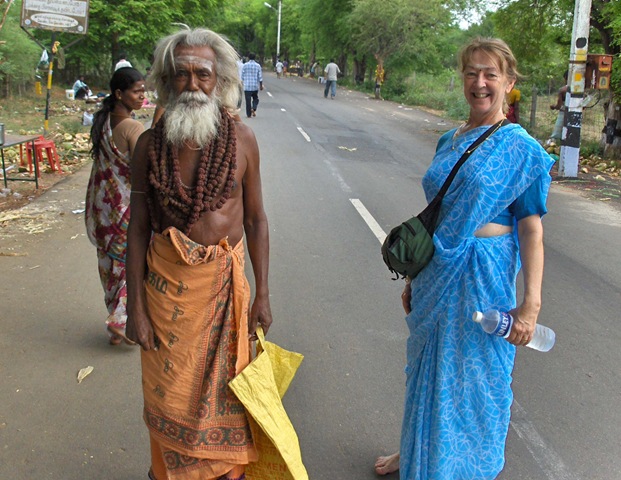
We often meet this sadhu in the morning when we go up the trail to get to the Inner Path. This goes past what we call the Sadhu Tank. I think this is called “Kattu Shiva Hermitage” on some maps. Usually he gives a big smile and says “Om namo Sivaya” as we pass on the trail. This morning he was out on the road, on his way back to “the tank.” We walked together for a bit.
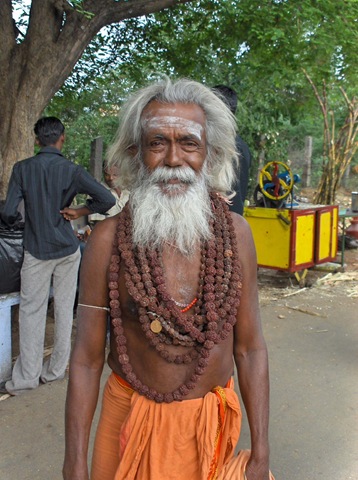
Here he is with Carol. He put on his Siva dhoti for the picture instead of the plain saffron one.
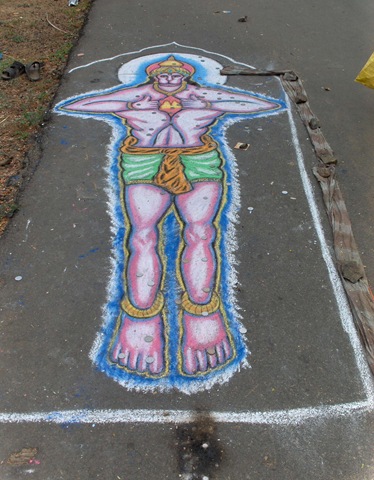
Chalk figure of Hanuman
Note that the artist put cloth boundaries on the pavement, trying to prevent walk-overs.
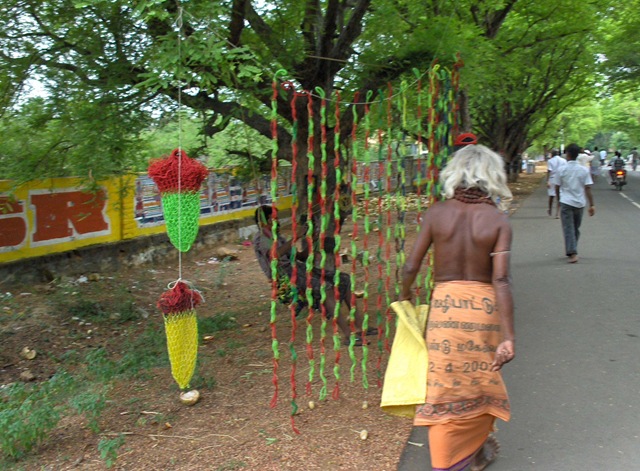
Selling Hammocks
It took some time before we know what the red and green strings were, hanging in this photo. They are hammocks!
Dourvaas Nama Siva Shrine
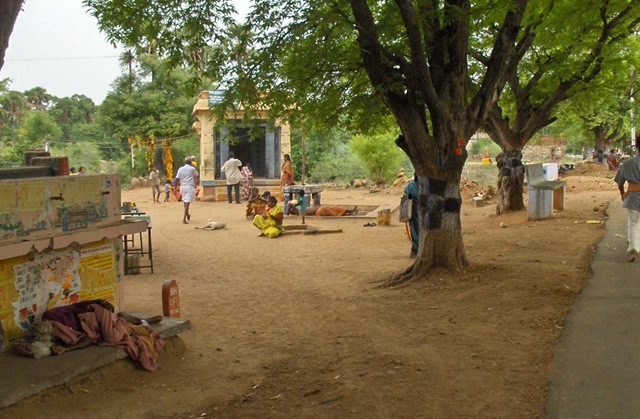
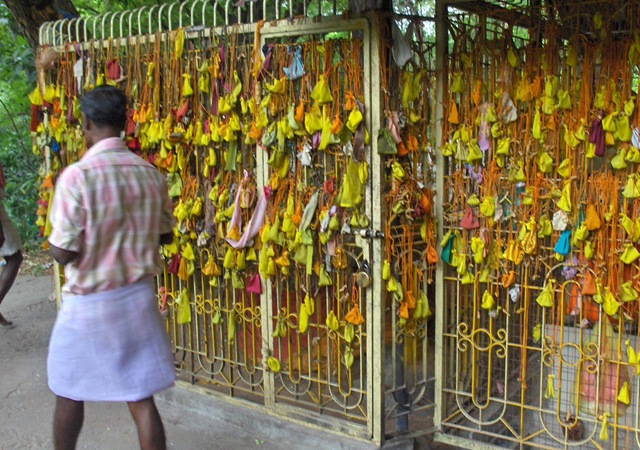
Here they usually used to ask us for ’20 Rupees’ for a “wish bag” to tie on a tree behind the shrine. These wish bags are a common feature in a temple. For example, when a woman wants a child, she will tie a bag onto a tree at a nearby temple.
This is right across the road from where we usually go onto the trail to the Inner Path. This is described in the posting
.
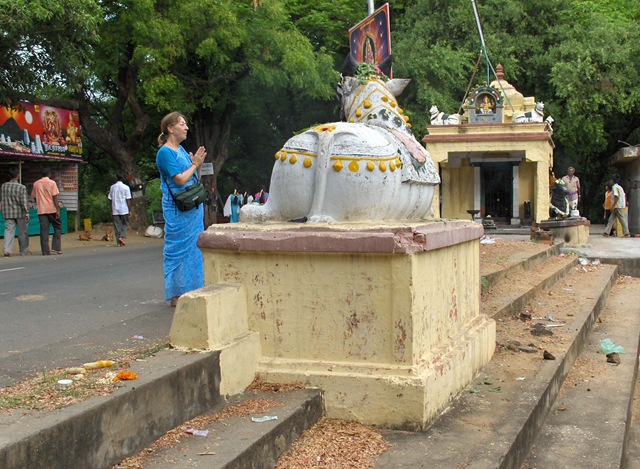
One of many Nandis
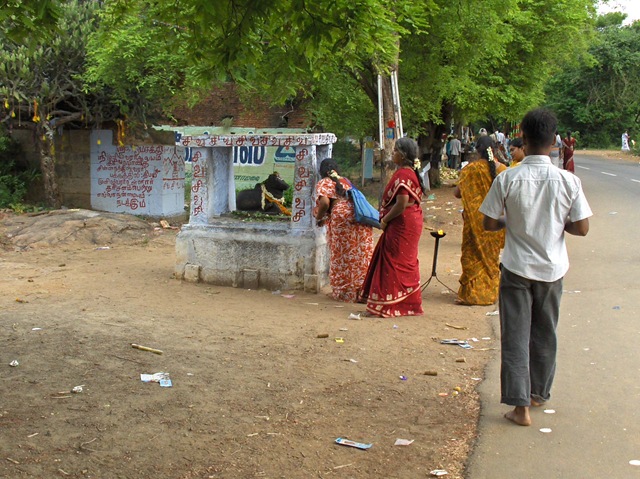
There are many Nandis along the road. Nandi the Bull is Siva’s attendant and gate keeper. In a temple, Nandi will face the lingam. Around Arunachala, most face the mountain.
Women visit images of Nandi, bringing floral offerings, and touch the stone. Their prayers are usually for fertility.
Clean-up after Full Moon night
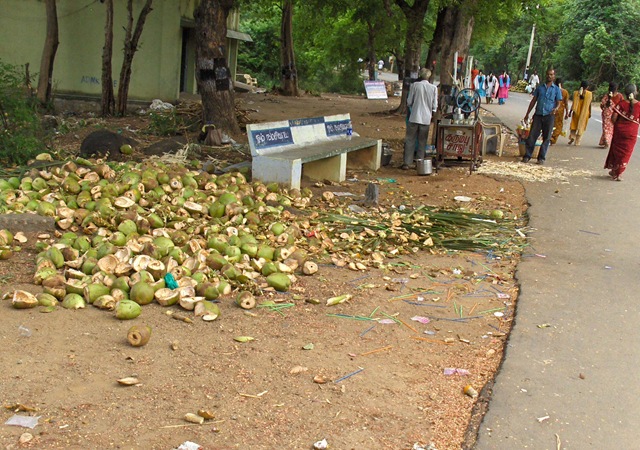
Empty coconuts, after a night of drinking coconut juice. Cleaning up after the full moon night is an issue. Some vendors do this with care. Many do not. And many of the people will throw trash anywhere.
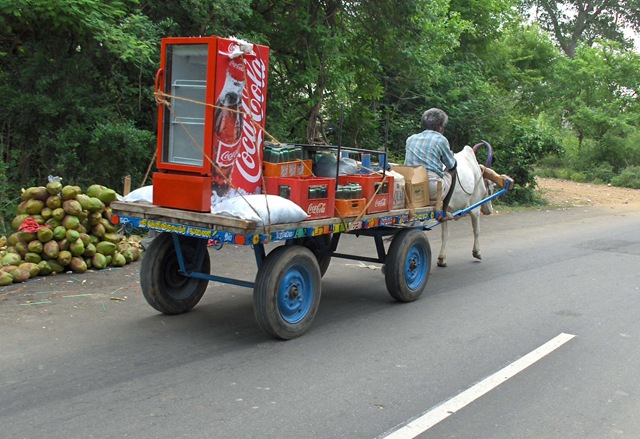
Supplies from a drink stand, going back on a bullock cart.
Another Nandi, by Soma Tirtam (Soma Tank)
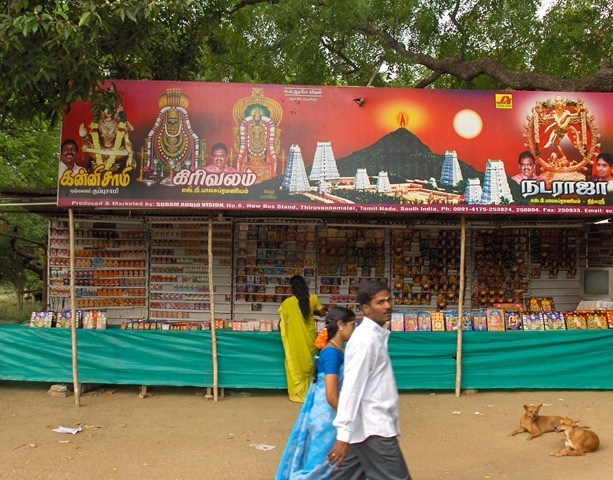
CD and DVD stand
Across from Soma Tirtam. There are a number of these stands, usually blasting out some Siva chant or song.
Mahashakti Shrine, covered with ‘wish bags’
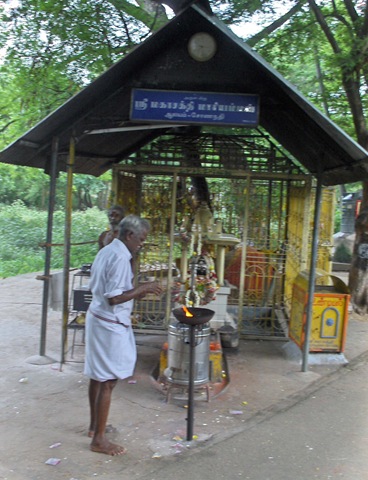
Sadhus
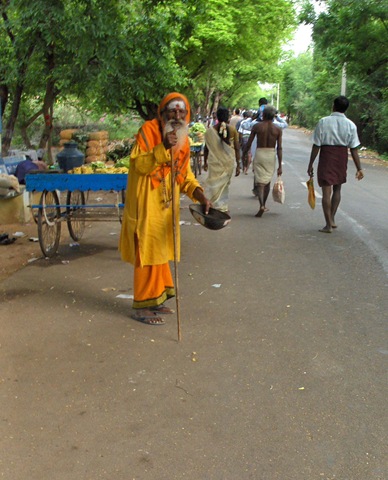
Sadhu with begging bowl
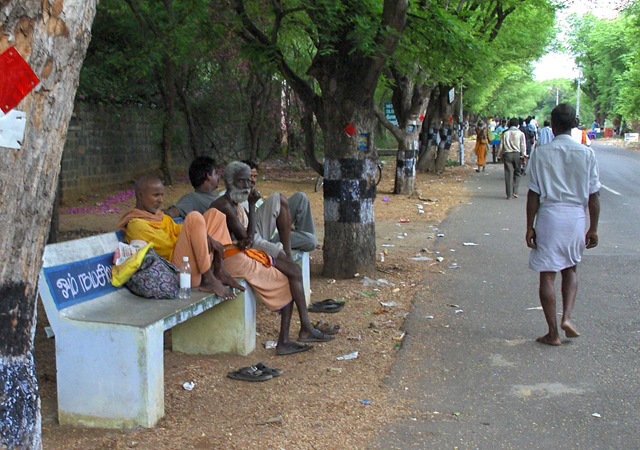
Sitting on bench
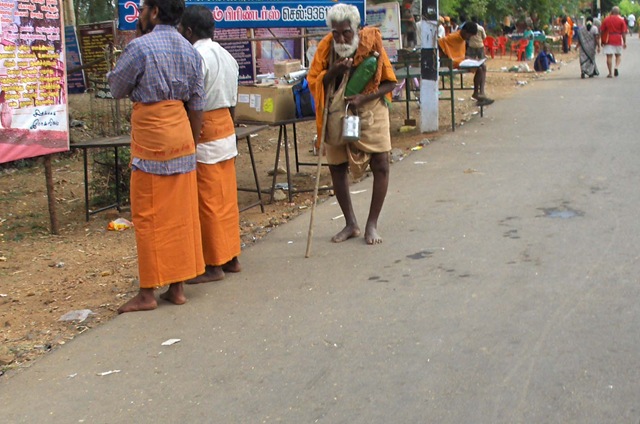
Elderly Sadhu. Just walking seems like a big task.
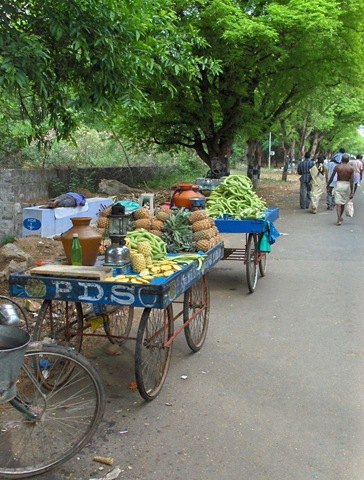
Vendors
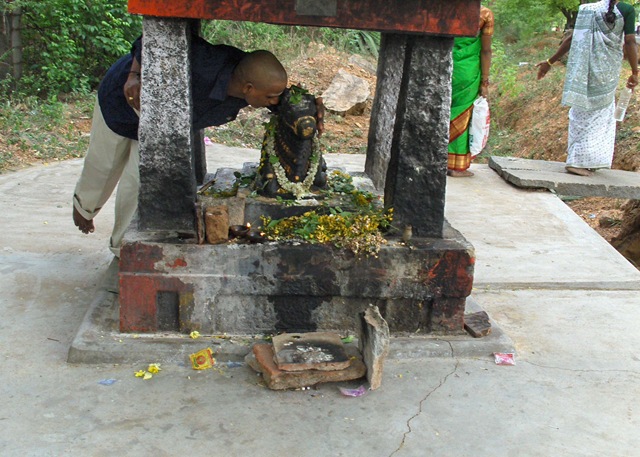
Man whispering secrets into Nandi’s ear
He spent some time whispering to Nandi. Must have had a lot of wishes.
Babies
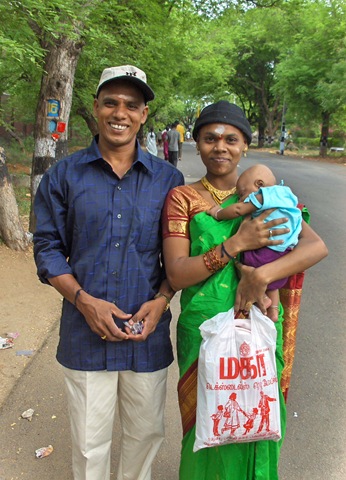
Young couple with babe in arms. Mother says proudly, “38 days old.” They were very pleased to be taking their new baby on pradakshina around Arunachala.
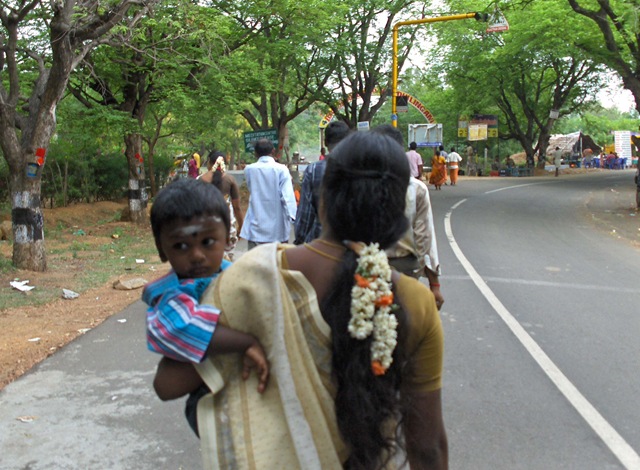
Another baby watching the first baby. You see many babies in the arms of their parents, being carried around the mountain.
One of the nine Lingams, Nirudhi Shrine
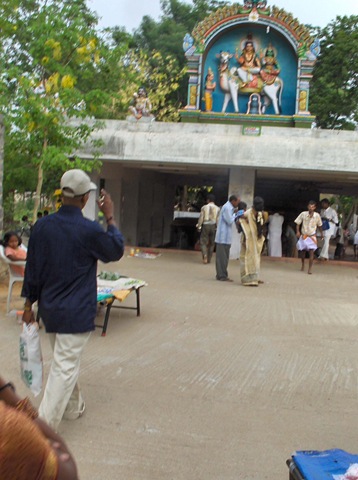
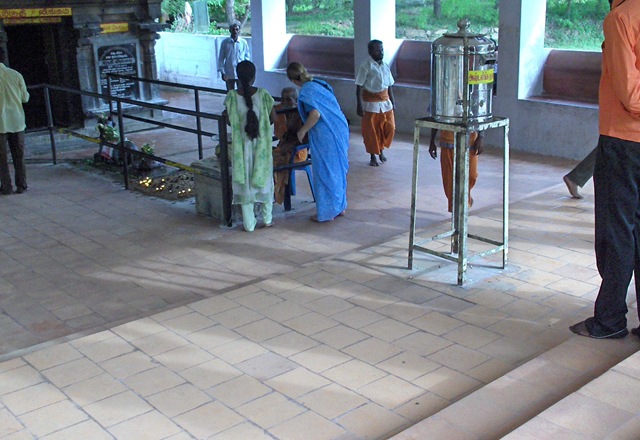
Carol getting blessed
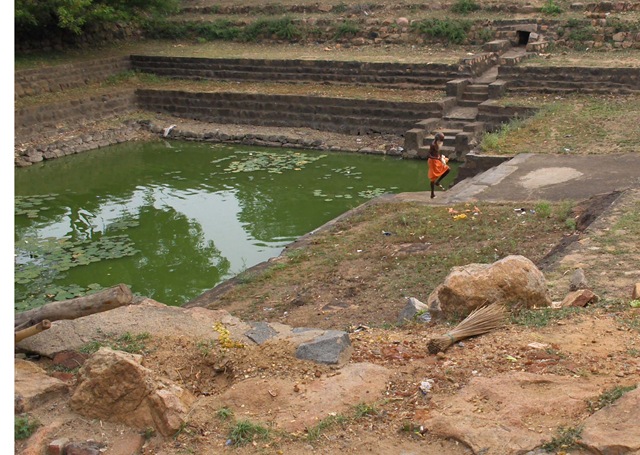
Sadhu taking morning bath in Nirudhi Tank
More vendors
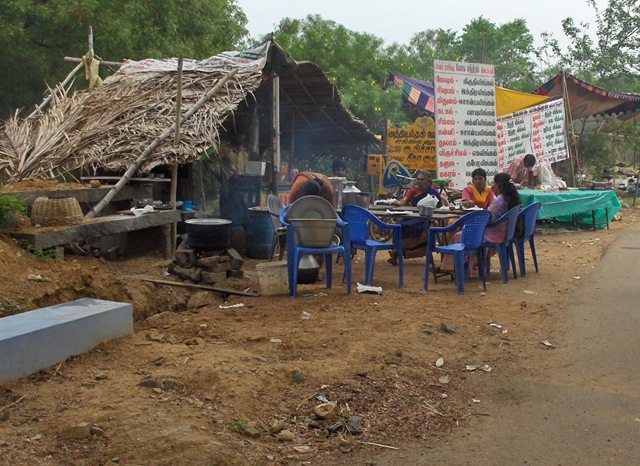
Food stand with thatched roof
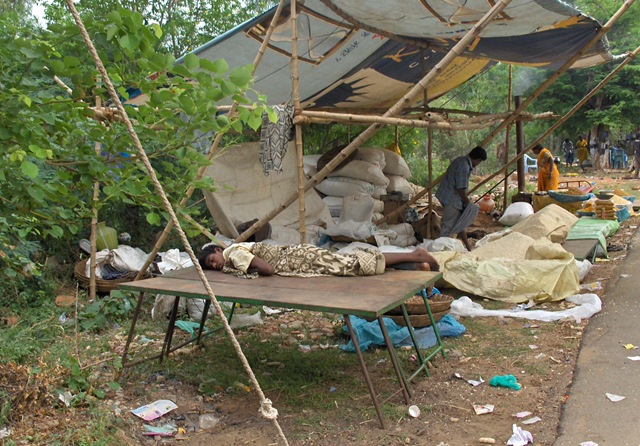
Man sleeping on table after a long night
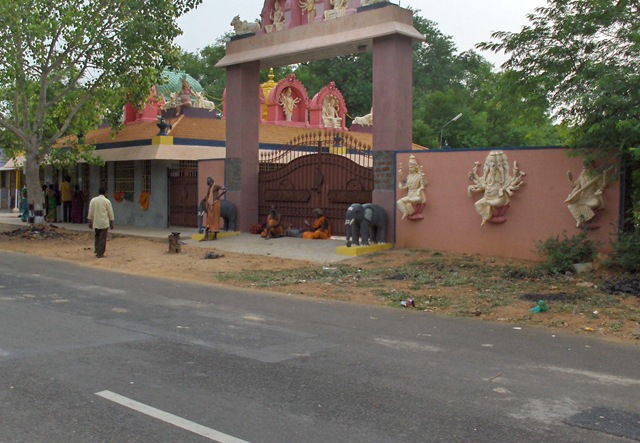
Vallalar Temple with Sadhus
Vallalar Temple features the Nine Planets
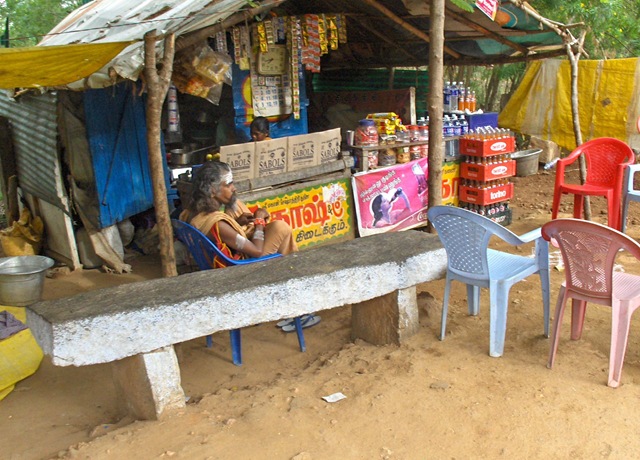
Sadhu in tea stand
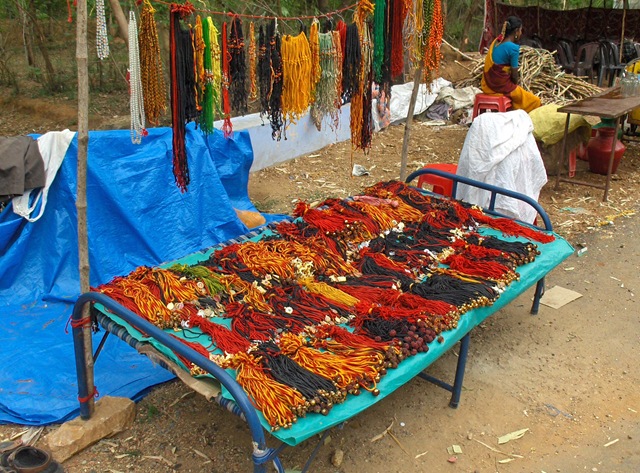
Brightly colored Rudraksha pendants
For the rest of this article, go to


You must be logged in to post a comment.