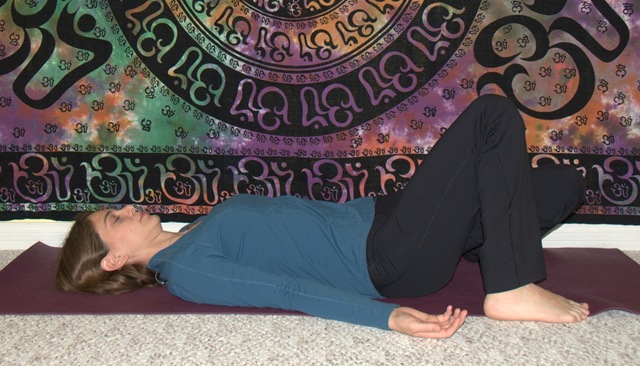
It is often said that Kundalini Yoga, as taught by Yogi Bhajan, comprises all systems of yoga. This is meant more in the sense that the result and benefits of other systems of yoga gradually and suddenly emerge into the experience of the Kundalini Yoga practitioner, such that one will notice the emergence of a deep intuition of posture and prana, and awaken to the experiences of shakti, laya, bhakti, and gyan (jnana), which emerge spontaneously into consciousness. While providing all the benefits of physical and mental health, fitness and fortitude, Kundalini Yoga is entirely different in approach, practice, technique, benefit and result than any other system of yoga. Kundalini Yoga is a Path towards direct experience of the non-dual all-pervasive and single Self.
This article is to provide some clarification and guidance as to how to practice Kundalini Yoga to realize the full physical, mental and spiritual benefit, while attempting to make it clear that, even though the various aspects of Kundalini Yoga may seem somewhat like the practices of other yogas, one should not make the mistake of teaching or practicing Kundalini Yoga, as one might have learned in another yoga discipline, because the dynamics of Kundalini Yoga are entirely different.
While other yogas often lose their direction – hatha becoming a “stretch and bolt,” martial arts – a sport, bhakti leading to fanaticism, jnana into intellectual mind-games, daily practice of Kundalini Yoga generates a relentless force field within the body mind and soul that turns one to experience their True Spiritual Self, as a magnet turns to true north.
Through the daily practice of Kundalini Yoga, there is a gradual strengthening of the nerve pathways and centers of the body towards the experience of an increasing electromagnetic voltage that corresponds to the influx of the awareness of the universal energies that support and sustain the body and mind, like the conversion in a house of a 110 voltage system, gradually to a 220 voltage system, then to a 440 voltage system, where, by analogy, the electric wiring, fuses and energy support systems are progressively strengthened throughout the body field. The results are systematic, holistic, expansive, balanced and complete, where Kundalini is experienced as an awakening of Awareness. This awareness brings about a total opening of the systems of the body. The governors, which are energy control centers in the Kandal, between the navel and fourth vertebra, the brain and the Heart, which restrict (like the surface of a bubble) the sudden influx of the ocean of energy that surrounds us, are able to gradually open the body’s energy channels to this ocean.
Voltage throughout the body increases to allow the infinite energy that supports, sustains, and pervades the universe in all dimensions to emerge as our normal awareness. As a result of this systematic strengthening of the body field, as energy increases, it diffuses throughout the system, so that even sudden bursts, which in other yoga practices may seem troubling, become no more that waves on the shore of an ever widening ocean to the practitioner of Kundalini Yoga, as taught by Yogi Bhajan. There is a shift in awareness from reflected consciousness (the moon of the mind) to direct consciousness (the sun in the Heart), from notional “i” to the True “I” that is seamless. The Guru becomes the inner divinity in one’s Heart, no longer the reflected images of the mind.
Kundalini in other yoga practices is something different, because the body and mind are not prepared and adequately balanced, except in a monastic situation, and then under the careful guidance of someone who has practiced that yogic system, who assists the practitioner in the long and arduous purification process unique to that specific practice. Otherwise, there may be sudden bursts of energy that become disconcerting to the practitioner who experiences them, who then has no one to go to for direction. Thus, yoga / mediation teachers often tell their students to disregard energy flows or to sublimate them, which in reality is like the lifeguard at a lakeside resort telling someone, who is swimming with some discomfort in the middle of a lake, to avoid the experience of water against their skin and wetness in the mouth.
In Kundalini Yoga practice there is acceptance and opening, not denial or rejection. As the higher centers open, the devotion one feels, the deep inner longing, are for the ever increasing experience of purity, lightness and Truth that begins to permeate them, versus images of devotion that often trap devotees into an imaged concept of God.
Shakti becomes Bhakti, and Bhakti becomes Gyan (Jnana), a realization of inner Wisdom and Self Knowledge that is beyond thought and conjecture, beyond endless intellectual discourse and argument, into which many other practices degenerate. The power of the discriminative mind emerges, a Force of Intelligence permeates and rivets the body and mind to the Spirit, and the pure mind inverts and reflects the True Self in the Heart. The ancient Sages and Yogis call this the Enlightenment of the Whole Body.
Kundalini Yoga, as taught by Yogi Bhajan, is very practical. Innumerable sets of Kundalini Yoga exercises, kriyas, mantras and meditations, with their origins going back thousands of years, once hidden and imparted secretly are now provided openly, each with specific purposes that culminate in the systematic strengthening of the energy pathways, centers and governors, resulting in the simultaneous influx of the universal energy consciousness pervading us. But there are basics that need to be covered in order to realize the full power and benefit of a daily Kundalini Yoga practice, i.e., sadhana.
Invocation / Dedication:
Kundalini Yoga practice always begins with a dedication. Our life and being, our consciousness is based on one simple component. Awareness. This simple Awareness is a light that illumines everything. It is the subject-“I” to all objects. Its source is the substratum of waking, dreaming and deep sleep. It is the support for the physical, subtle and causal bodies. It is the consciousness behind the conscious mind, the subconscious and unconscious. It is a self-effulgent screen within which and upon which everything seen and unseen appears. While single and all-pervasive, it manifests in the Heart, the Harimandr, from there filling all the nerves of the body and a major nerve up to the brain with the sense or awareness of “I” – of identity. All that is required to awaken to the True Self is to hold onto this Awareness and just watch. In Kundalini Yoga we begin with a dedication to apply this Awareness to our entire practice and life. This is the Adi Mantra: Ong Namo Guru Dev (Day) Namo: In the Name of the Creator, the Creative Force in the Universe. In the Name of That Inner Divinity that takes me from darkness to Light,… i.e., I dedicate my awareness.
This means that throughout the practice the orientation is always to be aware, as follows:
Concerning the Awareness of postures and movements in Kundalini Yoga:
When there is a posture, movement or angle, it is also important that you s–t–r–e–t–c–h. For example, if you are instructed that the arms are to be held at 60o, you bring them to 60o (not 45o to 90o) and stretch the shoulders, arms, fingers, opening the armpits. Kundalini Yoga is the yoga of angles. The angle leads to a specific effect. By stretching, you will discover that the exercise becomes easier and achieves its full physiological intent. The same for raising legs, or arching. There needs to be an attention and awareness of a full and complete execution of a Kundalini Yoga exercise, not necessarily to do a posture or movement to perfection, as with some yogas, but to do ones best to perform the Kundalini Yoga exercise correctly (and never to over exertion or strain, which might hinder practice later). A little done right will enable you to do much more later. In time, progressively, you will find that what you can do now for 30 seconds or for a minute or 2, within a matter of weeks it will be easy to do these same exercises for 3 minutes, 5, 7, 11, 31 minutes. The stretching is the key to holding a position for a long time, because it vitalizes the entire life system in each area. Otherwise the body will feel like a dead-weight.
Also, in movements, begin slowly and feel the link of the awareness to the pranic radiance; then begin to add breath. Then, to effect the electric charging of the body, begin to gradually increase the power of the breath and the movement. The result will be that you will see a tremendous difference in the overall experience and realization of the benefit of each Kundalini Yoga exercise.
In Kundalini Yoga, awareness is the important factor to the practice. That’s why Yogi Bhajan emphasizes that “Kundalini yoga is the Yoga of Awareness.” He doesn’t say the yoga of postures, movements, angles, breath, bhandas, and so many other factors, but specifically “Awareness.” This is because our Awareness is the True Self, and through the practice of Awareness in a yoga that generates and deepens the experience of radiance, identity to the limited mind dissolves, and the substratum support Awareness emerges – the Infinite Being, and you abide as That.
Therefore, when we move into a posture and movement, we begin slowly, being aware of every part of the body, of the stretching of muscle and ligaments, of the relaxation of all parts of the body not involved in the exercise, so that the energy generated can flow directly to the areas under pressure, and then to relax inwardly those areas under pressure, so that these too will be able to fully absorb the energy flow being generated. The very directing of awareness to these areas will also greatly expand the growing sensation of radiance that flows from the muscles and organs, then deeper from the cells, then deeper from the atoms, and then even deeper, as ever expanding radiance is felt that you eventually realize to be the Radiance of the Self, the light of your consciousness.
Awareness in Breathing:
It is also very important that you learn to do the breathing properly. The basic breaths are long deep breathing (yogic breath), breath of fire and suspension of breath (holding the breath). But there are other breaths as well, such as kapalabati, canon breath and others that have specialized applications in conjunction with posture and movement that result in a unique effect that is exponentially greater and different than as practiced in other yogas.
Breath of Fire – whether one is sitting cross-legged with hands on the knees or arms extended in front of the chest, hands clenched or other angle, the main focus is on the rhythmic expansion and contraction of the diaphragm powered by the movement of the solar plexus and navel, so that the air is felt deep in the lungs, in the middle and through the chest area without using the muscles of the abdomen, chest or shoulders. This means that as you enter lightly into this breath, once you feel the light flow of the breath and the beginning of the emergence of a delicate pranic radiance, you begin to watch through the abdomen, the sides, the legs, the lower spine, the middle and upper arts of the back, the solar plexus and chest, the shoulders, neck and throat, the facial muscles, lips, jaw, eyes and forehead, relaxing each and every area. Then you refocus on the light rhythm of the diaphragm, relaxing its movement. The very application of this awareness to the diaphragm also gives it a greater voltage and energy, so that you’ll notice that the power and movement, combined with increasing radiance all through and around the body, deeper and deeper, becomes steadily stronger. In this way, you develop the Awareness to practice in a manner that allows the energy being generated to go to the actual areas under pressure from the posture or movement and not to be dissipated in other areas that might be under tension or stress only because awareness was not applied to relax and release these areas. Then the focusing of the energy flow to the areas under pressure will bring about the greatest benefit.
This same approach should be used in the beginning and active part of every Kundalini Yoga exercise, kriya, mantra and meditation.
Long Deep Breathing – in the Breath Awareness exercise, which is simply the practice of the yogic breath, there are three areas one becomes aware of: The inhalation together with the expansion of prana or feeling of radiance through the legs, lower middle upper part of the body, the chest/heart, neck head, up through the top of the head and expanding outward around the body field.
You inhale deeply down to the bottom of the lungs by allowing the lower part of the diaphragm to unwrap and expand downward and out against the abdomen. Then, pushing lightly down in the knees with the hands and pulling in with the hands against the knees, the spine will arch, chest come forwards, shoulders back, chin come in slightly and neck stretch upwards, slightly back at the axis and atlas. This is neck lock. Then “suspend the breath forward in the chest, and you will feel the gradual expansion of the energy flow, as described. With each breath more and more prana is stored in the heart, located it the 8th vertebra pranic center. After 5 to 10 seconds (initially holding 5 seconds and then gradually increasing to 10), slowly exhale, squeezing from the top of the lungs downwards until, as sensation of upwards contraction of an area just below the navel is felt. Then you will feel all the expanding energy, the prana, withdraw and flow down from the centers in the brain and higher centers, down into this area, which you just maintain in a contracted state without pulling upward as with root lock, for 5 or more seconds. In this way, the prana is expanded then together with the downward flowing apana, contracted. With every breath a greater and greater radiance will be felt throughout the body, all around and deeply into the cells and atoms of the body. Then inhale and hold the breath, come into neck lock, suspend the breath, meaning there is no downward pressure at the throat on the expanding pranic radiance. Then pull the root lock, which draws the accumulating polarity of energy in the Kandal below the navel up into the spine and experience a flow of energy radiating upwards and out, expanding in an ever widening field through the 10 Bodies – the chakras, throughout the aura, ark line and radiant body. This is a key breath (prana) awareness exercise, often used between Kundalini Yoga exercises.
In the Breath Awareness Exercise, you also become aware that in the suspension of breath you will notice that the radiance felt in the chest extends all through the front of the body, a kind of an infilling electric sensation that entirely suspends the breath and the mind. With each breath, you will notice a sense of abiding singly as the seer, with less and less interest or focus on the energy increasing throughout the body. The emergence of a sense of being “empty, clear, self-illuminating, with no exertion of the mind’s power (attention).” (from faith Mind of the Third Zen Patriarch) Thus, suspension of breath in holding the breath produces an effect that is vastly different from the breath retention in other yogas.
By incorporating this in the way that Kundalini Yoga exercises are practiced, the body becomes acclimated to the experience of greater energy flows, the mind becomes more expansive, pure/satvic, inertia is relinquished, and your awareness grows in inward clarity and expansion and the emergence of a deeper knowledge of who and what you really are, less and less centered around the focusing of the sense of “I” identity, more and more simply abiding in the consciousness of radiant, expanding being and the inward emergence of your True Identity in the Infinite.
Awareness and Bhandas:
Learning the bhandas properly from the beginning is also important, i.e., mool bhand (root lock), uddyana bhand (diaphragm lock) and jalandara bhand (neck lock). Bhandas are meant to direct the easy flow of circulating energy during and after the completion of the active portion of a Kundalini Yoga exercise. Eventually an automatic electromagnetic locking effect will be felt, as the energy increases in the body. Practice makes this eventuality come sooner.
Preparation:
Each Kundalini Yoga exercise has a specific effect that can be felt in the radiance generated and longer term deepening of awareness. Kundalini Yoga exercises are usually put together in sets with a specific purpose or more powerful kriyas, which may also be part of a set.
In order to derive the full benefit of sets, kriyas, laya mantras and meditations, it is suggested that a few kundalini Yoga exercises and pranayamas be practiced in preparation, in order to activate the radiance throughout the body and charge and balance the channels, then the effect of the sets, kriyas and meditations will be immediate and much more powerful.
An example would be to start with the breath Awareness Exercise, lead by the teacher.
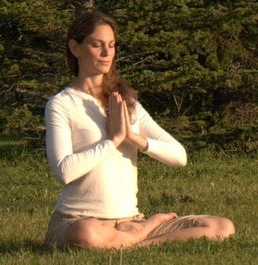
This might be followed by bringing the palms of the hands together, with thumbs against the sternum to begin the Invocation / Adi Mantra repeated 3 to 5 times, then inhale, hold the breath, pull the root lock and 30 seconds later, relax the breath. When you exhale you may feel a sensation of strong electricity moving through the spine and throughout the body. Just remain entirely passive and relaxed and the energy will flow outward.
Then sitting, spread the legs wide and bring the arms up to the sides, parallel to the ground pressing the shoulders back. In this exercise you slowly begin the lean forwards keeping the spine straight, leading with the heart and not the head, so the head remains slightly up. Then slowly start to stretch the arms forward, reaching and stretching the arms as far as possible. Feel the flow of radiance as you move.
Then slowly come into the starting position. Be aware of the stretching of the ligaments and muscles in the back and shoulders. With each slow forward and back motion, feel the radiance expanding throughout the body. You may notice a certain brightness in the source of the flow of attention between the heart and the brain. After 9 or 10 such stretches introduce a long deep breath as you come straight, hold a moment, then exhale as you stretch forwards. Again each slow motion will add pranic radiance. Then to increase the power and voltage much further, begin to move through this exercise with greater power in movement and breathing. You should begin to feel the radiance becoming electric. Then inhale and hold the breath, pull the root lock and let the energy fill the body, expand upwards and all around the body field. Exhale and lower the arms squeezing all the breath out until you feel the area below the navel contract upwards. Repeat in the same manner as Breath Awareness Exercise, several times, then inhale and hold again. Pull the root lock, feel the electricity flow through the legs, torso, back, arms and through the head, then relax for a minute, and come sitting cross-legged. The spine and back will be open and the Heart will be open from this exercise, and the whole body will radiate.
The next exercise is similar to the Breath Awareness Exercise in the intent to irradiate the body field. In this case one prepares for the practice of Kundalini Yoga exercises by bringing the arms forward, parallel to the ground, hands clasped in Venus Lock and doing the Breath of Fire. You begin lightly, then, as the prana begins to expand in the body, you will notice that the power of the breath, both in terms of volume of air pumped and speed, increases steadily throughout the exercise period. As you continue for up to 5 minutes, you will notice that all the muscles of the body are relaxed and that the powerful motion of the diaphragm itself becomes more and more effortless. A sense of clarity and electricity will begin to be felt expanding up from the legs and lower part of the body to the upper areas until you feel and expansion of this clarity and light filling the head and flowing out through the entire crown area, radiating around the body. Then inhale hold the breath, pull the locks, hold for 30 seconds or longer, then exhale squeezing all the breath out until the area below the navel contracts upwards. Keep the breath out in this way, without pulling the root lock, and all the energy will stabilize into this area and polarize. Then continue with the Breath Awareness Exercise, holding the breath in, then holding it out for 10 seconds after each inhalation and exhalation, while the cells of the body decontract, absorb the energy and begin to radiate.
Next comes spinal flex – camel ride. Again, you begin slowly. Sitting with legs crossed, holding the shins with your hands, then pulling the hands inwards, the spine arches straight and the neck comes into alignment stretching upwards in an easy neck lock. You will feel a releasing of energy all through the spine and flowing up through the top of the head, a clear, yet blissful sensation. After a few moments completely slouch the back, pressing the back arched spine back, stretching the nerves, muscles and ligaments that start to release their energy. Slowly come into the straight position, pulling the spine straight, and feel the released energy radiate upwards through the spine. Continue this slow motion several more times, then bring in the breath, inhaling to fill the lungs as you come straight, exhaling back, continuing slowly, feeling the radiance increasing even greater. At a certain point you will begin to feel the sensation in the spine of a will to vibrate more quickly, which in turn increases the power of the voltage being generated. In classes the teacher usually leads the movement until the power and speed is felt, then students continue on their own. Then inhale and hold the breath. Pull the locks, pressing the shoulders back, chest forward, suspending the breath 30 seconds, or longer. Then exhale, again, as previously squeezing all the air out until the area below the navel contracts upwards bringing about a polarization of the flow of prana (radiance) throughout the body field. Again continue with the Breath Awareness Exercise, as above, than sit still and relax, and feel the circulation and expansion of the radiance throughout the body, inside and eventually outside.
The exercises that follow are to open the moon channel and sun channel (the ida and pingala nadis). There are many variations, but here are 2 that open these channels in opposite ways.
The first is to come kneeling on the knees. Then extend the right leg straight to the right side. Then raise the arms up by the sides until they are stretched up, arms hugging the ears, with palms pressed together. The pelvis is pressed slightly forwards to keep a straight tension throughout the spine. Then begin very powerful Long Deep Breathing, completely expanding then contracting the lungs with every breath for 10 to 15 breaths, stretching the arms upwards with each inhalation. Then inhale, hold the breath for 10 to 15 seconds, pull the root lock, stretch the arms up, press the pelvis slightly forward and stretch the spine upwards. Feel the radiance fill the body, then slowly exhale, bringing the hands down in front of the kneed, bring the right foot back next to the left foot and come sitting back on the heels. Bring the spine straight, stretching the neck upwards, shoulders back slightly, chest forwards and wait. You will begin to feel a releasing of an electric current all along the left side of the spine, the moon channel, up through the back of the left side of the neck, up over the left side of the top of the head, to the point between the eyebrows. Wait, notice the flow of the energy, then release your attention and remain passive (negative mind meditation). The energy will begin to increase and expand all through the left side of the body, flowing upwards through the top of the head and around the left side of the body field. Just wait, maybe a minute or 3. Then repeat the same exercise, kneeling and extending the left leg out, arms stretched up, and so on to affect the sun channel to the right side of the spine.
The second part of this ida pingala / moon sun channel cleansing is again to come up in the kneed, but this time, you press the pelvis forward as far as possible, arching the spine back, pressing the shoulders back, expanding the ribcage forward, then arching the neck and head all the way back. Feel the radiance. Then slowly extend the left arm up stretching the arm and the fingers upwards, as though to reach for a lightning bolt. Then twist slightly to the right to put the right hand on the right heal, then over the right foot. Press the pelvis forwards more, extend the left arm and fingers upwards even further and begin the Breath of Fire for a minute. Then inhale deeply, hold the breath, pull the root lock, press the pelvis forwards, reach up, arch the spine more, feel the expansion in the chest area. Feel the energy radiance beginning to increase forcefully throughout the body field. Then slowly exhale, come sitting on the heels, hands resting on the thighs, spine straight. You will begin to feel a powerful radiance through the moon cannel, then expanding to all the organs on the right side of the leg, torso, neck and head, with energy flowing powerfully upwards. Wait.
After 2 to 4 minutes, feeling the radiance increasing, then balancing, you can repeat the same exercise extending the right arm up and left hand back to the left heal, to affect the sun channel.
Now that the ida and pingala are charges and balanced, the exercise that follows is to open the central canal (the sushumna) and the Heart, simple but powerful. I this exercise, simply sit cross-legged. Bring the arms behind the back with the hands clasped in Venus lock. Bring the spine straight, arms stretched straight, press the shoulders back to bring the shoulder blades together, expanding the chest forward. Now inhale deeply, then lean forwards keeping the head slightly up, leading with the heart, while stretching your arms up from the back as high as possible. Hold for a few seconds, then exhale coming straight, again pressing the shoulders back. And continue slowly 10 to 15 times, then when you come up, after inhaling down, this time inhale deeper, using all your strength to press the shoulders back, clasped hands pressing into the lower spine, neck extending and stretching upwards, pull the root lock and hold for 10 to 30 seconds. Exhale completely, inhale immediately remaining with the spine straight, again pressing the shoulders back, while pulling the root lock and neck lock 10 seconds. Repeat one more time, then very slowly exhale and bring th hands slowly around from behind the back to the knees. Relax the breath. You will begin to feel a surge of e pillar of light all through the spine, upward flowing through the top of the head, opening the central canal of the spine (the sushumna) and the Heart. Wait for 1 to 3 minutes until the radiance extends throughout the body through the top of the head and all through the aura.
The final preparation exercise is to open up the higher centers from the Heart to the brain and the arc line. This is a very simple exercise. Sitting cross-legged, you reach your arms up 90 degrees, palms facing eachother. Then begin to stretch the shoulders and arms back, arching the spine, opening the chest cavity. Stretch. Stretch the nick upwards and drop the head back slightly, as though to look between the up stretched arms and hands. Begin a powerful Breath of Fire for 3 to 5 minutes, all the while focused on the arching of the spine, stretching the arms and shoulders up and back, expanding the chest. You will feel the radiance begin to flow upwards through the neck and the chakras and governors in the brain and through the top of the head, possibly feelings of bhakti and purity filling the mind. Then inhale, pull the root lock and hold for 30 seconds. Slowly exhale bringing the hands to the knees and wait. You will feel the radiance expanding throughout the body and flowing upwards. Just apply the awareness to the flow, without direct attention, and the radiant flow will deepen and increase.
Try this series, as an example of what some might call a “warm up.” But in Kundalini Yoga, what in other yogas and sports is called a warm up, is a preparation of the body and mind for deep meditation on the radiance to be developed through every set, kriya and meditation.
There are variations of these after the Breath Awareness Exercise, but you are now ready to experience the full benefit of a Kundalini Yoga set, kriya and meditation.
In Kundalini Yoga practice, while the importance of stretching may be taught, the breathing and locks are somewhat different from hatha yoga practices, so it’s important to understand how to do them so that the energy flows easily and correctly.
The Active and Passive Aspects of Each Kundalini Yoga Exercise:
Finally, it is vitally important to understand that each kundalini yoga exercise has an active part and a passive part. In other yogas this is not the case. Each posture is a complete exercise in itself, whatever the series might be or whether in a series (like a karate karta) or single posture to corps pose.
But in Kundalini Yoga the purpose of the practice is to develop radiance (laya) and depth (pratyahar), which is only felt in other yogas much further along in their practice.
In Kundalini Yoga you are maximizing and working directly with all the systems of the body simultaneously – circulatory, pulmonary, endocrine, nervous etc. Each posture and movement brings about a pressure in a specific area or system of the body. This pressure means that the blood will saturate in that area. As powerful Kundalini Yoga breathing techniques are combined with the postures and movements, these areas put under pressure will have the strong effect of the purified and energized blood flow into that area. Initially, this means that these areas, where the capillaries and cells open under the pressure of the exercise, discharge their impurities and toxins in return for the vitality of the purified energized blood flow. Moreover, these same areas begin to build a charge – a voltage.
Now, here is the important part to remember:
The body is like a car battery, only with many batteries working together. In a car battery, there is water, and there are chemicals. As the chemicals are increased the voltage of the battery also increases – 3 volts, 6 volts, 12 volts, 24 volts, are a standard we can buy at any K-Mart. The body is mostly water, with some chemicals, whose secretion is the basis for the maintaining of voltage generated in the body. (This is why it is said: You are as young as your glands.
In the practice of other yogas, there is a gradual process in which the tensions and blockages of the body are reduced and the mind begins to become still. The process accelerates with increase practice and especially fasting and internal purification, such as (in the west) colonics (versus Nauli Kriya for cleaning the large intestine).
Then, as the energies of the body are used less and less towards the incessant pressure of thinking and identity encoding, imaging, impression taking and so on, there is a build up of unused kinetic energy, that begins to fill through the body, so that the body begins to lose its inertia, becoming satvic pure, transparent, blissful, easing into the ever-present oneness of the yogi’s surrounding.
Awareness to movement and eventually prana, as in Kundalini Yoga practice, is a key to the expansion of this kinetic energy in other yoga practices, what in Buddhist meditation and martial arts is called “Mindfulness.” This is because that simple awareness through which we experience the inner and outer world is really the light of the Infinite Being. When the mind becomes pure and still, this light of awareness, through which we experience the inner and outer world, sinks into its source, and illumination flashes forth.
In Kundalini Yoga, the posture/movement (always practiced with still awareness) combined with powerful breath creates this purification in various areas of the body directly, and with it comes an electrical charge to these areas. To support this electrical charge, and this is the very important point to remember in your Kundalini Yoga practice, the glands secrete very specialized chemicals. The charge or voltage generated directly impacts the glandular system causing the glands to secrete so that this charge may be sustained and maintained. Chemical electric pathways open. Once the active part of the Kundalini Yoga exercise is completed, the passive part begins. The reaction of the glandular and nervous system to the vitality of the bloodstream impacting the specific areas of pressure brought about through the posture or movement takes some time to complete. The time period depends on the duration of the exercise and other dynamics of the body’s ability to circulate the secreted chemicals.
Therefore, you have an active aspect of each Kundalini Yoga exercise and a passive aspect, which must be experienced for the exercise to achieve its full benefit!
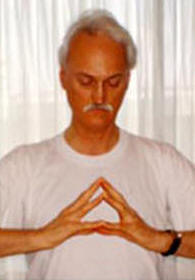
In the experience of the passive aspect of a Kundalini Yoga exercise, initially, there is the sensation of decontraction of the cells and muscles and ligaments in the area. Then comes the sensation of opening and radiance. Then the radiance begins to balance with all the other organs and cells of the body, strengthening the magnetic field of the whole body, bringing it into balance with the area affected in the exercise. And you begin to feel a previously impalpable sensation of “electric radiance” / “transparent electric” – which grows and expands (and brings about a deepening) through each progressing Kundalini Yoga exercise (and kriya) that make up a set, and then progressively building from set to set.
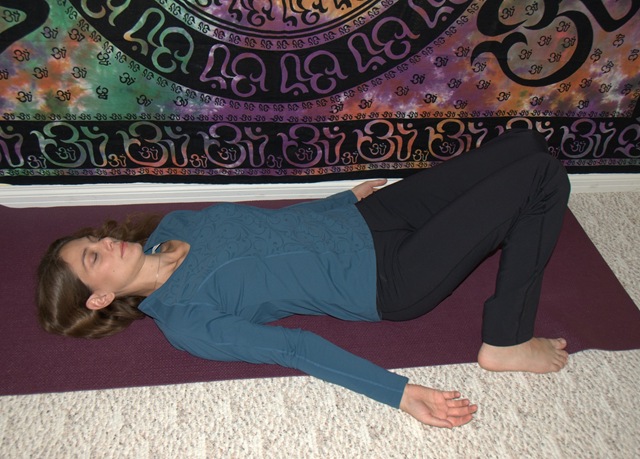
At the end of each set, usually before a meditation, we allow the body to go into a deep relaxation, yoga nidra, through which all the energies compacted in various areas of he body may finally release, merge, deepen, effecting an entire systemic new increased voltage plateau in the body, so that gradually you will become aware of the inner and outer radiance continuously.
In Kundalini Yoga, we usually diversify the sets practiced in order to bring about the opening of the cells, glands, organs, nerves and systems in every area of the body.
Typically, the passive part of a Kundalini Yoga exercise is as long as the active part, but what you are looking for is a sensation of the radiance circulating and rising through the body to the crown and beyond, which indicates the balancing of the electromagnetic field is complete.
Typically the Yoga Nidra is 10 to 15 minutes.
Purification of the subconscious:
The body is a mechanism that stores the impressions of who we think we are. (The body is like the hard drive for computer storage, versus the brain as the RAM/cache storage.) Because the impressions are stored in the body structure, we call it the subconscious. With Kundalini Yoga practice, the electric chemical balance of the voltage of the body increases to bring about a system wide vibratory frequency that is higher – more subtle – than the frequency of thought vibration, so that your sense of identity begins to become clearer and clearer, less linked to thought and sensation. No longer drawn to this or that reactive thought or imbedded compulsion, but open single clear awareness of the pervasiveness of consciousness throughout the body field (i.e., the ten bodies).
At the lower voltage level of the body, the mind’s focusing mechanism of attention needs to be used to see and know. It moves through the darkness (unawareness) of the body/mind field like a flashlight used to see on a dark night whose light grips each arising thought, sensation, impression in order to compare or merge with the sense of “I” inherent in the light. Sometimes more is seen. Like the waxing and waning of the moon cycles, the mind becomes brighter (feelings of love, compassion – satvic) and dimmer (feelings of hate, distrust, judgment – rajasic, tamasic).
Many people have no real sense or feeling of the energy radiance that pervades and sustains the body, i.e., their own life force, let alone that this force of Life is actually the Light and Life of the Infinite Being that denotes the single sense of “I” in the body. We focus to each part of the body and feel that part of the body.
But with Kundalini Yoga practice, in particular a daily morning sadhana, the overall voltage of the body begins to become the same as, even greater than, the voltage of the focusing mechanism of the mind……..
The result of this is that you begin to lose your experience of the need to focus, i.e., direct attention, as your awareness now simultaneously encompasses the whole body! You realize yourself to be the single seer of the whole body and the radiant field around, which you actually experience without focusing.
Kundalini Yoga practice includes the use of mantra and meditations.
Mantra in Kundalini Yoga is much different in effect and impact than with other yogas, because through the practice of what we might call the “Yoga of Light,” as described above, the “Yoga of Sound” is amplified. With the Yoga of Light, the whole body begins to resonate. When you add the Yoga of Sound, the sound amplifies throughout the body, and has the unique and special effect of integrating the energy that has been systematically stored from each Kundalini Yoga exercise. It’s like playing a regular guitar versus playing an electric guitar, where the reverberation increases with the amplitude of the voltage. But with Kundalini Yoga, the very use of the mantra also increases the amplitude of the voltage, so that you have a leveraged effect. Part of this is due to the effect of the sound causing a breakdown of subtle blockages of energy flow. Part has to do with the effect of releasing of energy stored in areas of the body from practicing Kundalini Yoga exercises. And, with the use of mantra, the glands also secrete to support and sustain the increasing voltage. You may practice a Kundalini Yoga set for an hour, and feel the radiance throughout your body and mind, and now you practice a mantra, and within 5 minutes the energy is so tremendously greater, and yet at the same time easy flowing and expanding, that there is no comparison.
While there are kriyas to benefit every part of the body and every aspect of the mind, and kriyas to activate the energy channels and control governors between the base of the spine and crown, there are also special kriyas and meditations to trigger the opening of the Spiritual Heart (not the anahata chakra) and the Pathway of the Self between the Spiritual Heart and the Crown. The Radiance felt here is both inward pulling and expansive, all absorbing and pushing out from within and between the atoms of the body. Time and space lose there meaning altogether. Stillness, radiance, pervasiveness, and all notions are relinquished.
Once you are able to “hear” the soundless pulsing of the “I as I,” the radiance takes on a different characteristic that inwardly reflects the Truth (Sat), giving the continuous sensation of Remembrance of your True Self single and pervasive and Abiding as That.
Kundalini Yoga meditations have a very specific purpose of opening the gate to the Infinite Spirit, which is to say, to subtly dissolve the remaining idea that the notional sense of “i” we feel as myself in the body is separate or different from the True “I” of which our notional “i” is only a reflection in the mind of the Temple of the True “I” in the Spiritual Heart.
As the mind becomes pure and satvic, there emerges a sense of a clear Force of Intelligence, that pervades the body field, but is felt initially in the area of the brain, wherein you feel the question arising, without a thought formation, of inquiry into where the sense of seeing arises. As the inner intensity increased, you feel a pulling force in your Heart (not the anahata chakra), initially like a magnet, and then like a graviton, transfixing the body and mind as one in Spirit, where inside and outside vanish, and “Everything is Whole” (YB)
Yogis call this force of intelligent awareness the budhi or discriminative faculty of the mind. The emergence of this discriminative faculty is because the mind is experienced to be radiant, clear, pervasive and still. Abiding in that stillness and pervasive field of radiance, which has no here or there focus, the experiencer Itself amplifies Its own Intelligence to ask “Who …? And suddenly something new happens, which we can call Yoga – Union. A Hearing, Recollection and Abiding. You hear and experience with a deep inner clarity that draws your sense of “i” powerfully inwards to a remembrance of who you are behind everything. Yogis call this experience Turya. You feel as though a sun is rising in the Heart, and with it that the moon of the mind is less and less needed to see and know, even though it may appear in the crystal blue sky. The notions of here and there become meaningless, and you abide in the recollection of your True Identity, the Ground of Being, as though coming out of an amnesia.
Initially, this “hearing” (sunia, sravana) is felt like a pulsing of “I as I” – like the striking of a tuning fork that reverberates as a soundless sound, or like a self-effulgent pervasive screen upon which everything emerges into appearance, only the images on the screen are seen from their perspective of the undifferentiated whole, and the idea of separateness simply dissolves from the conscious field.
In Kundalini Yoga, the evolutionary/involutionary practice taken as a whole is called One Star Spirituality, the One Star being the Reality in the Heart that expands Light of Being outward while drawing the self inward to abide as one’s True Self. The True Guru within us is experienced as sound and light that subtly draws us inward to awaken to our whole Self.
While Kundalini Yoga is not a religion, with daily practice the words in the spiritual texts of all religions will be heard, and you will feel the force of your True Self awakening to the meaning within the sound of the words, like being called from a sound sleep.
All this to say that, if a daily sadhana is taken up and you practice the breathing and locks properly, and you practice each Kundalini Yoga exercise, kriya, mantra and meditation understanding that with every active part there is an equally important (more important) passive part, then fear, imbalance, and everything related will pass and you will experience your True Whole Self.
“Wait, be patient,relax, consolidate integrate, be You…” Yogi Bhajan
Just practice, practice the right way, and keep up, and “everything that is good will come to you.” (YB) Sat Nam
Pieter Schoonheim Samara with his daughter

Pieter has traveled a long and fascinating spiritual path, having close contact with and studying under Yogi Bhajan. He lives in Thailand with his family, where he teaches Kundalini yoga as taught by Yogi Bhajan. You can find more of Pieter’s articles at the following link:
https://luthar.com/kundalini-yoga/


 Luthar.com