
Category Archives: Advaita and Yoga

Understanding Bhagavan Ramana’s Teachings: By Alan Jacobs

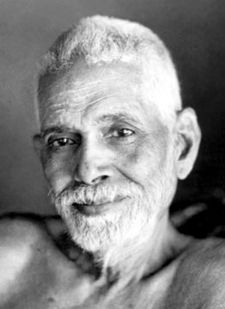
Introduction
In his seminal Crest Jewel of Discrimination, the Self-realized philosopher, Shankara, spoke of the three high gifts bestowed through the grace of God. Firstly, to be born in a human body, secondly, to aspire to liberation, and thirdly, to be associated with a great sage.
View original post 844 more words
The Gospel of Jesus Decoded: Christ and Kundalini, Part 1 by Michael Bowes
Although it is referred to in many different ways the Kundalini Shakti plays a key role in all spiritual traditions. The principles are the same, the effects are the same; but the words and symbols used to express Kundalini differ. In the Judeo/Christian tradition Kundalini is known as the Holy Spirit, Living Water, Christ, the Anointing, the Word and by other terms as well.
But before exploring the details of Kundalini in the Judeo/Christian scriptures, I would like to introduce the subject by examining the authentic and original message of Jesus.
View original post 3,108 more words
Shakti: Power of the Goddess: By Dr. Harsh K. Luthar
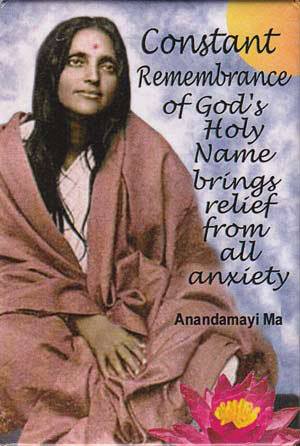
Gopi Krishna’s emphasis on Kundalini as a biological evolutionary force is a very limited view of the great Shakti.
Shakti is the fundamental Spiritual Principle and Force which has physical, mental, and psychic manifestations. These manifestations cannot indicate or capture the depth of this Great Power. Its ultimate nature is only realized when the Shakti completes its Journey to the end and reveals the deepest mystery of existence and the Self is Recognized.
Yes, the Shakti is Maha Sarswati, the Goddess of Wisdom. She makes one a poet, a scholar, and an orator. She bestows high intelligence. She is the teacher in both the earthly and subtle psychic realms.
View original post 103 more words
All Is Brahman: By Alan Jacobs
What does the word Brahman actually mean?
Sages say that it is ‘beyond verbal description’, but as a pointer they postulate Sat Chit Ananda which means Reality-Consciousness-Bliss. Brahman is not a God but an Almighty Great Power. It is the substrate of ‘All and Everything’, which means it contains the whole universe and holds it altogether. Brahman has two agents or adjuncts. First of all is Ishvara or Almighty God and Maya its delusionary power.
View original post 1,135 more words
Nirvikalpa Samadhi and Self-Knowledge: By Dr. Harsh K. Luthar
Sometimes people say that Nirvikalpa Samadhi is a state where there is no knower and known. That is really a half-truth. To capture the essence of Nirvikalpa Samadhi, it is better to say that in Nirvikalpa the KNOWER and the KNOWN are IDENTICAL. It is only pure consciousness that by which its very nature is self-revealing and self-knowing.
Nirvikalpa in Sanskrit means “without thought or doubt or mental modification”. It is the absence of mental modification and presence of fullness of consciousness in Nirvikalpa Samadhi which allows for the clear recognition of the Self.
Self is both the Knower and the Known, the Seer and the Seen, without any duality. Self, being one without a second, is always self-knowing. There is no “other” for it to know. That is why we refer to the Self as Nirvikalpa. The reference to Nirvikalpa implies the nondual nature of the Self.
View original post 274 more words
Ramana: Not Your Traveling Satsang Guru
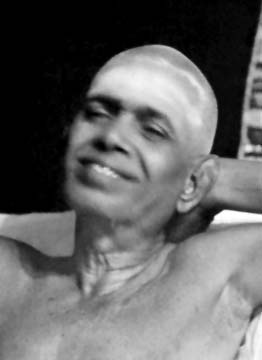 Bhagavan Ramana
Sri Ramana was immensely attracted to the mountain Arunachala in the South of India. Arunachala has been the home of many ancient and modern Yogis, Siddhas, and Sages, and carries a great mystique.
Once Ramana got to Arunachala around the age of 17, there was no leaving. He stayed in that area for the next 53 years until his death in 1950.
That is why Ramana is called the Sage of Arunachala (and not the traveling Satsang guy).
Given below is Sri Ramana’s comments and views (from Day by Day – 27-6-46) on why he never went anywhere to give darshan or satsang.
—————————-
View original post 266 more words
On Death and Dying: Words of Bhagavan Sri Ramana Maharshi
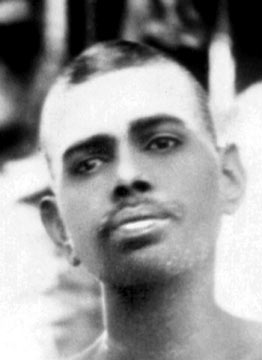 Bhagavan Ramana as a youth
The devotees know that Bhagavan Sri Ramana Maharshi had an intense experience of death in his seventeenth year. After the experience ended, he was established in the realisation of his true Self and the illusion of death died forever.
Here is in part Bhagavan’s description of what happened:
View original post 605 more words
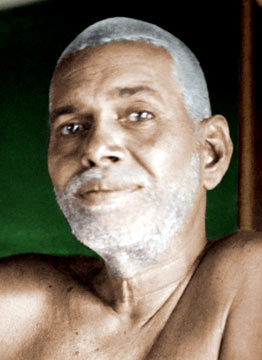
Professor and the Sage – Part 2
Professor and the Sage – Part 2
Interview with Prof. N. R. Krishnamurthy Aiyer
Concluding from Part 1. Summary:
At the age 16, Professor N.R Krishnamurthy had darshan of Bhagavan Ramana. That was in 1914. Eight years later in 1922 Professor Krishnamurthy had completed his M.S. in Physics. He went and met Bhagavan again. By this time Professor Krishnamurthy was an agnostic and put a question to Bhagavan that he felt could not be answered. Bhagavan, however, answered with a counter question that transformed Professor Krishanmurthy but also created fear in him of Bhagavan. Professor Krishanamurthy did not go see Bhagavan Ramana for 12 years. He was then a Physics Professor. Now the interview continues.
*************************************************
View original post 1,188 more words
The Professor and the Sage – Part 1
The classic story of Professor Krishnamurthy Aiyer meeting with Bhagavan Ramana (Part 1)
Professor N.R. Krishnamurthy Aiyer Speaks:
I am now ninety-two years old and I first met Sri Ramana Maharshi in the summer of 1914, when I was just a boy of sixteen. We were then on a pilgrimage to Tirupati and had halted in Tiruvannamalai, from where my grandmother hailed. We were not strangers to this town.
In the pilgrim party there were half a dozen boys, all of whom were about my age. We all decided to go up to Virupaksha cave. The Maharshi was then residing there and was attentive to all the activities of us youngsters. I noticed his gaze particularly focused on me.
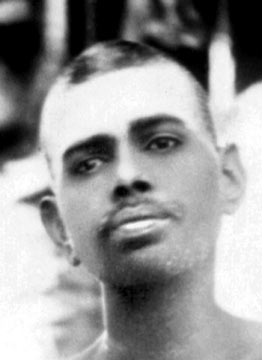 Bhagvan Ramana in his youth
We were all playing with the conch shell. The sadhus used to blow this shell like a horn when they went into town to beg for alms.
View original post 858 more words
 Luthar.com
You must be logged in to post a comment.