Harsha's avatar

REFLECTION: By Alan Jacobs

On my blank transparent screen, that is pristine
Primordial Consciousness, clear and clean,
Birthless and deathless, I survey the scene.

I sense it has the semblance of a dream.
Technicolour pictures come and go
Endlessly like in a movie show.

All are creations of this sleeper’s mind,
But I am not that body’s brain I find.
Instead I look behind his watchful eyes

And then discover to my vast surprise
That I am that same Consciousness sublime,
Which is One with Love, and is Divine.

Posted on March 12, 2004 by Alan-ji to HarshaSatsangh

Harsha's avatar

SILENCE: By Alan Adam Jacobs

S age serenely sits in Satsang silently,
I magination no longer interferes,
L imitless Love abounds unconditionally,
E ndless eternity pervades ethereally,
N othing impedes the peaceful tranquility,
C onsideration, clarity, and compassion,
E nter the Heart through Grace and bounteous bliss.

First posted by Alan-ji on HarshaSatsangh on March 11, 2004.

Harsha's avatar

Sage Wisdom: By Alan Adam Jacobs

Whoever is awake to the material world
Is fast asleep to the spiritual world.
This wakefulness is far worse than sleep,
When our soul’s asleep to God, it’s a door
Closing, to prevent the entry of His grace.
All day we suffer from a host of fantasies,
Thoughts of loss, gain or degeneration.
For the Soul there is neither joy nor peace
Nor a way of progression heavenwards.
The sleeper has his hope in each vain fancy
And converses idly with these foolish voices.

The bird of the soul flies cheerily on high
While its shadow is speeding upon Earth,
Some fools hasten to chase their  shadow
And rushing hurriedly become exhausted,
Not understanding that it’s a reflection,
Nor knowing from where it originates.

They vainly shoot arrows at this phantom,
His quiver soon empties from the long quest.
The  contents of his worried life become a void,
Time passes in chasing after this grey shadow.
But when God’s shadow becomes a nurse maid.
It saves him from  fantasies and illusion.
God’s shadow is the true servant of God.

Dead to this  world yet living through Him.
Take hold of His hem quickly so your skirt
May also be saved at the end of your days.
Never enter this dark valley of the shadow
Without a guide who’s a true son of God.
Desert the grey shadow, gain the bright Sun
Hold the hem of the orb of Shams Tabriz.

If you don’t know the way to the bridal feast
Enquire into God’s radiance named l’Haqq.
If envy grabs you by the throat on the way
It is Satan who reaches beyond all bounds.
Because from green envy he hates Adam
And he’s at constant war with happiness.

On the way there’s no harder bridge to cross.
Happy is he who hasn’t made envy his friend.
The body is a mansion packed full of hate,
The family and  servants are all tainted.
Yet Almighty God made the body to be pure
So sweep clean His house. The purified heart
Is a true treasure and Earth’s gold talisman.

If you indulge in guile, deceit and envy
Against one who’s without a hint of blame,
Then black stains swell up in your heart.
So rest as dust under the feet of a Sage
Amd scatter the dust on envy’s bald head.

Any fool who mtorments his body is unfit
For comprehending the spiritual life .
The nose catches fragrance leading to truth
That scent is the God revealed religion.
If he’s whiffed this perfume with ingratitude,
It comes and destroys his organ of perception.

Give thanks! Be a slave to those who are grateful,
Be in their presence as one truly steadfast.

Please note that this is a versification I have made from Rumi's Mathnawi
The Complete Literal Translation by Reynard Nicholson 

Alan Jacobs
Harsha's avatar

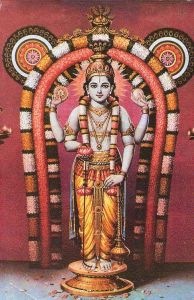
Njanappaana by Poonthaanam Numidiri-1

 
translation and commentary by Smt. Savitri Puram 
      duzvdh4anypjffvi_D0_guruvayurappa

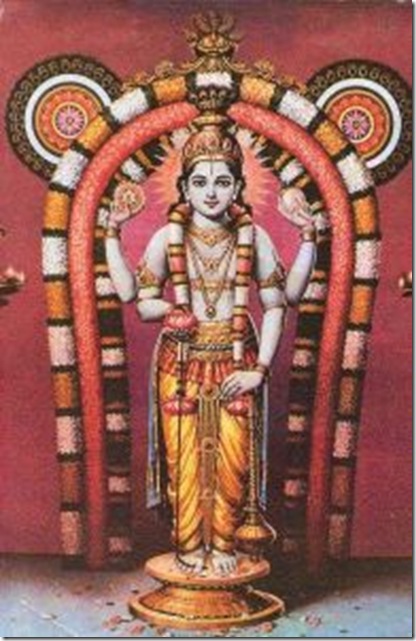
Krishna! Krishna! Mukunda! Janaardana!
Krishna! Govinda! Naarayana! Hare!
Achyuthaananda! Govinda! Maadhava! 
Sachidaananda! Naarayana! Hare!

Introduction

Njanappaana can be considered as the Bhagavad Gita of Malayalees. This is a Darshanika kaavyam or philosophical poem expressed in the most simple Malayalam language for ordinary people. Poonthanam Nambudiri, an ardent devotee of Shri Guruvayurappan, transformed his unbearable sorrow from his infant son’s death into a “yogavishesham”. He used this sad experience to build his Bhakthi soudham or house of devotion and opened it for all devotees for all time. Even though the language is very simple, this njaanappana, or song of wisdom deals with the essence of all vedas and upanishads. May Bhagavan Guruvayurappan, Bhagavathy Sarswathi Devi and Sri Poonthaanam Nambudiri bless us to become wiser by going through this great Song of Wisdom!!boarder

Gurunaadhan thuNa chaika santhatham thirunaamangal naavinmel eppozhum
Piriyaatheyirikkanam nammude nara janmam saphalamaakkiduvaan

May my Gurunathan help me (thuna chaika) to keep the auspicious names of Lord continuously on my tongue (naavinmel eppozhum) and to make this human life (narajanmam) meaningful and fruitful!(saphalamaakkituvaan).

The only way to to make the human life fruitful and meaningful is to constantly chant the auspicious names of Lord. So, the poet is seeking the blessings of his Gurunaathan to help him retain the naamam on his tongue for ever. Who is Poonthanam’s Guru?  He is considering Guruvayurappan as his Guru because Lord is both the remover of the darkness of Anjaanam or avidya (Guru) and the protector and saviour of all (Naathan). After innumerable births in lower species,we finally got narajanmam in Kaliyuga. Kalisantharanopanishad and many other scriptures reinforce the importance of naamasankeerthanam in Kaliyuga. Naamasankeerthanam can be done any time anywhere.

Innaleyolam enthennarinjeela Ini naaleyum enthennarinjeela
Innikkanda thadikku vinaashavum Inna neramennaethumarinjeela

We really do not know what happened until yesterday or what would happen tomorrow. Neither we know when this body we see today will perish.

When we look at the literal meaning, we may feel like responding: “I know what happened until yesterday and I can roughly guess what will happen in the coming days. I am hail and healthy and unless I get into an accident or so I should be able to live many more years”.

Poonthaanam is putting his forefinger on his nose with an expression of “what a pity?” because he meant much more than the literal meaning of yesterday, tomorrow and our present body. He persuades us to think deep about the uncertainty of life. Yesterday and today also means previous janmaas and future janmaas. We do not know about our previous janmaas or good and bad karmaas we have accumulated. A great part of our good and bad experiences in this janma is the direct result of our past karmaas. We cannot undo the sins or suffering by anything other than sincere prayers. Bhagavaan is the only one who can change the results of our praarabdha karmaas and in Kaliyuga, naamasankeerthanam pleases Bhagavan more than anything. We do not know what is in store for us tomorrow. How can we make sure that our future is in safe hands? Only by offering ourselves in His strong and kind hands. Then what about today? At present we live in this body and the moment jeevathma leaves the body, it becomes lifeless like a log of wood. We have absolutely no idea when that will happen. Here Poonthaanam used the word “thati” for body to specifically tell us that body is like a log of wood or worse than a log of wood when it is lifeless. A dead body that is not preserved starts deteriorating in a few hours where as a log of wood may remain intact for several months or even years. Poonthaanam advises us to think deep about these truths and use every moment available to worship Lord with naamams. Chaitanya Mahaprabhu also said that there are no hard and fast rules for chanting naamaas. Anytime one can chant and under any circumstances one is allowed to chant. “Shuchir va ashuchir va sarva avasthaasu sarvada” meaning in any condition clean (purified) or dirty (impure) one can chant the auspicious names of Lord.

Kandukandangirikkum janangale  Kandillennu varuthunnathum bhavaan
Randu naalu dinam kondorutthane Thandiletti nadathunnathum bhavaan
Maalika mukaleriya mannante Tholil maaraappu kettunnathum bhavaan

If Bhagavan wishes, those people whom we see today may disappear (may be dead) by tomorrow. Again if Bhagavan decides, with in a few days (two or four days) a healthy man’s dead body may be carried to the funeral pyre. In the same way, by God’s wish, a king sitting in a palace (maalika) can become a beggar with a dirty bag (maaraappu) hanging from his shoulders (tholil).

Poonthaanam explains how transient is our life, wealth, poverty, sorrows and everything that we see in this world. A man walking and having fun this moment can embrace death the next moment. Everything is Lord’s wish! In Kerala, usually a dead body is tied to a wooden ladder or a piece of long wood and carried by relatives (normally by sons) to the funeral pyre. However hail and healthy one may be, when the time decided by Lord approaches, chaitanyam or jeevan disappears leaving the dead body to be carried to the funeral pyre. It can happen any time, in one day, two days or four days (randu naalu dinam kondoruthane). Here Poonthanam used the word “mannan” for king (mannante) because “mannan” also means “drushtan” or “aviveki”. He advises that those people who have money and power should have the vivekam to use both dharmically remembering that they came to this world with nothing and would go from this world with nothing. Bhagavan can take it any moment from anybody.

By Lord Krishna’s blessings, Kuchela or Sudama became wealthy overnight. What about Ravana? He lost everything that he held dear and finally he lost his life too at the hands of Lord Rama. Even if we are destined to go through sufferings due to our past karmaas, surrendering to Lord will lessen the negative effects and lead us to Satgathi. “Bagavan says in Gita: “na hi kalyaanakruth kashchid durgathim thaatha gacchathi” meaning “If you do good, it will definitely lead you to satgathi or protect you from any harm”. Poonthaanam tells this truth from his own experience of the tragic and sudden death  of his infant son.

I have heard several versions of the story. But the following is the one I heard from my parents. Poonthaanam’s son was 5 months old and anna praasham (giving rice for the first time is called “choroonu” in Malayalam and usually it is done either the 5th month or 7th month ) ceremony was fixed. He invited several relatives and that morning after feeding the baby his wife made a bed in the room next to the hall where the ceremony was to be conducted. Usually there will be an entrance to that room from the kitchen also. Baby was sleeping and his wife was busy with all the preparations. It was morning and one namboothiri lady finished her bath and put the wet clothes in the same room where the baby was sleeping. That room was dark even during day time and she did not see the baby and unfortunately wet clothes were put on the baby’s face. ( I can very well believe this because in my house, there is a room on the north side called Vatakkini which is very dark even in day time. So when our parents told us this story, we listened with tears in our eyes and we felt it could happen in any Nambudiri house.) Then the next lady came after bath and seeing the wet clothes in a corner she also put hers on the top of it. One after another a few ladies unknowingly put wet clothes on  and around the baby. Nobody noticed and it was about muhurttham time and Poonthaanam asked his wife to bring the baby. She was shocked to see what happened to her helpless baby and we can imagine the rest.

This sorrow gave birth to Njanappana and Poonthaanam advises us to realize the uncertainty of everything in this world and persuades us to think of God by continuous chanting of His auspicious names.

Kandaal ottariyunnu chilarithu Kandaalum thiriyaa chilarkkethumae
Kandathonnumae sathyam allennathu Mumbe kandangariyunnithu chilar

Some people see this truth, understand it or internalize the truth. But some people cannot comprehend the truth even when they see it everyday. But there are some others who know that all that they see are not real and it is all Maaya.

Here Poonthaanam divides humans into three categories. Utthama purushaas (or wise people or perfect human beings) are able to understand the transient nature of this world. People like Shankaraacharyar, Sreeraamakrishna Paramahasar are examples who belong to this category. Then there are Madhyama purushaas (or reasonably wise people) who understand it when they themselves or people near, dear and around them experience the ups and downs of life. Then the third category of people known as Adhama Purushaas (people with low level of wisdom) do not understand or even do not have the attitude to think more about it even if they or their beloved ones go through the negative as well as the positive experiences including successes, death, suffering and disease. Yudhishtira Maharaj says to the Yaksha who asks ” what is the biggest wonder in the world?”

Even though everybody who is born embraces death eventually, the living people refuse to believe that death will eventually embrace them also. What is more surprising than this? Even though we see it everyday we live as if death is only for somebody else.

Again Poonthanam indirectly tells us that only with Bhagavan’s blessings we can have this vivekam or power of discrimination. So we should pray Bhagavan to include us in that category of few people (the word “chilar” indicates that these kind of people are rare) who are capable of seeing the truth. In this Kaliyuga, the most doable form of worship is naamasnakeerthanam and he encourages everybody to chant auspicious names to purify our mind and elevate ourselves from the state of Adhama Purushas to the state of Uttama Purushas.

Palarkkum ariyenam ennittallo
Pala jaathi parayunnu saasthrangal

Many people (palarkkum) want to know (ariyenam)about all these (including the power of discrimination of human beings, about the mystery of God, how to go beyond Maya and attain salvation etc) and hence so many saasthraas (saathrangal) tells (parayunnu) about or explain these subjects in so many different ways (pala jaathi).

Which saasthra or which philosophy appeals to each one depends on each individual’s nature, attitude and circumstances. Some people like certain approach whereas others like a totally different approach. Saathraas contain so many different philosophies to satisfy the varied interests of ordinary people. Just like we all choose different professions or jobs for the sole purpose of survival, different people accept different saasthraas to advance spiritually and increase the awareness of parmaathma chaithanyam or God. There are Vaishnavaas, Shaivaas, Shaaktheyaas or another group who worship all 33 million gods alike etc. Goal is the same and only paths are different. There is a saying that “vitthamaeva param nrunaam janmaachaarakalodaya:” meaning people choose different ways and methods for the sole purpose of acquiring wealth.

Outwardly each and every philosophy may appear different, but once the essence is understood, the differences slowly disappear and all the paths unite to become one path. The word Saasthraas (saathrangal) is used because they advise to follow certain restrictions and rules to advance smoothly in the spiritual path. How is it possible to choose the right path and who will guide us through? Poonthanam has only one solution: chant the auspicious names of God and He will guide us through the right path.

Karmathiladhikaari janangalkku
Karma saasthrangalundu palavidham
Saankhya saasthrangal yogangal enniva
Sankhyayillyathu nilkkatte sarvavum

For those people (janangalkku) who are authorized to do karmaas like yaaga or yanja, homam, poojaas etc (karmaathil adikaari- it can even mean those who desire to do karmaas or those who are entrusted with the duty of performing karmaas) several different (palavidham) karma saashtraas are available (karma saasthrangalundu). Saankhya saasthra, yoga saasthra etc are among the innumerable or countless(sankhyayillya) saasthraas available. But for the time being, let us keep aside ( nilkkatte) all of them (athu sarvavum)

Just like the diversity of the world and its inhabitants, saasthraas also are diverse. Different types of yanjaas, poojaas, and homams are described very clearly in many scriptures. Initially even though devotees perform them with some specific desire, as the Bhakthi bhaavam matures, Bhagavan’s blessings help them to do Nishkaama karma or do karma with out expecting anything in return. There is a small conversation between Jabali Muni and a vartthaka or business man called Thulaadhaara. Even though Jabaali Muni was an embodiment of kindness, he was proud of his achievements and considered himself as the greatest Dharmishttan. Then he heard an ‘ashareeri” or wise words from God to visit Thulaadhaara. He visited him and Thulaadhaara explains to him how we all should do our swadharmam with out expecting anything in return. Thulaadhaara told him that Yanjaas and poojaas are done to show our gratitude to God, Forefathers, Rishis and other Maahaathmaas for what blessings they  have already bestowed on us. Renunciation of the results of the karma is nishkaama karma  and Nishkaama karma purifies our mind. God’s chaithanyam gets reflected only in pure minds.

Maharshi Kapila’s Saankhya philosophy regards Universe as consisting of two eternal realities Purusha and Prakriti. Pathanjali Maharshi’s yoga saasthra describes different types of yogas like Hatha yoga, Raja Yoga etc. They all lead one to the knowledge of Brahmam, but those paths are very difficult and with out an able Guru (in every sense of the word) it is impossible to follow those paths. But in this Kaliyuga, Bhaktha Kavi Poonthaanam advises us to set aside those difficult paths (which are as sharp and dangerous as the edge of a razor) and follow the most simple and enjoyable path of Bhakthi or devotion. What is the first and final step in the path of devotion? Naamasankeerthanam. Bhakthi starts with Naamam and ends with Naamam. It is for ordinary people as well as for self realized souls. No question of whether you are authorized, whether you have enough knowledge to pursue or whether you have the right comes into question in this way of worshipping Lord. Anybody can do naamajapam, anytime, anywhere. 


Krishna! Krishna! Mukunda! Janaardana!
Krishna! Govinda! Naarayana! Hare!
Achyuthaananda! Govinda! Maadhava! 
Sachidaananda! Naarayana! Hare!

Part One…To be continued…

boarder

Harsha's avatar

Is There Now A Choice But To Love? By Dr. Harsh K. Luthar

We are like candle lights
shining on each other
warming the air around us.

And wherever the wind of change
placed our flame
we would not do anything different.

Those whom life has broken
hear the unspoken truth
always from the Heart.

Is there now a choice
but to love
even if silently.

Harsha's avatar

First, The Lightning: By Dr. Harsh K. Luthar

First, the lightning,
then the lightening,
follows the OM of thunder!

Shattered, scattered
who can put together
pieces of space.

No point in trying
and asking why
all the atoms are dancing.

As if they hear nothing
but love songs
written for you.

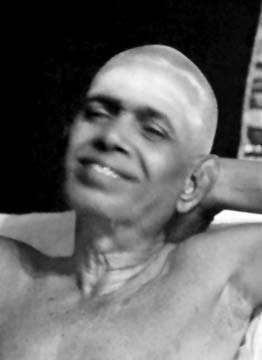
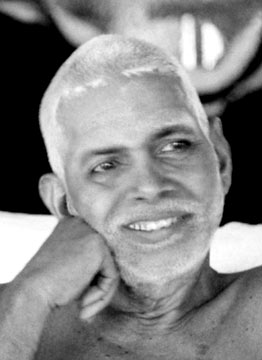
Bhagavan Ramana

Harsha's avatar

Self-Realization According to Ramana: By Dr. Harsh K. Luthar

The following is a summary of Bhagavan Sri Ramana Maharshi’s teaching on the Self.

Self-Realization cannot be described because Self can never be an object of perception.  The Self  is always the subject. The Ultimate Subject.  When the mind is temporarily absorbed in the Heart, the Self is known with immediacy as the eternal presence. That is called Kevala Nirvikalpa Samadhi.

However, even after having attained Nirvikalpa Samadhi, the mind has the tendency to sprout up again with its conditioned habits due to the force of karma (previous tendencies). Hence the need for awareness and practice of reflective inquiry continues.

When the mind is completely resolved in the Heart, the Self naturally and spontaneously dominates in all states of consciousness (waking, sleeping, super-conscious). That is known as Sahaj Samadhi or the natural state. In this state, the karma that has started to bear fruition will continue until the end of the body. The former conditioning might still manifest in the sage but loses its fundamental hold to create new karmic forces for the future.

Sri Ramana describes Self-Realization below.

“The state we call realisation is simply being oneself, not knowing anything or becoming anything. If one has realised, he is that which alone is, and which alone has always been. He cannot describe that state. He can only be That. Of course we loosely talk of Self-Realisation for want of a better term.”

Bhagavan Sri Ramana Maharshi

Bhagavan Ramana

Bhagavan Ramana

Harsha's avatar

Self-Realized Sage Is Like A Parrot: By Dr. Harsh K. Luthar

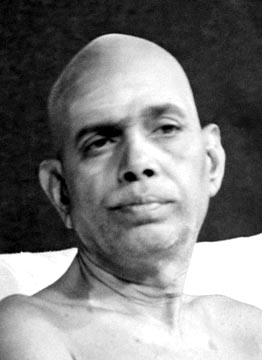
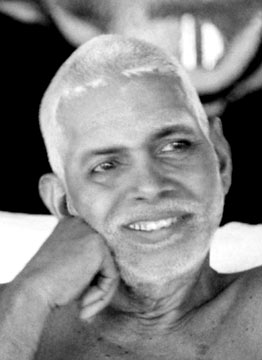
Bhagavan Ramana as a youth

Ramana

Self-Realized sages are like parrots. You see them in their youth, in middle age, and then in their old age.

Bhagavan Ramana

Bhagavan Ramana

They do not change their message and keep saying the same thing over and over again.

On the outside, such sages appear the same as anyone else.Yet, within, the perpetual fountain of love for all beings becomes an ongoing stream that can barely be contained. So they do not mind repeating themselves again and again.

Self-Realized sages are like parrots. But unlike parrots, their utterances come from the depth of their experience, the direct knowledge of the Heart. Such words, although always the same, are energized by the power that can transform a human being.

The devotees of Sri Ramana, even those who did not have much learning, used to say, “He made us like Himself”.  The simple silence of a Self-Realized sage exerts a powerful influence that follows a devotee until the Self is realized as one’s own Heart.

Bhagavan Ramana

Bhagavan Ramana

Harsha's avatar

Goddess As The Guru In Tripura Rahasya

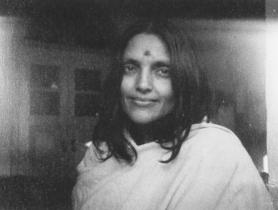
Sri Sri Anandmayi Ma

The classic Goddess scripture Tripura Rahasaya is well known to Sanskrit scholars and now a number of translations exist in English.

Bhagavan Sri Ramana Maharshi often quoted from Tripura Rahasya and considered it one of the greatest works that expounded Advaita philosophy. Bhagavan’s close devotee Munagala Venkataramaiah (later known as Swami Ramanananda Saraswathi)  translated Tripura Rahasya into English in 1936. That was the first translation of this classic, I believe. A number of Sanskrt scholars since then have made their own translations into English.

In many Hindu scriptures like Tripura Rahasaya, the ultimate Guru is Devi, the Supreme Goddess.  She gives instructions to the sages so they can know the highest truth of Reality and attain Self-Realization.

In the path of Tantra, the sciences explaining the mystery of mantra, mind, and breath are explored and explained. Tantric texts focus on the nature of the divine energy within the body, also known as Kundalini Shakti, that moves through the chakras (centers of power) giving rise to various super-conscious experiences and leads to Samadhi.

When the aspirant is spiritually mature,  the Shakti, the Supreme Goddess Herself, takes and merges the mind of the devotee in the Heart and then reveals HerSelf to be the Heart. Then there is no more Goddess or devotee and the universe disappears.

Eternal Bliss as Self-Revelation, the very essence of Beauty, remains as ItSelf. That is what the ancients called Sat-Chit-Ananda. The One without a second. That is the Self. That is Brahman.

Harsha's avatar

Call of the Conch-Introduction: By Joyce Sweinberg

5732_216453855374_215886190374_7808618_1259315_n
“We need to challenge our age old habits and tradition
if they are in direct contrast to the principles of
non-violence and dharma laid down by Sri Krishna in Gita.”

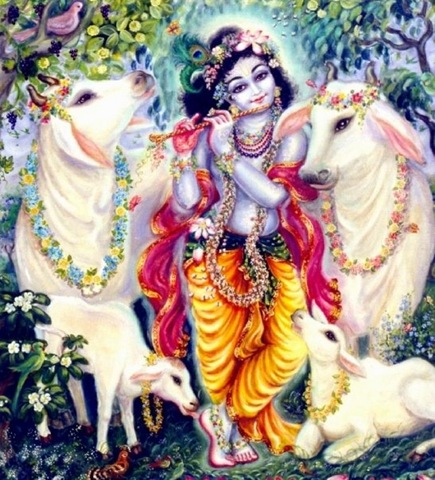
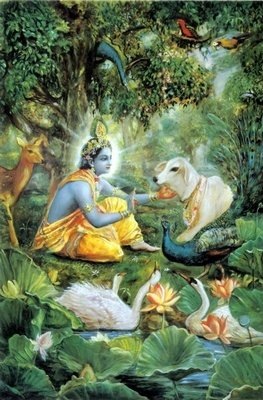
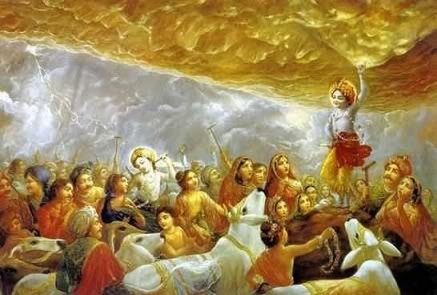
Lord Krishna is also known as Gopala, or protector of the cows. His love for and relationship with the cows of Vrindavan forms a major part of His transcendental past times.  Among the artwork depicting His holy image, there are just as many showing Him with His beloved cows as there are images depicting Him with His beloved Radha and the gopis.  As Giridhara, He lifted the mountain of Govardhana to protect the citizens and the cows from destruction.  When He played His flute, the cows were there, His most ardent audience.  When He wanted to eat, the cows were there, His most willing suppliers of milk and butter.  When He wanted affection, the cows were there, His most unselfish companions, wanting nothing from Him but His caress and His embrace, which they freely returned.  And so, it is not surprising that from these stories and for other reasons, the practice of offering Him prasadam made with dairy, and bathing His image in milk developed and took hold as the cornerstone of devotional rituals.

At abishekam, a devotional service, the offering of milk is one of the most common items donated by devotees.  Sometimes mixed with honey and other items, the milk is poured onto the deity and flows freely and amply throughout the ritual, allowed to drain into metal bowls, collected and then poured back into the bottles for the devotees to take home, now blessed by the Lord.  A small vessel is also passed around the room, with each of us given a small spoonful to drink the blessings of Divinity. Food is also offered to the Lord for prasadam and usually contains milk and ghee, a form of clarified butter.  After the puja is complete, the food is shared by devotees partaking of the Lord’s blessings, gathering together in the sangha of God’s worship.

What appears as a charming expression of devotion now has lurking behind it a vile abuse of this most sacred creature of the Lord, both in India and here in America, knowingly perpetrated by the suppliers of the dairy products and unwittingly financed by the Lord’s devotees.  While I converted to a vegetarian diet years ago, I continued to include some dairy in my diet, although very limited due to my developing concern with ahimsa and allergic skin reactions.  But I continued to accept the prasad, I continued to pour the milk when the occasion arose and I relished the sweets and the wonderful Indian cuisine so freely shared where I worship. I told myself that any hesitations I had should be quashed within myself because these were offerings to God and had been blessed and cleansed of any sins committed in their procurement. Lately, though, I was becoming uneasy about it, but not voicing my thoughts and not knowing quite how to voice my developing uncertainty over the source of these offerings.

6129_121115465189_753070189_3399602_3278962_n

Until recently, when Kamleshji, another devotee on a bhakta forum posted a message directly confronting this subject, and ripping open my cloak of uncertainty to the naked truth that cannot be denied if one looks with one’s eyes open, if one hears with one’s heart and if one thinks with one’s conscience. From his post and subsequent communications from him, I quote a few lines below…

“….as devotees of Lord Sri Krishna we must definitely pay attention to the plight of His most beloved animal, the Cow (Go-mata).

Just recently on Sri Krishna Jayanthi, we bathed Lord Sri Krishna in milk, curd, ghee and offered Him His favourite naivedhyams such as paal payasam,  ghee and butter.

However we must be aware how this milk is obtained in this Kali yugam, especially where milk is obtained in commerical farming techniques (as in big cities in India and especially here in the US).  Before this exploitative factory farming age, our saints used to procure Milk products in harmony and without cruelty, the milk was taken from the cow only after the calf has had it’s fill and the cow was worshipped as Go-matha.  Such offerings are certainly pleasing to the Lord.

However in the present age,  factory produced milk is a very cruel exploitative product of torturing cattle. The poor cows are  enclosed in a tiny space, chained in its own waste in darkness, cold and filth for the rest of its life. It is pumped with insane amounts of hormones, and other toxic medications to artifically increase milk production.

These large amounts of hormones, antibiotics and other unnatural feed, cause the cow to grow large and make it prone to bone fractures and other very painful diseases. To add to this torture the cows are artifically inseminated to produce calves to ensure regular supply of milk.

The most unfortunate of the calves are male calves  (called Bobby calves) who are considered to be useless and are sold off to be butchered for meat when they are just five days old. The mother cows separated from their calves cry in agony, yet they are not spared and are administered more hormones to continue milking them.

After milking the cow till it has been exhausted and after ensuring that the cow cannot yield anymore milk, it is sold off to be slaughtered in the most brutal manner for meat and leather.  I request all bhaktas to please think about this, will our Lord ever accept our abhiseghams and Naivedhyams if it means that His favourite innocent animals are killed slowly and extremely painfully all their lives?  Let us not act in an adharmic manner and perform unthinkable atrocities and sins by offering factory produced milk and milk based products especially in our sacred rituals and also in our diets. I can only be certain that we shall never suceed in our sadhana if it causes so much needless pain for innocent animals.

Lord Sri Krishna, vividly describes the three types of foods, Sattvic, Rajasic and Tamasic. Milk in the olden days was definitely Sattvic however now it is 100% Tamasic due to the abundant violence and abuse it entails. Drinking such milk is equal to eating beef.  In fact the animals raised for meat do not have to suffer so much as these unfortunate dairy cows are made to suffer.

We cannot afford to fool ourselves into believing that just because we are vegetarians and do not eat beef, we are protecting the cows. We need to challenge our age old habits and tradition if they are in direct contrast to the principles of non-violence and dharma laid down by Sri Krishna in Gita.”

govardhanagiridhari

His post prompted me to respond to him and to also go online to view some of the websites which I knew would show me the truth, as painful as it might be to watch and to listen. I am now convinced that I must be even more vigilant in my avoidance of all dairy products where I do not know the source.  I will also post several more blog entries examining this subject in more detail, in the hope that each of us can look more honestly into our hearts about what we put into our mouths and onto our bodies, and onto the Lord.

The Luthar.com blog already has several articles on the subject of vegetarian diet…this short series is specifically examining the vegan diet.  We will look at ahimsa as the foundation for a vegan diet, the economic incentives fueling the abuse, the ways in which the dairy cows are abused, including their offspring, and how they are slaughtered in the end. We will examine the human health consequences of ingestion of dairy products and the environmental effects of the mass procreation of cows for human consumption.  We will explore the organic industry as well. We will post photos and links to videos so you can see for yourself what is happening to the dairy cows.  We will also post links to organizations geared to helping the abused cows and offering alternatives to the current system.  We will offer suggestions and ideas on how to substitute other products in our diet and in our worship. We ask that you the reader examine the facts with an open heart. Together with Kamleshji, who has studied the subject extensively and speaks with eloquence and fortitude in His devotion to the Lord on this subject, I will continue to post, seeking His blessings and inspiration.

Today is Ganesh Chaturthi and I take this opportunity to post the first in this series on this day with this prayer…that I serve the Lord without reservation acting as best I can on His wishes, and that I open my mind and my heart enough to let Him speak through me as He guides me.  Ganesha Saranam!

n702126689_1382369_7333

Patram pushpam phalam toyam yo me bhaktyaa prayacchati;
Tadaham bhaktyupahritamashnaami prayataatmanah.

If one offers Me with love and devotion of a leaf,
a flower, fruit or water, I will accept it with joy. BG 9.26

 b36