Harsha's avatar

Shakti: Power of the Goddess: By Dr. Harsh K. Luthar

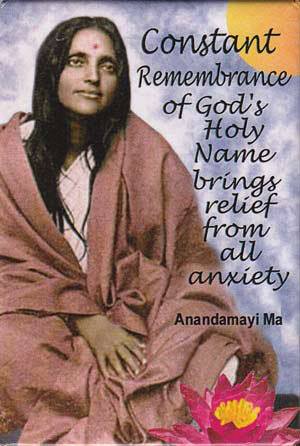
Sri Ma Anandmayi

Gopi Krishna’s emphasis on Kundalini as a biological evolutionary force is a very limited view of the great Shakti.

Shakti is the fundamental Spiritual Principle and Force which has physical, mental, and psychic manifestations. These manifestations cannot indicate or capture the depth of this Great Power. Its ultimate nature is only realized when the Shakti completes its Journey to the end and reveals the deepest mystery of existence and the Self is Recognized.

Yes, the Shakti is Maha Sarswati, the Goddess of Wisdom. She makes one a poet, a scholar, and an orator. She bestows high intelligence. She is the teacher in both the earthly and subtle psychic realms.
Continue reading

Harsha's avatar

Nirvikalpa Samadhi and Self-Knowledge: By Dr. Harsh K. Luthar

You are the Self

Sometimes people say that Nirvikalpa Samadhi is a state where there is no knower and known. That is really a half-truth. To capture the essence of Nirvikalpa Samadhi, it is better to say that in Nirvikalpa the KNOWER and the KNOWN are IDENTICAL. It is only pure consciousness that by its very nature is self-revealing and self-knowing.

Nirvikalpa in Sanskrit means “without thought or doubt or mental modification”. It is the absence of mental modification and presence of fullness of consciousness in Nirvikalpa Samadhi which allows for the clear recognition of the Self.

Self is both the Knower and the Known, the Seer and the Seen, without any duality.  Self, being one without a second, is always self-knowing. There is no “other” for it to know. That is why we refer to the Self as Nirvikalpa. The reference to Nirvikalpa implies the nondual nature of the Self.

Continue reading

Harsha's avatar

Ramana: Not Your Traveling Satsang Guru

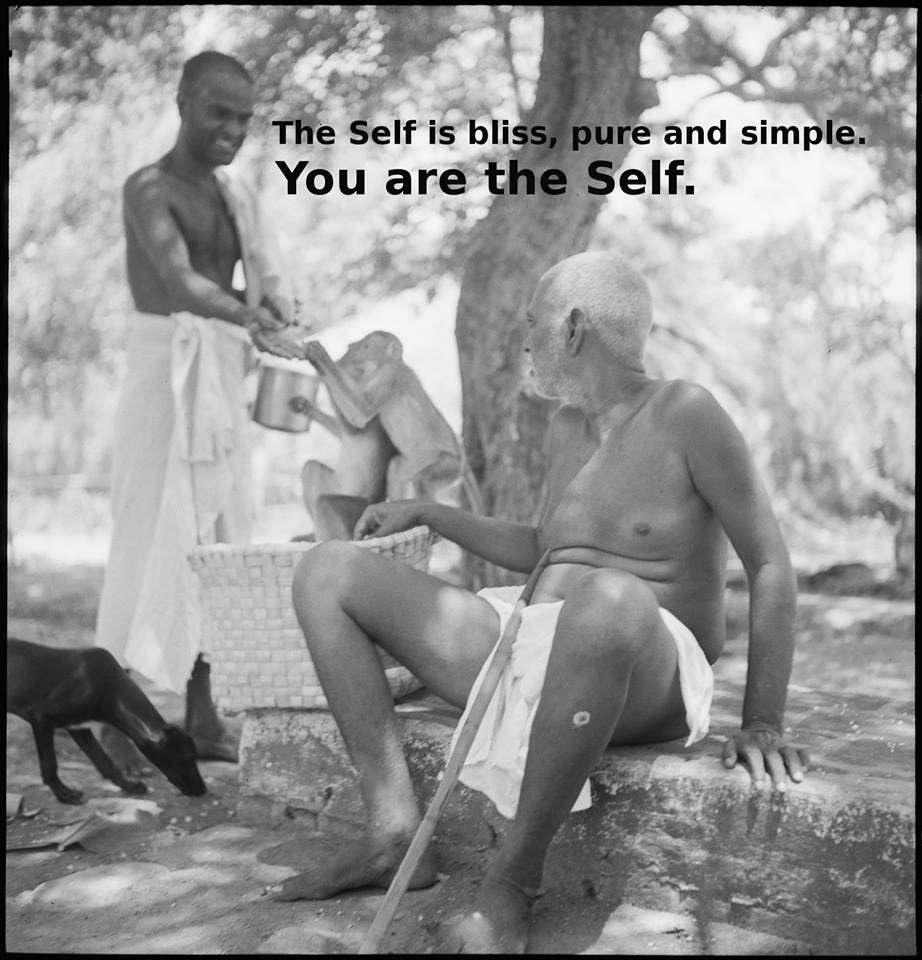
Bhagavan Ramana

Sri Ramana was immensely attracted to the holy mountain of Arunachala in the South of India. Arunachala has been the home of many ancient and modern Yogis, Siddhas, and Sages, and carries a great mystique.

Once Ramana got to Arunachala around the age of 17, there was no leaving. He stayed in that area for the next 53 years until his death in 1950.

That is why Ramana is called the Sage of Arunachala (and not the traveling Satsang guy). To Sri Ramana, the idea of leading a satsang circus around the world with him as the head (and being proclaimed as the great Maharshi) seemed entirely comical and troublesome.

Given below is Sri Ramana’s comments and views (from Day by Day – 27-6-46) on why he never went anywhere to give darshan or satsang.

—————————- Continue reading