
Mira Prabhu says, “Why is Shiva called the Destroyer, and what does He destroy? Shiva, being pure infinite consciousness, transcends all relative limitations—rather, He consumes all duality in his divine fire. What is the focus of Shiva’s destruction? The Ego, or one’s relative identity—because this is the one deadly block to knowing who we really are—beyond body, mind, emotion, gender, IQ, history, lineage, education, status, bank balance and track record”.

 What, in the first place, is unconditional love? Each of us is likely to have our own special definition of this phenomenon, while Google would likely manifest a gazillion definitions in about three seconds flat.
For me, as I write this post, it is that perfect love that flows freely minus the expectations of the ego (mini-me), love without strings, love that seeks nothing but the welfare of the recipient, love that surges effortlessly from the infinite abundance of our true nature—not the raucous, limited, limiting, clamoring, two-legged “love” that dies, shrinks or withdraws when its conditions are unmet—or even worse, the so-called “love” that turns into vicious hate when not reciprocated—as when a spurned lover throws acid on a pretty girl’s face, or a jealous husband stabs his cheating wife to death. As Will Shakespeare said so eloquently so many centuries ago, love is not love that alters when it…
View original post 589 more words
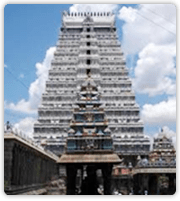 Even more water flowed under the bridge of my life. A decade or so later, without really meaning to—after all, woman proposes and Great Spirit disposes—I found myself in Tiruvannamalai, a famous temple town in south India. Despite a never-ending series of trials and tribulations, I decided this would be the home I’d been looking for—for the simple reason that I felt strongly that it was here that I could pursue my “Moksha Project”. (“Moksha” means liberation—defined by Ramana Maharshi as “permanent freedom from desire and fear”—and, in my opinion, the highest goal to which a human on the inner path can aspire.)
 The years flew by and our group of fantastic females disintegrated. Some left Manhattan or began new lives that did not allow for the intimacy we’d shared as single women. As for me, I took a huge leap into the unknown at the eve of the millenium: I left my comfortable life in Manhattan for the foothills of the Himalayas in order to become a good Tibetan Buddhist. But that plan for enlightenment did not work out for a variety of reasons, and once again I found myself travelling here, there and everywhere, searching for that perfect home into which I could settle for the rest of my life, in order to focus on my creative and spiritual goals.
 It was twilight by the time the entire group had assembled in my Brooklyn Heights apartment. We sat in a circle on the floor of my candle-lit living room and held hands in silence in order to create the perfect atmosphere for sharing. Then Melissa produced her Talking Stick and a mantle of awe fell upon us—for the polished wooden rod really did seem to exude a magical aura all of its own.
 My turn to host our fortnightly gathering rolled around. I wanted to make the evening truly memorable, but how? Out of the blue, Melissa—a member of our group who lived in nearby Carroll Gardens—called to invite me to watch a documentary with her. Bored with her job as assistant editor at a fashion magazine in midtown Manhattan, Melissa had begun to explore all forms of spirituality with a vengeance; it was our shared passion for mysticism that had drawn us extra close.
 During my post-divorce years in Manhattan, I grew close to a band of unusual women ranging in age from their 20s to their 50s. Some were freelancers or regulars at the posh corporate law firm for which I then worked; others I’d bumped into at some cheese-and-wine affair that trendy Manhattanites throw in order to compensate for a crazy work-week; still others I’d encountered through the 12-Step program, whose meetings I attended in order to eradicate the insidious smoking habit slowly but surely draining my life force.
 Luthar.com