Posts by Harsha

Harsha's avatar

In Memoriam: Dr. Suryanarayana Raju

Dr. Suryanarayan Raju

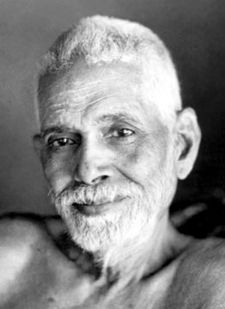
Our friend and Bhagavan Ramana devotee Dr. Suryanarayana Raju left the body a few days ago. I never met Dr. Raju face to face, although we had talked about such a meeting happening at Arunachala in India. Our friendship was based on our common spiritual interests and the teachings of Bhagavan Sri Ramana Maharshi.

I had interacted and corresponded with Dr. Raju over a number of years. I also edited and published several of Dr. Raju’s articles on luthar.com. I found Dr. Raju to be extremely bright, highly cultured, courteous, and respectful of everyone.  Dr. Raju exuded warmth, love, and was always generous and kind in his words towards me personally. He was most considerate and I felt much love, respect, and affection for Dr. Raju as well. Continue reading

Harsha's avatar

Self-Inquiry or Atma Vichara: By Dr. Harsh K. Luthar

Harsha's avatarLuthar.com

Self-Inquiry, also known as Atma Vichara in Sanskrit, is based on a philosophy that has its origins in the ancient teachings of Advaita Vedanta. Advaita is based on the Upanishads, the Bhagavad Gita, and is found in a number of other scriptures that are considered sacred by the Hindus. Advaita means nonduality, the ultimate Oneness that pervades or underlies everything.

Essentially Advaita implies that even though there is a diversity of phenomena, it has its origins in God and that ultimately everything not only exists in God but also resolves itself into God. According to Advaitic sages, the nature of God is Sat-Chit-Ananda. Sat means Existence. It is the nature of God to Exist. Chit means Knowledge. It is the nature of God to Know. Ananda means spontaneous Joy. The nature of God is Bliss or Joy.

View original post 685 more words

Harsha's avatar

What Is Witness Consciousness? By Dr. Harsh K. Luthar

Harsha's avatarLuthar.com

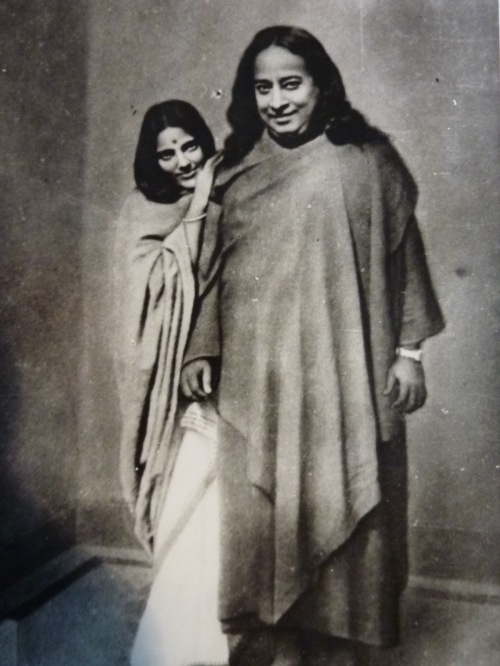
Anandmayi Ma with Swami Yoganand

Witness consciousness as a concept and a spiritual practice has become better known now in the West. In the psychology of Advaita and Yoga of thousands of years ago, it has always been a fundamental tool for self development and self understanding on the path to Self-Realization.

View original post 481 more words

Harsha's avatar

Wisdom Eye: The True Guru: By Dr. Harsh K. Luthar

Harsha's avatarLuthar.com

“Who is a master? He is the Self after all.” Ramana Maharshi

The company of peaceful Sages (Satsangha) and living in Ahimsa (harmlessness) is considered the primary influence that leads to Self-Realization. The forced attempts to discard various habits and conditioning and practicing different techniques to calm the mind have built in limitations. However, such methods can be pursued with benefit if one is already inclined towards these practices.

When strong inner motivation is present, one is automatically propelled towards Self-Awareness and Meditation. The fog of confusion then quickly evaporates and leads to Self-Seeing, Self-Being, Self-Realization, and Silence of the Heart.

Meditation and mind calming methods, can be effective at many different levels if practiced in the context of a clear understanding. Such practices, however, cannot by themselves end the fundamental agitation of the mind which continues at more and more subtle levels and causes suffering.

The nature of the…

View original post 1,176 more words

Harsha's avatar

Many Things Are Going On: By Dr. Harsh K. Luthar

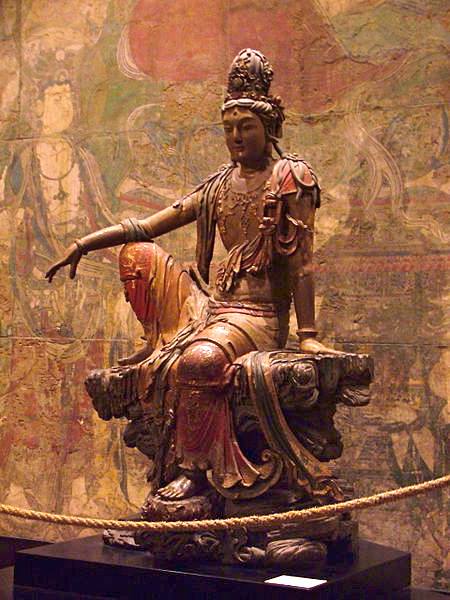
Quan Yin 0 Avalotiksvara

Harsha's avatarLuthar.com

The usual things are going on in many places.

War, hate, and killing of enemies

in order to love, protect, and nurture ones own.

Inflicting punishment on others

yet remaining free of consequences

is not possible for us

as human beings or nations;

for the revenge that brings joy

also brings grief.

This is the nature of our suffering,

that we believe our sorrows are more precious

than the tears of our enemies.

The story of life is written on the faces

of both the watching and the watched.

Paralysis provides the context

for the breaking news stories on the dinner table.

It does not help that our fingers

cannot touch across the television screens

and the eyes cannot meet to offer consolation.

Guilt serves as a buffer for one

for the other, hope underlies fear.

Closure is never at hand in this sphere of duality.

View original post

Harsha's avatar

Ahimsa – The Antidote to Fear: Dr. Harsh K. Luthar

Harsha's avatarLuthar.com

Bhagavan Sri Ramana used to say, “Ahimsa Param Dharma”. It means that Ahimsa (Nonviolence) is the Supreme Dharma (Duty or Principle). Sri Ramana pointed out to the devotees and yogis that in Patanjali’s Yoga Sutras, Ahimsa is named as the highest virtue above all other virtues. If we are able to understand what Ahimsa means at the deepest level, that clarity itself guides us in discovering the nature of the Self as our own Being.

Ahimsa means to be gentle with others and oneself and all of nature. Ahimsa means to be natural and aware without rushing and pushing and trying to get somewhere quickly. This applies to both the material and the spiritual world.  The mental tendency to grab and consume experiences of various types remains, even as people get on the spiritual path. There is nothing wrong with that. However, we should be aware of the tendencies that…

View original post 697 more words

Harsha's avatar

Recommended Books for Teachings of Sri Ramana Maharshi: By Dr. Harsh K. Luthar

Why Worry

Dear Friends:

The most frequent question that I am asked, especially from newcomers to Bhagavan Ramana’s teachings, is: “What books do you recommend for studying the teachings of Sri Ramana Maharshi”?

Here is my answer. Please keep in mind that everyone has their favorite sources for Bhagavan Ramana’s teachings and I am simply sharing mine. In addition, my attempt is to keep the list of recommended sources small for the most practical benefit of people just getting introduced to Bhagavan’s teachings. So there is an element of subjectivity here. However, I am happy to add to this list as Bhagavan devotees give me feedback as to what sources they would personally recommend.

Continue reading

Harsha's avatar

What Is Enlightenment? By Dr. Harsh K. Luthar

Harsha's avatarLuthar.com

What Is Enlightenment?

“The state we call realization is simply being oneself, not knowing anything or becoming anything. If one has realized, he is that which alone is, and which alone has always been. He cannot describe that state. He can only be That.”  Bhagavan Sri Ramana Maharshi

What is Enlightenment? Did you know that it is simply the state of being your self. Does this sound too simple to you?

There is so much talk about Enlightenment these days. Gurus, teachers, self-help experts, and personal development specialists go on talking about the wonders of Enlightenment. Well why not? They are selling something, a vague but an attractive idea of bliss and happiness; and there are plenty of buyers.

My friends, where is the glamor in being one’s own Self?

That is all what Enlightenment is. But we run from this simplicity.

There are many extraordinary Samadhis, visions, and powerful…

View original post 136 more words

Harsha's avatar

The Meaning of the Term “Ji” in the Indian Culture: By Dr. Harsh K. Luthar

At Arunachala Ashram in Canada

In the Indian culture, we sometimes add the word “ji” at the end of someone’s name to convey respect.

For example, if someone’s name is Ashok, and we want to convey warmth and respect, we call him Ashok-ji. If someone’s name is Maya, we call her Maya-ji.

However, in the Indian culture, no one will ask or demand that we add “ji” when addressing them to show respect. That would be very uncool. It would actually be humorous. It is up to us when we want to add the “ji” after the name of the person. There is no compulsion that we have to add “ji” to the name of everyone we meet and greet.

Continue reading

Harsha's avatar

Understanding Bhagavan Ramana’s Teachings: By Alan Jacobs

Harsha's avatarLuthar.com


Introduction

In his seminal Crest Jewel of Discrimination, the Self-realized philosopher, Shankara, spoke of the three high gifts bestowed through the grace of God. Firstly, to be born in a human body, secondly, to aspire to liberation, and thirdly, to be associated with a great sage.

View original post 844 more words