
Posts by Harsha
Ideals of Nonviolence and Universal Love are Sacred
There are many things going on in our social/cultural, economic, and political environments. If we are self-aware, we can see clearly the emotional roller coaster of anger, fear, and hate that the media, politicians, and sometimes even the so-called religious leaders invite us to ride.
Any incitement to hate others can only come from ignorance of one’s divine nature.
With deep faith that the same God resides in all hearts, we hold the ideals of nonviolence and universal love for all beings as sacred. In doing so, we remain calm, rational, and logical as we engage in all our work as karma yoga.
Actions taken in the spirit of service to others brighten the pure intelligence within us that lights up our path.
Bhagavan and the Cracked Egg: By T. K. Sundaresa Iyer
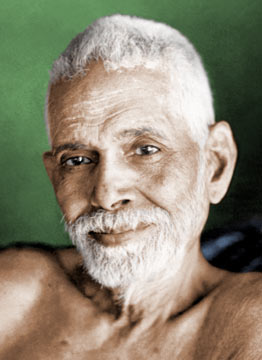
The following story of Sri Bhagavan Ramana Maharshi is a favorite and shows the spontaneous love from the heart the Sage of Arunachala felt for all living beings including humans, plants, animals, and birds.
View original post 553 more words
Self As Presence. What Is, Is You: By Dr. Harsh K. Luthar
The Truth of Existence is ultimately simple and never absent. It could not be otherwise. Sri Ramana used to say that the Eternal Divine nature cannot be present at one time and absent at another. So we must become aware of our Self in this present moment. It is only in the present that the Self is Realized. That is because the very nature of the Self is Pure Presence. It is Pure Being.
Truth is always Self-Seeing and Self-Being. Self Sees It Self by the power of its own inherent Truth. It needs no external agency for validation. You do not need anyone to tell you that you exist. You know you exist. Your existence announces itself perpetually and continually. That is the nature of the Self. It is unbroken and the whole mass of Awareness-Existence-Bliss. In Sanskrit, we refer to it as Sat-Chit-Ananada.
Advaita says that Self is…
View original post 483 more words
As I Saw Him: By Sadhu Arunachala
As I Saw Him….
The most authentic sources for Bhagavan Sri Ramana Maharshi’s teaching are Bhagavan’s own words and also the recollections of Bhagavan devotees. How Bhagavan spoke and acted in the world also is noteworthy as the purest teachings of the Self emanated from his very being. I will be sharing some of my favorite stories of Bhagavan as told by the devotees.
View original post 1,433 more words
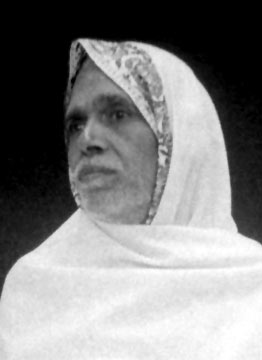
As I Saw Bhagavan Ramana: By Varanasi Subbalakshmi
As I saw Bhagavan Ramana
A most beautiful account by Varanasi Subbalakshami of Bhagavan Ramana. Bhagavan Devotees will enjoy reading it immensely.
I LOST MY HUSBAND when I was sixteen. I went back to my mother’s house and lived there as a widow should, trying to pray to and meditate on God. My mother’s mind too was devoted to the spiritual quest and religion was the main thing in her life.
View original post 1,616 more words
Remembering Bhagavan Ramana: By Krishna Bhikshu
As I Saw Him: By Krishna Bhikshu
I went to Arunachala for the first time with Sri Rami Reddi. We had our food in the town and then went to the Ashrama. In those days there was very little there – a hut for Bhagavan and another over his mother’s samadhi (place of burial). Bhagavan had just finished his food and was washing his hands. He looked at us intently. “Did you have your food?” He asked. “Yes, we had it in town.” “You could have had it here,” he replied.
I stayed with him for three days. He made a great impression on me. I considered him to be a real Mahatma, although his ways were very simple. Most of the cooking was done by him in those days. The Ashrama lived from hand to mouth and usually only rice and vegetable soup were prepared.
When I was about to leave, I asked Bhagavan: “Bhagavan…
View original post 466 more words
Know That By Which All Else Is Known: By Dr. Harsh K. Luthar
Know That by which all else is known.
The photo art above is from John Wassenberg FB page.
____________________________________
Some say that Reality is subjective, some say it is objective, and some say it is both objective and subjective, and some say it is neither.
View original post 225 more words
Kundalini Shakti in the West: By Dr. Harsh K. Luthar
Kundalini Yoga in the West
The notion of Kundalini Shakti is at the heart of yoga and is embedded in virtually all Eastern traditions regardless of the name or label that is given. If we carefully examine any school of yoga, tantra, or various traditions (Shakti, Shaivite, Kashmiri Shaivism), there will usually be some descriptions of Hatha Yoga, Pranayama, Kriyas, Mudras, Mantras, and different types of meditations on the Chakras (energy centers).
In the Shakti traditions, detailed descriptions are given of the various aspects of the visions of the Goddess that arise in meditation. Even in the school of Advaita Vedanta, which does not depend on the practices associated with Shakti Yoga, we see that the great scholar/saint Adi Shankracharya has written hymns to the Goddess who represents Shakti, the divine power.
View original post 779 more words
Goddess As The Guru In Tripura Rahasya
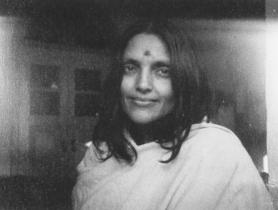
Goddess As The Guru
The classic Goddess scripture Tripura Rahasaya is well known to Sanskrit scholars and now a number of translations exist in English.
Bhagavan Sri Ramana Maharshi often quoted from Tripura Rahasya and considered it one of the greatest works that expounded Advaita philosophy. Bhagavan’s close devotee Munagala Venkataramaiah (later known as Swami Ramanananda Saraswathi) translated Tripura Rahasya into English in 1936. That was the first translation of this classic, I believe. A number of Sanskrt scholars since then have made their own translations into English.
In many Hindu scriptures like Tripura Rahasaya, the ultimate Guru is Devi, the Supreme Goddess. She gives instructions to the sages so they can know the highest truth of Reality and attain Self-Realization.
In the path of Tantra, the sciences explaining the mystery of mantra, mind, and breath are explored and explained. Tantric texts focus on the nature of the divine energy within the body, also…
View original post 96 more words


You must be logged in to post a comment.